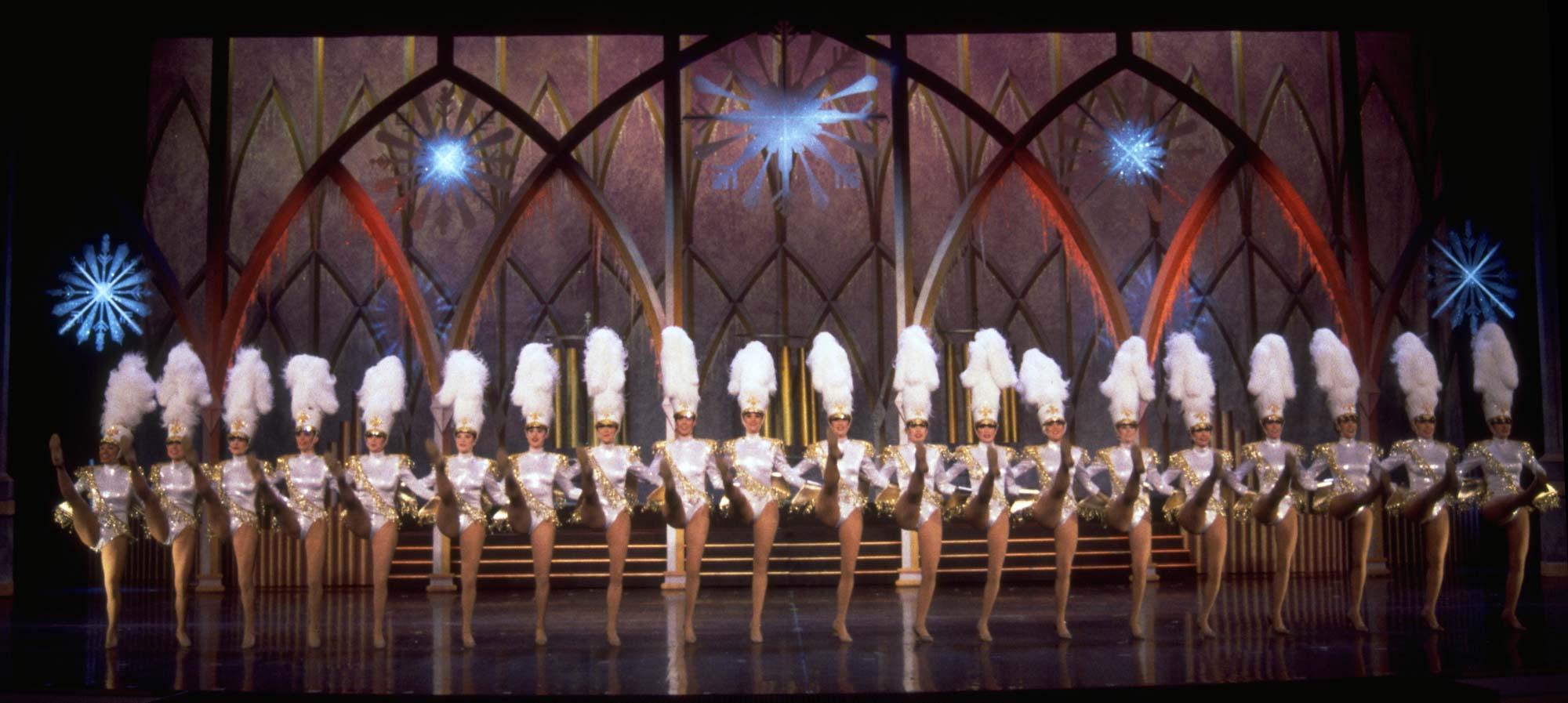
At the end of the 19th century, the masses enjoyed different forms of entertainment ranging from vaudeville to the rudimentary beginnings of cinematography. In that guilty pleasures menu, the most popular sin was the musical numbers where the Tiller Girls triumphed in England and the Follies Bergère in France.
With the fusion of both, the Ziegfeld Follies emerged in the United States, musical revues that combined synchronized choreographies, dance numbers, songs, and comedic sketches. Around 1922, the entrepreneur and choreographer Russell Markert was so impressed by the Ziegfeld Follies performances that in 1925, he founded a precision dance company in St. Louis, Missouri, named the Missouri Rockets. The success was immediate.
Simultaneously, in New York, the entrepreneur Samuel L 'Roxy' Rothafel built luxurious entertainment palaces considered great pleasure experiences for the general public. In 1927, he opened The Roxy Palace, where he hired the Missouri Girls, renaming them the Roxyiettes.
Despite the 1929 Crash, the millions of John D. Rockefeller, the media reach of RCA (Radio Corporation of America), and Rothafel's artistic ideas, the Radio City Music Hall emerged in 1932. In December of that same year, the Roxyiettes settled in this art deco architectural gem that remains the largest indoor theater in the world. From that moment on, they would be baptized as the Rockettes. Since 1933, the Christmas show has been performed, with the most famous number being the Parade of the Wooden Soldiers.
From the original 16 dancers, they grew to 36 who were fully proficient in tap, jazz, ballet, and modern dance. One of their most characteristic features remains the optical illusion of kicking with legs parallel at eye level, giving the impression that they are all kicking at the same height. To implement this visual fiction, the tallest dancers were placed in the center and the rest in a staggered formation. Historically, their heights ranged from 167 cm to almost 179 cm.
To ensure that the sound of their tap numbers like Rag Dolls or 12 Days of Christmas is heard, the dancers have microphones embedded in their shoes. It is estimated that only in the Christmas number, 14,000 standard-sized batteries are used. Additionally, they are responsible for styling their own hair and makeup.
Since the rise of the star system in the early days of sound cinema, the girls had an incentive to perform as opening acts at the most important premieres of the time such as King Kong, Breakfast at Tiffany's, or Mary Poppins, as well as entertaining the American troops during World War II.
In fact, the first known rockette was Vera-Ellen, one of the stars of On the Town (1949), who was fired after two weeks for being too individualistic. The next was Maria Beale Fletcher, crowned Miss America 1962.
In addition to the Christmas show, the other well-known performance is the one they have been doing since 1958 at the Macy's Thanksgiving Day Parade, where hundreds of thousands of New Yorkers gather in the streets.
For decades, the Rockettes formed a kind of club exclusively for young women over 18 with white skin and without any malformations. The rules were so strict that an article in The New York Times published in 2018 claimed that Russel Markert, who had been the artistic director until the early 80s, even forbade one of the young women from tanning for fear of appearing "like a colored girl."
Racial prejudices continued with his successor, Violet Holmes, who staunchly defended that the dancers should be "mirror images" of each other, so that "one or two Black girls would distract and the precision line would be lost." The NAACP (National Association for the Advancement of Colored People) denounced the events in 1982.
Jennifer Jones became the first African American to be hired in 1987, with her debut performance at the Super Bowl halftime show the following year. Two years earlier, the Rockettes' management admitted the first Asian dancer, Setsuko Maruhashi.
Gradually, prejudices were eradicated until in 2019, Sydney Mesher, the first dancer with a visible disability due to her missing left hand, joined the dance company. The Rockettes are currently celebrating their centenary.