Time can be measured in the generations that pass through any work. Here's an example: it has been 20 years since The Lightning Thief, the first installment of Percy Jackson and the Olympians, arrived in bookstores to captivate children with its heroes and monsters inspired by Greek mythology. Jason, Medusa, the Minotaur... you know the drill.
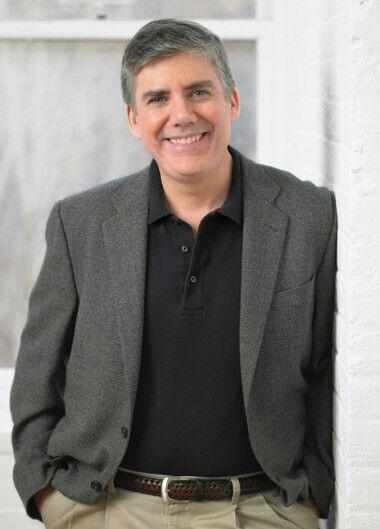
Rick Riordan (1964, Texas) now looks at his protagonist, the demigod son of Poseidon, with a distant tenderness, but also with the pride of someone who knows that good stories do not age. The American writer is visiting Spain for the first time at ease: "I once went on a cruise that made a quick stop in Barcelona, but I had never been to Madrid," he tells EL MUNDO.
His visit coincides with the premiere of the second season of the series of the same name on Disney+ and with the anniversary of a saga that began as a story for his young son, diagnosed with ADHD. A tale invented at his bedside that ended up becoming a global phenomenon translated into more than 35 languages, almost on par with Harry Potter or The Hunger Games. And in case you were wondering: Camp Half-Blood is here to stay.
The Sea of Monsters, a book that adapts the second season of the series, was published almost two decades ago. What is it like to return to that world for a completely new audience?
It's a wonderful opportunity. I really like the idea of revisiting a story I wrote so long ago and looking at it today with perspective, as if I had a second chance. Thinking, "Maybe this character could change a bit," or "this is a better way to tell it." Of course, we want to be as faithful as possible to the original story, but it's also very stimulating to be able to tell it in three dimensions. In the books, we are constantly inside Percy's head, and that can't be done on television. Instead, seeing the story from other perspectives makes it, for me, more interesting.
To what extent should an adaptation be faithful to the original text and where can it take creative liberties?
It's something we talk about a lot in the writers' room and with the producers. If you tried to adapt every page absolutely faithfully, you would need 30 episodes per season, a billion dollars, and so much filming time that by the end of the first season, the actors would be five years older, which doesn't work here. The key is how to quickly get into the story and how to keep the interest. It's like cooking something slowly and intensifying the flavors.
Your stories constantly draw on classical mythology to reflect contemporary issues. Are you more drawn to the epic side of myth or its human dimension?
I think they are deeply connected. The idea of a quest is epic, but it's also a metaphor for the human struggle. I don't want to get too philosophical, but when you're young, everyday life often feels like an epic. Going to school every day can feel like facing a monster. You have to think, "How do I survive until the end of the day?" That's epic, but also very human. You need both things because if there's only great adventure, it's not believable.
Many readers grew up with Percy Jackson and now watch the series with a more adult perspective. What connects a viewer in their twenties with the preteen audience?
Twenty years ago, I had no idea that I would still be talking today with people who read the books back then. I never imagined they would continue to work so well or end up being turned into a television series. I always say that if you enjoy the books, you are the right age. I have readers who are 80 years old and readers who are eight, and that's wonderful. I hope the series also works like that.
Your novels address serious themes, such as trauma or loss, while remaining light and fun. How do you maintain that balance?
When we thought about the adaptation, we were very clear that it had to be suitable for children—we don't want to give them nightmares—but also interesting for teenagers, adults, parents, people without children, or older people. How do you achieve that? Not just with monsters and action, or just with humor, but with emotions. When you see the relationship between Percy and his mother, Sally, you think, "How beautiful how they take care of each other." Or you look at Percy and Annabeth and say, "They are adorable together, will something happen between them?" even if you don't know the books. That's what connects everyone.
Is there a scene from these two seasons that you have seen and thought, "I wish I had written it like that"?
Yes, definitely. The introduction of Tyson, the cyclops, is different in the series, but I think it's better. It gets straight to the point. When I see Tyson on screen, played by Daniel [Diemer], I immediately feel an emotional connection, almost a need to protect him. It works better than what I did at the time.
In an industry saturated with franchises and cinematic universes, what does Percy Jackson bring beyond the cultural phenomenon?
There's a very old saying in Hollywood: "Nobody knows anything." And it's still true. No one knows exactly why something becomes popular or what will happen with television or streaming. Everything is constantly changing. All we can do is tell stories and hope they find their audience because they say something that resonates with them.
With so many installments, translations, movies, and now the series, are you still surprised by how much you connect with people?
I'm always surprised. When people talk to me about numbers or millions of copies sold, I don't think about numbers. What really matters is getting to know people, one by one, and hearing what the books meant to them. When someone tells me that the story helped them in a difficult time, or made them feel less alone, or that a mother read the books to her daughter and that created a bond between them... that's everything to me. It's a huge honor that these stories are part of people's lives. I feel like Percy Jackson no longer belongs to me; now it belongs to the readers and viewers.
Is it more challenging than ever to write young adult fiction?
It's hard to say because I've been doing it for a long time and my way of writing hasn't changed much. But I think if I were to start today as a young author, it would be much more complicated to find an audience. At the same time, I don't think the transformation is a negative thing. I don't understand the TikTok algorithm, for example, but I know it helps people discover books, helps readers find each other, and create community. It's neither better nor worse than before: it's something very different.
If your characters lived in the real world of 2025, what would they need to survive our own 'age of monsters'?
Adaptability. It's the most important quality of any hero, in any era. You have to be able to think quickly because everything changes, and we always face the unexpected. We see it constantly in the news. You can't prepare for everything: you have to be able to adapt on the fly.
It seems like the Riordanverse is here to stay... has the series influenced the way you conceive your new stories?
Definitely. I've been writing three new Percy Jackson books while we were working on the series, and now, when I write Percy, I hear Walker's [Scobell] voice in my head. And when I think of Annabeth, I think of Leah [Jeffries]. But it's a positive thing: it makes everything more real for me. I feel like I know these characters even better than before, and that has been a lot of fun.