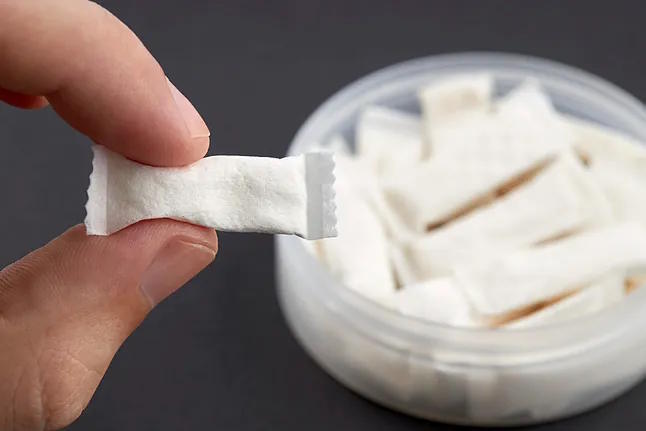
The use of nicotine pouches has increased tenfold in the United Kingdom between 2020 and 2025 (from 0.1% to 1% of the population). This means that more than half a million people are already using them, according to an article published in the journal The Lancet Public Health. The study reveals that nicotine pouches, also known as snus, are often used as an aid for people who want to quit smoking or reduce consumption. This was the case in at least 6.5% of attempts this year, although the authors state that it is still unclear whether the pouches actually contribute to a lower smoking rate.
Concerns arise from the growing use among new consumers, particularly young people aged 16 to 24. According to data from the last three years, consumption has increased from 0.7% (January 2022) to 4% (March 2025). Meanwhile, the popularity of this product has remained almost unchanged among those over 35 years old.
"From a public health perspective, the key issue is not just that young people use nicotine pouches, but whether they use them instead of cigarettes or vapes or in addition to them," explains one of the lead authors, Harry Tattan-Birch, from the Department of Health and Behavioral Sciences at University College London.
Therefore, the article's authors emphasize the need to prohibit the sale of nicotine pouches to individuals under 18 years old. They also call for more research to understand if they truly help people quit smoking.
According to Alejandro Frino, a pulmonologist and member of the Smoking Working Group of Socap (Catalan Society of Pulmonology), the issue lies in keeping nicotine away from minors. "It is the most potent drug causing strong addictions," emphasizes the expert. "White pouches should not lead minors into this type of addiction. Nicotine absorption is faster and more intense than a patch to quit smoking."
Furthermore, Frino insists that "white pouches should not lead minors into this type of addiction. Nicotine absorption is faster and more intense than a patch to quit smoking."
Tattan-Birch also emphasizes that "the challenge for regulators is to reduce nicotine consumption and initiation among young people without inadvertently reinforcing the habit of smoking cigarettes." Especially concerning the 16% of users who start using a tobacco product without a history of regular smoking.
The study, which analyzed data from the Smoking Toolkit Study (a comprehensive monthly nationally representative survey conducted between October 2020 and March 2025), also indicates a combined use: the majority of users (69%) also consume other nicotine products (56% smoke and 39% vape). "This poses a risk due to the high nicotine content that leads to addiction in individuals," Frino concludes.
A risk amid the decline in youth consumption
According to the pulmonologist, these data from the United Kingdom "serve as a warning." Tattan-Birch also believes that the conclusions can be extrapolated. "Regulators in other countries can learn from the UK's experience by acting proactively, implementing laws on the age of sale, and restricting marketing aimed at young people," warns the study's author.
In Spain, tobacco consumption among students aged 14 to 18 has reached historic lows, according to data from the Survey on Drug Use in Secondary Education 2025 (Estudes), conducted by the Ministry of Health. In fact, tobacco consumption has decreased from 21% to 15.5%, the lowest figure recorded. However, there has been a slight increase in the use of electronic cigarettes in the last 30 days (27.1% in 2025 compared to 26.3% in 2023).