Open Society Foundations is the philanthropic arm of the Soros family. It was founded by the 'patriarch', financier George Soros, using the term "open society" directly from the greatest liberal philosopher of the 20th century, Karl Popper.
Despite - or perhaps because of - such aspirations, Soros and his group have been accused by the global far-right, among other things, of manufacturing Covid-19 in Ukraine, financing the secession attempt in Catalonia in 2017, creating caravans of Syrian migrants to Germany, managing the alleged cannibalism of young children by the business and political elite of the US, being anti-Jewish, part of a Jewish plan to control the world, and, in his childhood, a Nazi.
The conspiracy theories against George Soros are so numerous that they even have a Wikipedia page, and have led to the expulsion of Open Society Foundations from bastions of democracy such as Vladimir Putin's Russia or Recep Tayyip Erdogan's Turkey.
Open Society Foundations is one of the largest civil society organizations in the world, with assets of around 21.5 billion euros and grants and non-repayable aid of 374 million, mostly aimed at promoting democracy and left-wing causes.
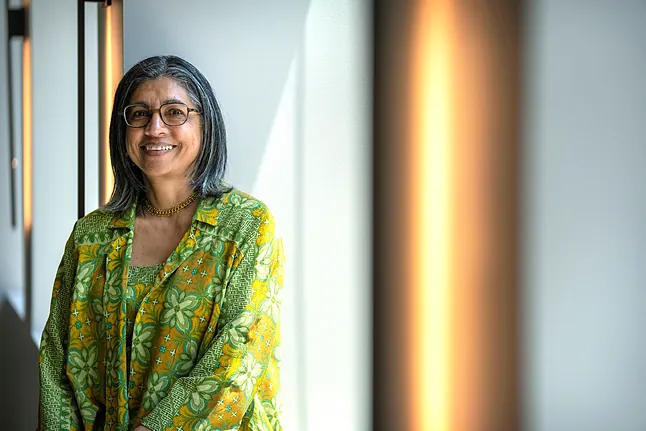
The President of the organization is British lawyer Binafier Nowrojee, although for the past two and a half years, the top position has been held by the businessman's son, Alexander. Nowrojee participated in the recently concluded UN Climate Change Conference (COP30) in Belém (Brazil), where she spoke with El Mundo about the future of the fight against climate change at a time when the US - not only under Donald Trump but also under more activist figures like Bill Gates - have downplayed the issue.
How has COP30 been?
It is very different when the country hosting COP is a democracy compared to when it is not [in the previous three years, it was held in Egypt, Dubai, and Azerbaijan, respectively]. In Belém, there have been very active civil society groups, a robust debate, discussion, with Brazilian organizations willing to address the issues. It has been impressive to see the energy of the attendees, the mobilization of the youth...
A cynic would say that climate change and its consequences are too important to be left to the people by companies and governments. Or, in other words, that it is easier to reach agreements between governments than among a multitude of groups.
Indeed. The government space remains separate. But climate change is one of those issues that can only be addressed from a perspective that combines governments, businesses, and people. These Conferences should be opportunities to advance a vision of a fair future. Obviously, community groups make more noise, are more chaotic, but their participation is necessary.
In this COP30, the US did not participate.
That has opened a door for other governments not to dilute their commitments to accommodate the US but rather to seize the opportunity to agree on an agenda they all support. It is part of a process to ensure that the world takes the right stance.
It is not only the absence of that country decided by Donald Trump. It has also been the reflection of one of the biggest advocates for the fight against climate change, Bill Gates, demanding that action shifts focus from combating climate change to mitigating the effects it will cause. Gates has also expressed his fear that the emphasis on containing 'greenhouse gas' emissions will harm economic development and increase poverty.
First and foremost, it is important to note that the world is no longer determined by superpowers. This is an increasingly multipolar world, where the 'Global South' [the name given to former colonies, which later became developing countries] is also more involved in the debate, just as Washington is stepping back. While the absence of the US is undoubtedly a loss, no one is waiting for the country to return to the negotiations. Brazil, Mexico, Senegal, South Africa, and other countries are forging new paths for climate action and economic growth, demonstrating that there is a way in the fight against climate change.
Why is the attitude of these countries so different from that of the US?
Because they see the climate crisis as an opportunity and a necessity, not an unnecessary burden. This often leads them to seek imaginative solutions. Latin America, for example, is full of creative ideas in this regard. Here, the use of biofuels is seen as a transition element from fossil fuels to renewables, and governments like Brazil are engaging in discussions and debating action plans. One of the things we do at the Open Society Foundations is support new ways to combat climate change.
However, in the US, concern about Earth's climate change has decreased (including the oceans, whose chemical composition is also changing due to CO2)
One thing is that the White House does not believe in international cooperation to combat climate change - or even in climate change itself - and another is the existence of a strong non-governmental environmental movement. The fact that the current government does not believe in it does not mean that citizens have stopped believing. Additionally, the US is a very large country where states have a lot of autonomy to decide what they do. California is leading efforts in climate policy, and given its economic impact, the measures they take have effects nationwide.
How do they do that in practice?
We invest in communities, people, and businesses pursuing these goals, and we try to offer assistance to governments.
When you talk about the Open Society Foundations investing, do you mean direct investment - in the capital of those companies - or more sophisticated and controversial financial instruments, such as 'green bonds' and 'blue bonds', aimed respectively at financing environmental conservation activities and Ocean conservation.
We have different arms. Most of what we do is non-repayable credits. But our investment fund has financed things like EcoEnterprises, a fund led by women that invests in companies operating in activities that promote diversity preservation, fight against climate change, or equity. Or in the Amazon Diversity Fund, an investment fund in the Amazon rainforest region that finances sustainable activities. In those cases, we act as regular investors. And finally, we connect civil society activist groups from different continents.
When discussing the fight against climate change, the two 'elephants in the room' are always left out: China and India. Both have huge populations and economies and are often accused of not playing fair in this field. For example, Beijing and Delhi still rely on fossil fuels, especially coal.
I believe these are two countries that have to make numerous efforts in very diverse areas, so they must find their own strategies. At a time when the US has renounced all its climate commitments, India and China continue to uphold theirs.