The last 10 years have been the hottest since the pre-industrial era, and 2025 will rank second in the records, just after 2024. Spain endured the most devastating wildfires in the last 30 years during the summer wildfires, and Europe, the continent experiencing the most warming, melted during the early heatwave in June. The year ended with dramatic scenes of floods caused by torrential rains claiming hundreds of lives in Indonesia, Thailand, and Sri Lanka.
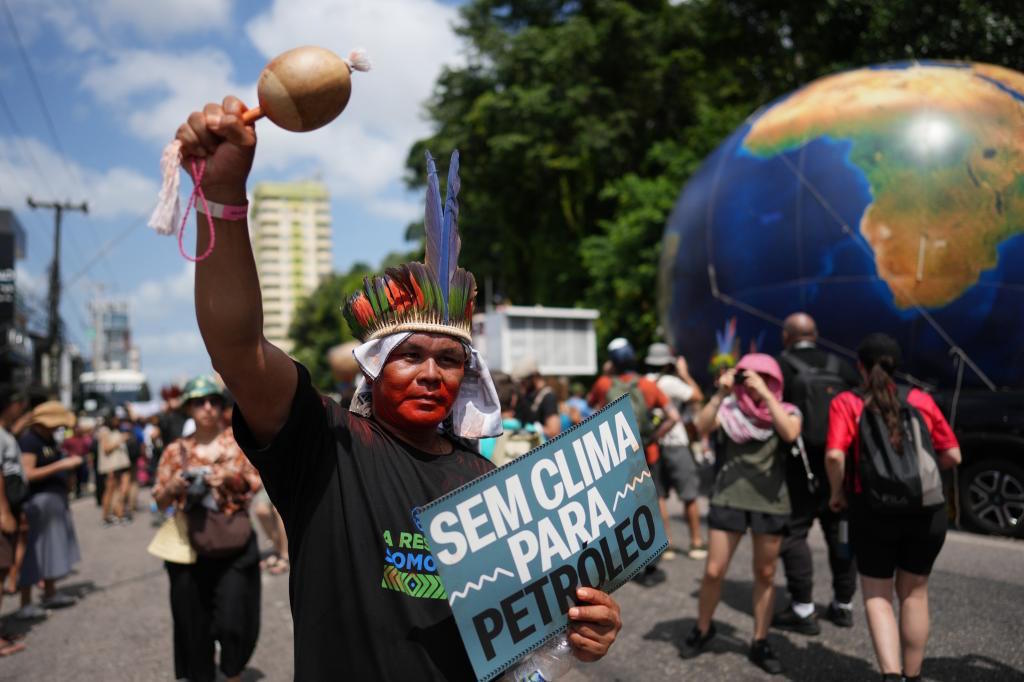
2026 starts with uncertainties regarding action on climate change, following the rather discouraging outcome of the COP30 in Belém (Brazil), which decided to postpone the roadmap for the end of fossil fuels indefinitely. "This summit has exposed the truth: all the efforts we have made so far have been insufficient," stated Brazilian Environment Minister Marina Silva. "Reality shows that we are still doing less than necessary, but at least we have been able to maintain the connection over the last 30 years. Without the Paris Agreement and all the work that preceded it, the planet would be heading towards a four-degree warming."
The latest projections place the global temperature increase between 2.3 and 2.5 degrees by the end of the century. The threshold of 1.5 degrees may definitively be left behind this decade, but the stakes remain high for COP31 to be held this year in Antalya, Turkey, with the presence of hundreds of oil lobbyists and the absence of the United States, determined to undermine any possible agreement from the outside.
Despite the watered-down final agreement, COP30 at least served to keep the flame of multilateralism alive and to promote the Coalition for a Just Transition Away from Fossil Fuels, composed of around a hundred countries (including Spain). The first international conference of this COP appendix will take place on April 28 and 29, 2026, in Santa Marta (Colombia), a symbolic port for its role in coal exports.
"We must seize the momentum, lead with courage, and form a true coalition of volunteers," declared Irene Vélez Torres, Colombia's Minister of Environment, driving the transition alongside the Netherlands. "We want to invite cities, local governments, indigenous peoples, NGOs, and companies to join a multisectoral platform to progress towards a progressive reduction of fossil fuels."
The promoters of the volunteer coalition claim that the Santa Marta summit will be "complementary" and will not compete with the COP process. However, several analysts warn that we are possibly at a turning point after 30 climate summits, and potentially witnessing a staging of an incipient energy cold war, with the world divided between petrostates (resistant to abandoning fossil fuels) and electrostates (committed to accelerating the ecological transition).
COP30 also highlighted the increasingly tangible existence of the so-called obstruction axis, in the words of British economist Michael Jacobs. This new geopolitical axis would be led from outside by the United States and, from within, by Saudi Arabia and Russia. The goal would be to sabotage action against climate change as much as possible, deemed by President Trump as "the greatest scam of the century," despite the extreme weather events that hit the US in 2025.
"The rest of the world is fed up with denialism and delays," former Vice President Al Gore interpreted the events of COP30. "Ultimately, the fossil fuel industry and its allies will lose power. At present, they can veto diplomatic language, but they cannot veto action in the real world."
The energy cold war will converge throughout 2026 with the cultural war in cities, where resistance to the ecological transition promoted by European right-wing parties is gaining ground. Berlin has become one of the first battlegrounds of climate regression, with measures taken by the Christian Democratic Union (CDU) in defense of motorists' rights, increasing speed limits on streets and suspending pedestrianization projects.
Paris, for instance, has led the ecological transition in Europe over the last decade with the pedestrianization of the Seine riverbanks, promoting bicycles, and creating garden streets. The 2026 municipal elections will test the green shift led by Cádiz Mayor Anne Hidalgo. The prospect of electing a new right-wing mayor like Rachida Dati could signify a setback in this trend. As seen at the national level with the French National Assembly's vote in favor of abolishing low-emission zones and the campaign against renewable energies, renamed "intermittent energies" by Marine Le Pen.
Meanwhile, Reform UK leader Nigel Farage bluntly stated that abandoning the zero emissions target for 2050 will be "our new Brexit". Conservative leader Kemi Badenoch has gone even further, announcing that her party will propose renouncing the Climate Change Act that former Prime Minister David Cameron promoted in 2008 and was almost unanimously approved.
Surveys confirm that environmental concerns are being replaced by concerns about the geopolitical situation and the risk of armed conflicts. However, the economic reality has already set a clear trend in the past year: investments in renewable energies have doubled those in fossil fuels, electricity generated by solar panels and wind turbines has surpassed coal for the first time, and half of the new electric capacity in India and China - the two most populous countries on the planet - was low-carbon.