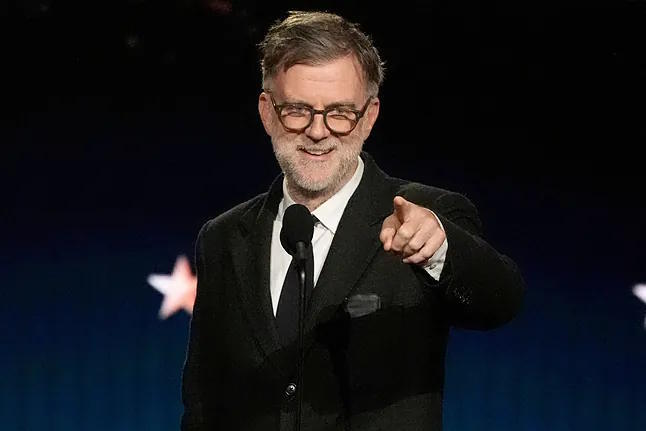
If one bothered to conduct a survey at the end of a potential plenary meeting of cinephiles, occasional fans, and academics from any academy of universal cinema about which unanimously respected and even adored living director, probably among the most voted, if not the most, would come outPaul Thomas Anderson. If the survey were limited by age and only candidates from the so-called Generation X and later were admitted (that is, no omnipresent boomers), then there would be serious possibilities that PTA, according to his initials that coincide with those of the Albanian Labor Party, would compete for the podium with Tarantino, Fincher, or perhaps, and by broadening the spectrum and opening Pandora's box, Shyamalan, Kelly Reichardt, or Nolan. We are talking about people with enough filmography not to be questioned for being considered "in training" and, at the same time, filmmakers who have not yet entered the category of classics like their immediate predecessors led by Coppola, Eastwood, Scorsese, or Spielberg. We are talking, as you may have noticed, about all (or almost all) men, all Americans, and all white awaiting the next turn, with names like Ryan Coogler, Chloé Zhao, Bong Joon-ho, Nia DaCosta, or Andrea Arnold, much more plural, more female, more international, less imperialistic, let's say.
For some reason that reason does not understand, PTA's unquestionable prestige has run parallel to a judgment from his colleagues that is both condescending and incomprehensible. Time and time again, he is pointed out as a great director, but incapable of making the film. And with the definite article goes nothing less than the same glory. His cinema is both the best and brightest heir to the legacy of his predecessors (from the New Hollywood that empowered directors in the decline of the major studios) and the most faithful representative of a tradition and a grammar that presides over all American cinema from its Fordian origins where heroes struggle alone against an untamable, wild reality, and indeed, to be conquered. The nuance now is that each and every one of the Pynchon-inspired protagonists are doomed either to failure or to simple despair. In some way, few directors like Paul Thomas Anderson more faithfully represent the contradiction of turning around an inheritance that, nevertheless, they fully embrace; the eternal and very tiresome American dream transformed into a disease very close to compulsive obsession. And so on.
Let's say that Another Battle After Another —according to the director himself, his most pursued and always postponed film— is the perfect model to make up for this historical lack. And in this exercise of guilt exhibition by his colleagues, which is also one of redemption, there is something as luminous and accurate as, let's admit it, slightly sinister. If the inevitable is consummated, the international and very plural Hollywood that now occupies the Academy would award a hilarious, feverish, and acerbic critique of the migratory policy of the current Trumpist Administration (that is the film according to Thomas Pynchon's novel Vineland), but from a refutation of any attempt not only of violence, but of protest even. It is curious that in the most conflictive moment of the millennium, the galas are balms where no one raises their voice (beyond Mark Ruffalo, on the red carpet, or Judd Apatow, on stage, in isolation). It is curious that in the interviews granted for the film, the director avoided any political response in the most political of his films. It is curious that the response to the current programmatic vindication of the greatness of America (again) is replicated with the most enthusiastic call to that other inoperative, unreal, and always idealized America (again). That is, it is not only the occasion to heal the persistent forgetfulness of one of the great living directors, but the film to do so follows the protocol of not bothering the orange beast too much. And one more thing: PTA does not follow the open-minded pattern that so infuriates the furiously anti-woke alt-right of recent years. He remains a man and white. And in all of the above, the sinister point.
And then there is the case of Hamnet, by Chloé Zhao, which among so much celebration of Another Battle After Another is already beginning to reveal its intentions and its captivating beauty. The Golden Globe for Best Actress for Jessie Buckley announces the more than certain Oscar that will come and the Golden Globe for Best Drama places it in a very interesting comeback position. One fact: the Oscars are held at the end of March. Rarely before has the so-called awards season lasted so long. Otherwise, things can still turn. But that is another battle. After another.