Oaxacan recipes, Mayan treasures in Yucatán, colonial cities of Guanajuato, the nature of Chiapas, the desert of Baja California... Mexico is so much Mexico. There are so many fascinating corners... Where to start exploring its 31 states, besides Mexico City? Perhaps through its magical towns, the nomenclature that gathers its most emblematic localities, places that "have always been in the nation's collective imagination and represent fresh and varied alternatives for national and foreign visitors," according to the Ministry of Tourism. It is an open list that began in 2001 with Huasca de Ocampo, in the state of Hidalgo, as the first member and has been growing to reach 177 today. Each magical town is different, but they all treasure a cultural, historical, and natural richness that makes them worthy of a visit.
The "land of blue," they call it, and the blame naturally falls on the Blue Agave Weber, the bluish-toned plant used to produce tequila. This incomplete route begins in some of the essential magical towns. As we know, Tequila, in the state of Jalisco, is the birthplace of Mexico's iconic distilled spirit. The agave landscape mesmerizes us from the Chiquihuitillo viewpoint. So does the Tequila volcano, considered a World Heritage Site. Once in the town, the colorful main square and the Santiago Apóstol temple catch the eye, as well as the washhouses on Tabernas street. The obligatory stroll should include the Regional Tequila Museum (MUNAT), as well as a visit to some of the tequila distilleries.
The Wixárika culture (or Huichol) is one of the oldest and most vibrant living indigenous traditions in the state of Nayarit. In fact, the Wixárika Route, an ancestral ceremonial path of over 500 km connecting sacred sites in the North American country, was included last year on UNESCO's World Heritage List. Another great reason to visit Nayarit, on the Pacific coast, is its paradisiacal beaches. Destinations like Sayulita, also a magical town, are globally renowned for surfing and its bohemian atmosphere. Even if you don't ride the waves, there are plenty of opportunities to enjoy nature. Whale watching, for example, is a popular activity. Tourists also flock to admire the craftsmanship, and being by the sea, one must try typical dishes like shrimp meatballs and fish cracklings.
In the state of Michoacán, Pátzcuaro is another dazzling enclave. If you ever want to experience the Day of the Dead in Mexico, this would be an incredible setting to do so. Its cobbled streets, baroque architecture, Vasco de Quiroga square, one of the largest in America, make the former capital a true colonial gem. But there's more. Another attraction is its lake, especially when filled with butterfly fishermen, named for the shape of their artisanal nets. It is a Purepecha tradition and a source of pride in Michoacán.
Now we travel to the heart of the state: Guanajuato. The journey through this territory takes us to places well known for their role in the country's independence history, from the city of Guanajuato to Dolores Hidalgo. Yet, in the chapter of beauty, there is an undisputed winner: San Miguel de Allende, one of the most cosmopolitan magical towns. UNESCO bestowed it with the title of World Heritage Site in 2008, but this city with 500 years of history has been in vogue since the mid-20th century when artists began to flock, turning San Miguel into the haven of creators it still is today. It retains that artistic air, along with expensive hotels and top-notch restaurants. The sound of the mariachi, the work of artisans, the colors of the markets, and the sound of its bells still resonate through the cobbled streets and painted houses of this top tourist destination.
Street vendors around the Zócalo of San Cristóbal.SHUTTERSTOCK
In Chiapas, one of the states with the greatest ethnic and cultural diversity in the country, we find San Cristóbal de las Casas. Surrounded by mountains and forests, the city is another captivating myth for travelers. There are many reasons why. Much of the liveliness of SanCris, as its inhabitants affectionately call it, converges in the Zócalo, the large garden square, where on one side stands the Cathedral and other important buildings, such as the House of the Mermaid and the church of San Nicolás, which retains its original style.
The pedestrian streets that cross the center are filled with vendors and people wearing colorful huipiles going up and down. The amber and craft shops are overwhelming: textiles, jewelry, popular toys, and jewelry... everything is tempting. Having a coffee from Chiapas in a café is a must. But you must also try the posh, a drink made from sugarcane and cornstarch. Around the Santo Domingo square, you shouldn't miss the Museum of the Highlands of Chiapas and the Textile Center of the Mayan World, a journey into the wonderful textile art of the city.
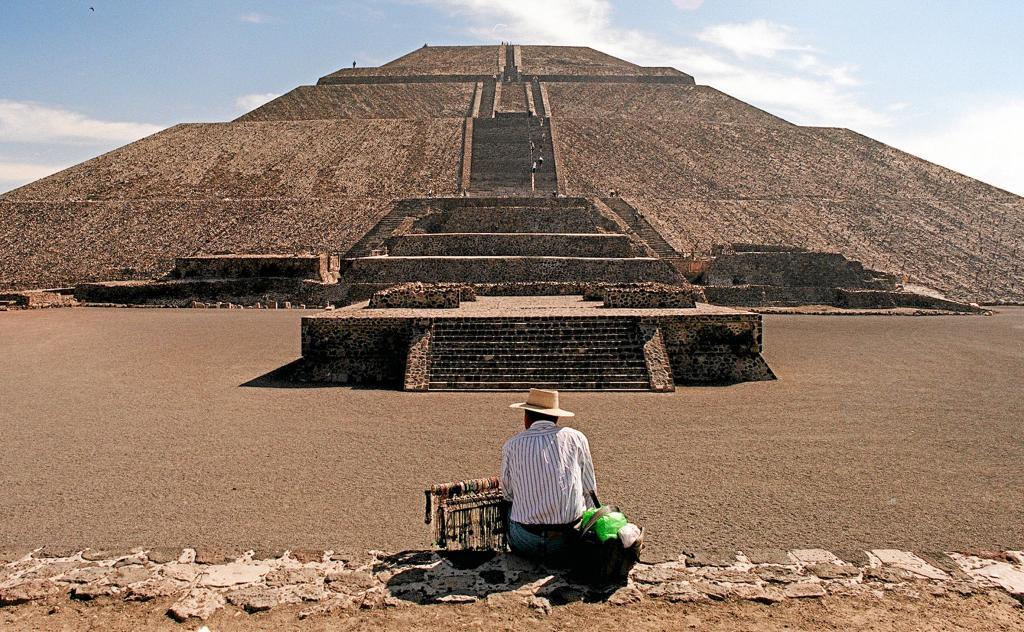
We conclude the journey in the heart of Yucatán. Izamal is not lacking in color either, founded in the mid-16th century and entirely painted in yellow. Its main attraction is the majestic convent of San Antonio de Padua, but there is much to explore in this lively colonial city. Another worthwhile stop is the astonishing Mayan pyramid of Kinich Kakmó, one of the three in Izamal. How can one resist: it is the largest in surface area on the Yucatán Peninsula and the third in Mexico.