Cancer does not always come from genes. Our lifestyle determines our chances of developing malignant cells that lead to a disease currently affecting 32 million people worldwide. In one of the most ambitious studies published to date, an international team of scientists has quantified prevention: 7.1 million cases per year.
That is the number of new diagnoses that could be avoided by acting on 30 modifiable risk factors, as stated in a study published in Nature Medicine. The study, analyzing data from 185 countries, sends an urgent message to health authorities: 37.8% of the global cancer burden is in our hands. Lung, stomach, and cervical cancers represent almost half of all cases that could have been prevented.
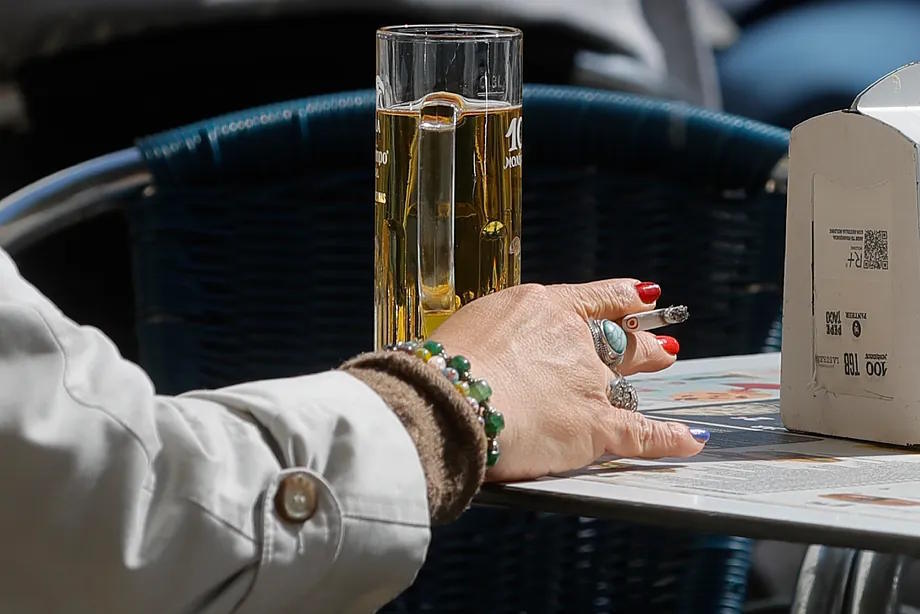
Tobacco is the main factor, causing 15.1% of all cancer cases globally. The second most important (10.2%) are infectious agents such as H. pylori, HPV, and hepatitis viruses. And alcohol consumption is the third, responsible for 3.2% of cases.
According to André Ilbawi from the WHO, head of the cancer control team and one of the study's authors, "this is the first global analysis showing how much cancer risk comes from preventable causes". "By examining patterns in different countries and population groups, "we can provide governments and individuals with more specific information to help prevent many cancer cases before they develop," he warns in a statement.
Cancer figures in Spain: the most common in 2026
One of the most striking conclusions of the study is the disparity between sexes. While 45.4% of cancers in men are attributable to preventable factors, in women, the figure drops to 29.7%. According to the research authors Hanna Fink and Isabelle Soerjomataram (the latter being the head of surveillance at the International Agency for Research on Cancer, IARC), this difference is not biological but cultural and social.
"Beyond tobacco, men tend to have jobs with higher exposure to occupational carcinogens (such as diesel or asbestos) and consume alcohol at higher levels," they point out. They also mention a psychological barrier: "There is less use of preventive health services by men, reflecting gender norms about risk-taking and self-care."
Spain facing the mirror: Tobacco, alcohol, and the weight paradox
The detailed analysis for Spain reveals its own reality. In our country, 43.1% of cases in men and 24.1% in women are preventable. Smoking remains public enemy number one, responsible for over 33,000 annual diagnoses between both sexes. However, alcohol and obesity present worrying nuances.
Jürgen Rehm, co-author of the study and a global authority in Epidemiology, is clear about alcohol consumption, especially in Mediterranean culture. "Alcohol is a clear risk factor for cancer, and this includes all types of alcohol. Red wine causes the same cancer as distilled spirits," says Rehm. According to the data, alcohol causes over 8,400 cases annually in Spain. "The public perception of alcohol as a carcinogen is still very low. We need people to understand that reducing intake is a prevention measure as real as quitting smoking."
On the other hand, Spain shows a worrying trend in body weight. High body mass index (BMI) is the only major risk factor where the burden is higher in Spanish women (6,523 cases) than in men (4,301). This factor is particularly driving cases of endometrial and postmenopausal breast cancer in our country.
The challenge of latency: What we sow today, we will reap in 2040
The study innovates by applying a 10-year latency period. In other words, the cancers we see today are the result of how we lived in 2012. This raises a disturbing question: what will happen in the next decade with the increase in sedentary lifestyle and poor diet?
"It is very likely that the preventable fraction will increase," warns Hanna Fink. "While smoking is decreasing in some high-income countries, factors like high BMI are increasing almost worldwide. The impact of obesity we see today in young people will manifest itself harshly in the coming decades."
While in Spain and the West the debate focuses on lifestyle, in less resourceful regions, the battle is against microorganisms. Infections (such as HPV, hepatitis B and C, or H. pylori) account for 10.2% of global cancers.
According to Isabelle Soerjomataram, this is the greatest health injustice. "In sub-Saharan Africa, 30% of cancers in women are due to infections. Access to vaccines and antibiotics is the most underutilized tool. It is not just about people changing their habits, but governments ensuring vaccination against HPV and treatment for H. pylori."
What should governments do?
When asked about a single measure that could be implemented tomorrow, the authors agree on regulation. Rehm advocates for stricter public health laws, similar to vaccines: "They prevent disease before it appears."
Fink and Soerjomataram point to tobacco as the quickest victory: "Fully implementing WHO recommendations (high taxes, smoke-free spaces, and advertising bans) remains the most effective way to save lives. Only tobacco causes 15% of all new cancer cases worldwide."
Science is clear: almost four out of ten tumors should not occur. The Nature Medicine report is not just a database; it is a roadmap for the Spanish and global healthcare system. The message to citizens is one of empowerment, but for politicians, it is a call to action: primary prevention is much cheaper and more humane than any cutting-edge treatment.
"It is better not to have to talk about cancer because we have prevented it, than to spend hundreds of millions treating it," concludes Jürgen Rehm.