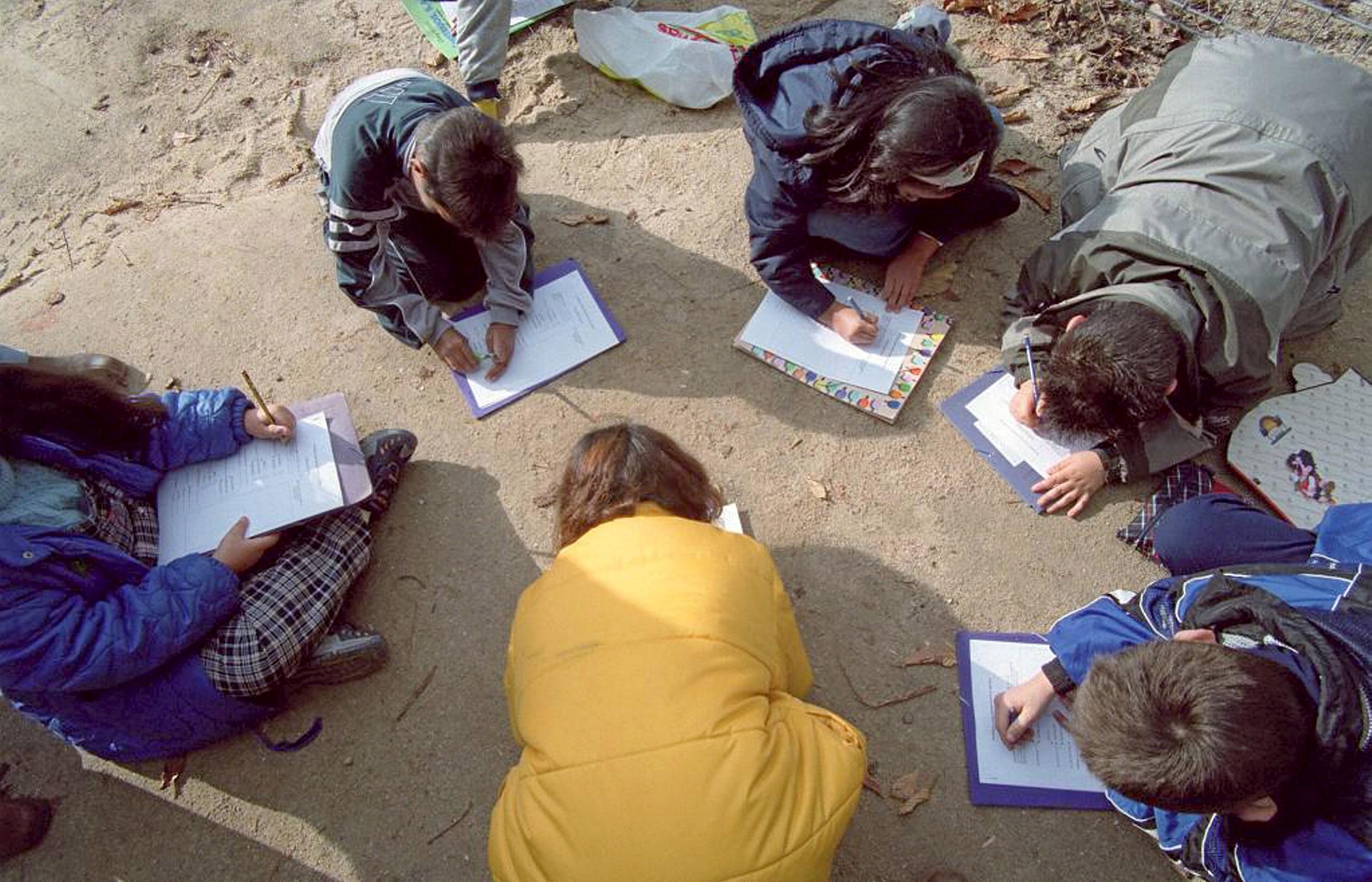
From Monday to Friday, many children and adolescents have schedules that would make many adults pale. School in the morning, lunch, English, piano, football, homework, shower, and dinner against the clock. Free time is relegated to the margins, if it appears at all. Getting bored or simply doing nothing has become almost a rarity. It is not an anecdote but an increasingly widespread pattern that is starting to have a name. The so-called hurried child syndrome - the hurried child syndrome - describes minors who grow up under constant pressure to perform, progress, and make the most of their time as if childhood were a race with milestones to achieve as soon as possible. Behind this concept is the child psychologist David Elkind, who addresses in his book The Hurried Child: Growing Up Too Fast "the pressure parents put on their children to succeed academically and their expectation for them to behave and react like miniature adults."
"Our society prioritizes values related to the economic and social system, such as individuality, competitiveness, or forced independence in childhood. We want short-term results, at any cost. We live in a deeply ableist culture that values children only for their results," summarises María José Garrido, a doctor in Anthropology and specialist in Ethnopediatrics.
It is not just about overloading the schedule but about a way of understanding child development under the logic of productivity. According to Dr. Elkind, "our society is regulated by time, giving more importance to immediate results". The problem is that the body and mind do not always keep up with that pace.
"When the daily routine of children and adolescents is filled with obligations, the first aspect that is usually affected is sleep. Sleeping less than necessary not only means being tired the next day but also has a direct impact on brain function," explains the Child Neuropsychology team at Avanta Mynd.
In Spain, experts have been warning about a silent saturation for some time. According to estimates from the Spanish Society of General Practitioners and Family Medicine (SEMG), around 15% of minors show symptoms of chronic stress. The figure increases in adolescence, where various studies indicate that up to 30% of young people suffer from sleep disorders. We are not talking about isolated cases but about discomfort that is creeping into pediatric consultations and classrooms.
"Patients often express feeling overwhelmed. In the 8 to 10 age group, we observe a progressive increase in difficulties concentrating at school, irritability, and frequent somatic complaints. Some of them are very self-demanding, with rigid thoughts like: 'If I make a mistake, they will think I'm a loser'," detail several psychologists from Avanta Mynd. "In slightly older age groups, in addition to accentuating complex thoughts related to demand, we encounter frequent cancellations due to the feeling of not having time for anything else."
"What is most noticeable within the school day is the lack of time to do homework or study. A schedule full of activities cancels out the need for rest and leisure that we all have, especially children," agrees Javier Carballo, a Therapeutic Pedagogy teacher at Santa Teresa de Jesús School in Ourense. The teacher has been working with minors for over 10 years and highlights that, in many cases, the total daily hours exceed the working day of an adult in any European country: "This makes their workday too long, reducing their productivity and attention, which means they make less use of classes."
The hurried child syndrome is not listed as an official clinical diagnosis, but it is appearing more frequently in medical and psychological literature. Numerous studies warn of repeated patterns, such as subtle but persistent changes in behavior, mood, or daily functioning. Also, a progressive loss of interest in activities that were previously enjoyable.
One of the keys lies in the normalization of hyper-busyness. Extracurricular activities were born as an educational complement and a space for socialization, but in many cases, they have become an extension of academic performance. According to Elkind, there are "three main dynamics of haste": parents, schools, and the media that amplify them.
"All the preparation of our children does not guarantee anything. The educational model tends to dismiss creativity, improvisation, and autonomy in favor of memory and the repetition of knowledge, characteristics far from what the knowledge society requires. It is most likely that our children will have jobs that do not yet exist," Garrido opines.
According to the anthropologist, the key is that in the process of generating interests and curiosity in new areas, "the child is the protagonist, the one who can choose their interests or decide whether they want to do an activity or not. It is essential for adequate neurological and affective development that allows them to self-regulate in the future."
"Our society is regulated by time, giving more importance to immediate results"
The impact is particularly visible in adolescence. The accumulated fatigue over the years, combined with academic demands and social pressure, takes its toll, and symptoms of emotional exhaustion appear. It is not coincidental that many adolescents reach a vital stage that should be precisely about exploration and discovery feeling exhausted. "Excessive cortisol due to stress can lead to future problems: it affects learning, memory, and resilience in adulthood. 70% of psychiatric illnesses also begin in childhood and preadolescence," Garrido points out.
Emma Higuera is a twenty-something who, like her younger brother, experienced firsthand the extracurricular overload. From kindergarten to high school, she was immersed in a chronopathic spiral: English, French, and German classes, typing, chess, dancing, skating, horse riding, tennis, basketball, swimming, paddle tennis, Pilates, and catechesis. On weekdays, she was usually busy from four to seven-thirty in the afternoon. Also, some Saturday mornings: "I didn't really end up tired because I was used to that frenetic pace of life, going from one place to another, staying fit," she says. "Perhaps the worst started in high school when there were many exams, and I had homework until dinner time."
Here arises a paradox: to what extent has school become a place where some children rest from a too intense pace outside the classroom? "The educational system has been forced to change; children are increasingly more susceptible and fragile, they feel more overwhelmed and need more time to assimilate. The focus is shifting from theoretical content that used to be taught to a more playful and dynamic tone, more attractive to students. The school needs to lower the bar to avoid overwhelming them," says Carballo.
Avanta Mynd emphasizes that the main problem is the accumulation of tasks and the lack of unstructured time: "In a fast-paced world, allowing children to get bored can paradoxically be the greatest gift we can offer them". Free play - the one that does not pursue objectives, grades, or medals - plays an essential role in cognitive and emotional development. When it disappears, so does part of creativity and self-regulation capacity.
Because boredom, so demonized, is actually fertile ground for imagination. In the early 1930s, Walt Disney designed a stress-free environment in his studios to foster creativity among workers through the play zone effect. Modern neuroscience, with names like Arne Dietrich, later demonstrated that by blocking cortisol, the brains of artists and creators function much better.
"In a fast-paced world, allowing children to get bored is the greatest gift we can give them"
"Those patients with very rigid schedules tend to depend more on adult instructions, resulting in less initiative, perfectionist tendencies, and fear of disappointing others," warn the psychologists. "They show intense frustration when they do not meet expectations, accompanied by recurring thoughts of 'I cannot fail,' affecting self-esteem and self-concept."