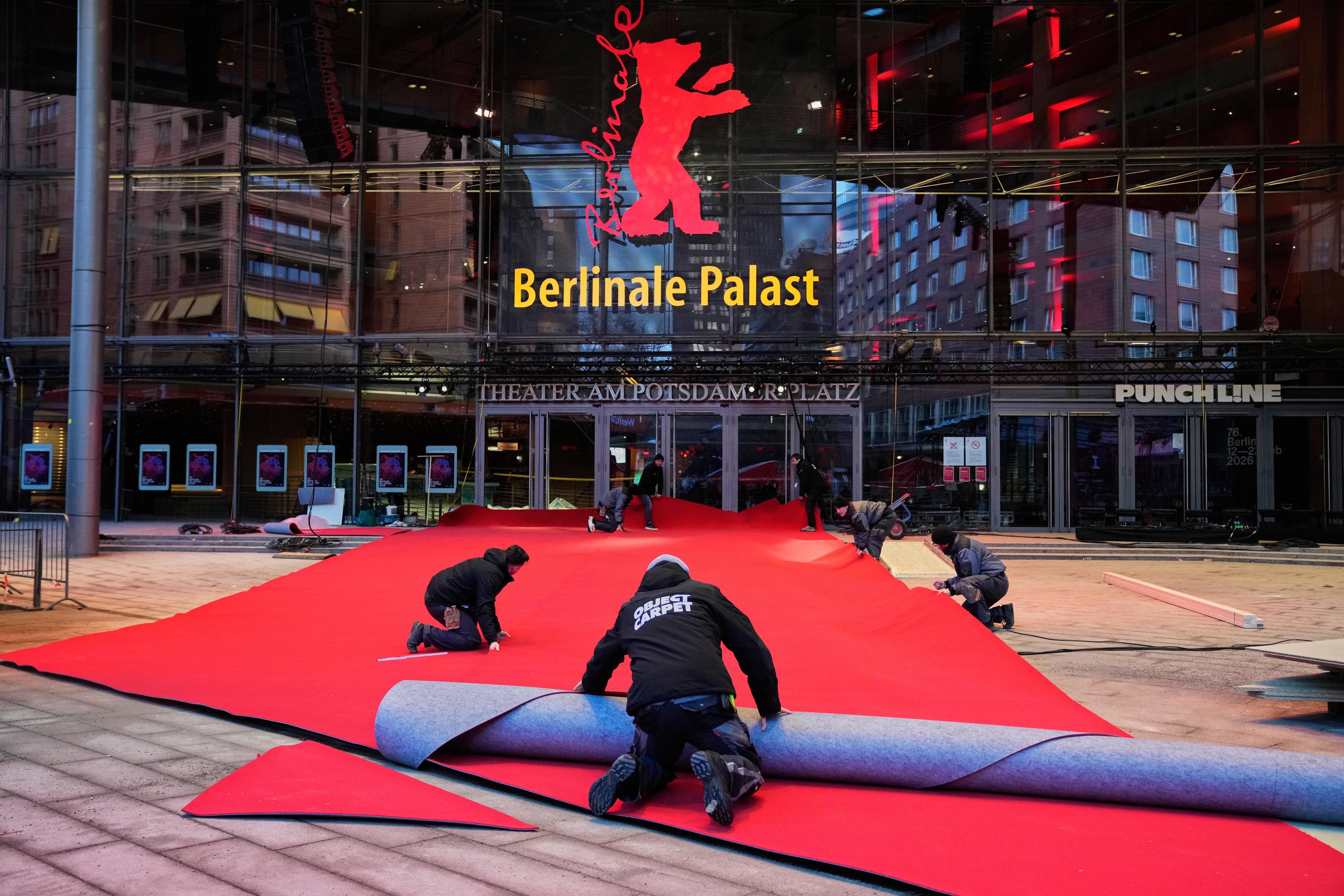
Desire is to a large extent the most graphic (and hurtful) representation of a lack. The Berlin Festival changed its directors last year with the declared intention of being the opposite of what it had been. Or, at least, the opposite of what was traditionally said about it: too political, too focused on minority cinema, resistant to Hollywood stars... That was the desire when the current director, American Tricia Tuttle, replaced the duo formed by Carlo Chatrian and Mariette Rissenbeek after five years at the helm. Well, years have passed, and as a clear symptom of the same absence, the desire remains intact. Berlin, once again, seeks its place.
The edition that is now starting presents itself as so promising that it's a bit overwhelming. Everything is promising. Despite Tuttle's insistently declared intention to make the German capital the second most important event for independent cinema after Cannes (in terms of the number of films programmed and market activity), the shine of the titles still does not match such desire. The 2025 edition was understood, and excused, as a transitional gathering. And yet, seen in retrospect, it even arouses a bit of envy. Here were the works of Richard Linklater (Blue Moon), the Romanian Radu Jude (Kontinental 25), or the Brazilian Gabriel Mascaro (The Blue Path) alongside the winner, the Norwegian Dag Johan Haugerud who completed his ambitious trilogy on sex, love, and dreams with, precisely, Oslo Dreams. All very desirable indeed.
With the new and very extensive program in hand, it's hard to find arguments, hard to find reference names, hard to find anything other than, once again, desires.
Following the path of established actors, few casts are as attractive as that of Queen at Sea, where the French Juliette Binoche faces off against the British Tom Courtnay in a film directed by Lance Hammer. And not far away, the return of the outstanding German actress Sandra Hüller after the glorious year in which she starred in The Zone of Interest and Anatomy of a Fall. She is the protagonist of Rose, a black and white drama set in the 17th century and directed by the Austrian Markus Schleinzer.
What remains of the official section once again relies on promises. The promise of Flies, by Mexican Fernando Eimbcke, who returns after presenting Olmo here last year; the promise of the two-time Silver Bear winner Angela Schanelec who presents My Wife Cries; and the promise of the Turkish-German director Ilker Çatak, whose previous film, The Teachers' Room, was even nominated for an Oscar. Çatak premieres with Yellow Letters, aiming to expose the current Turkish dictatorship.
Outside the official section, more promises steal the spotlight, with projects as diverse as The Ballad of Judas Priest, with Sam Dunn and Rage Against the Machine guitarist Tom Morello as directors; The Moment, by Aidan Zamiri, with Charli XCX as co-writer, lead actress, and more, and The Weight, by debutant Padraic McKinley, with Ethan Hawke and Russell Crowe facing off in a survival drama downstream.
Thus, a Berlinale begins in which, despite not lacking the latest from Hong Sang-soo, it promises. The problem is that it promises more uncertainty than anything else.