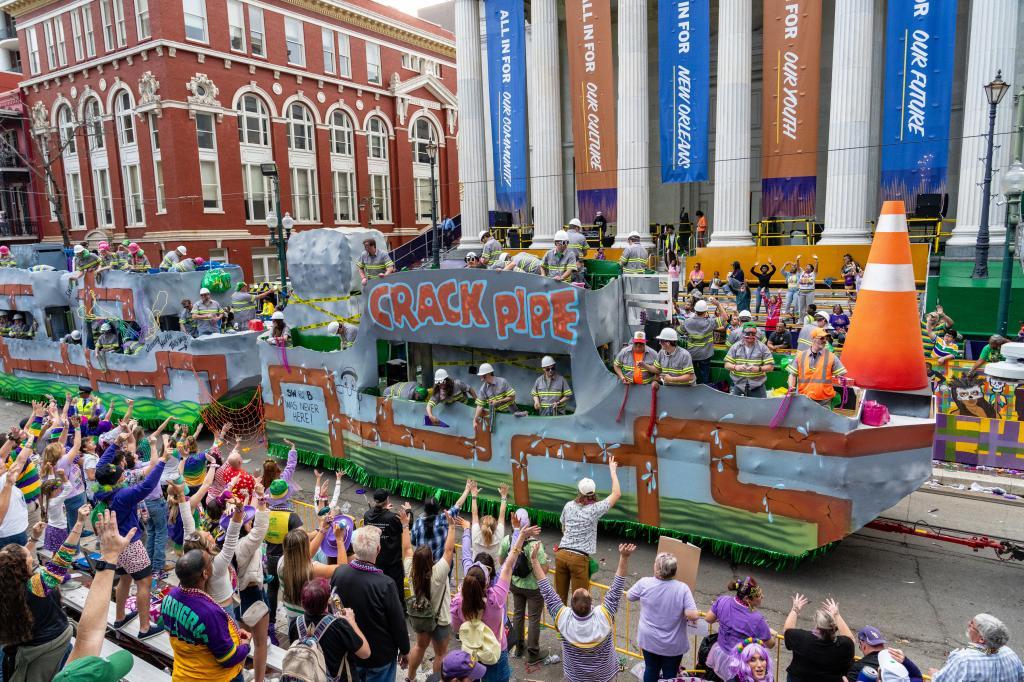
With all due respect to those in Cádiz or Santa Cruz de Tenerife, here are the keys, secrets, and more than a few curiosities of one of the most popular carnivals in the world that you must experience at least once in your life, the Mardi Gras in New Orleans, which attracts over 1.5 million visitors each year, generating around 900 million dollars for the local economy.
The Roman origin of the celebration
The French name of the popular American carnival has no mystery, as the Gallic origins of New Orleans, the city where it thrives during these days, are well known. And Mardi Gras refers to the Tuesday before Ash Wednesday and the 47 days before Resurrection Sunday, according to the Christian tradition of our neighboring country. Or rather Roman, as it was the inhabitants of the Empire who organized a celebration to mark the beginning of Lent. This tradition arrived in the popular city of the southern state of Louisiana in the 18th century with the French colonists who settled there. However, back then, the festivities were usually limited to dances.
However, after the Civil War, it was decided to do something to revitalize the city's economy. That's how in 1872, a group of carnival leaders placed posters on trains to encourage residents from other states to come. The success was overwhelming, introducing the tradition of Mardi Gras first nationally and then internationally.
We already know that Tuesday is the main day of the celebration, but why is it accompanied by the term "gras"? Due to calendar issues, as that Tuesday before Ash Wednesday was the last day that Catholics could indulge in culinary delights of meat (figuratively and literally) before starting Lent and, therefore, the 40 mandatory days of fasting and penance. It was the day when "fat" was welcome, hence it is also translated as "Fat Tuesday" or even "Fat Tuesday."
Festive atmosphere from January 6th
However, the carnival is not only experienced during Mardi Gras itself but starts on January 6th, the day of Epiphany or our classic Three Kings' Day. From then on, the streets of the most famous city in Louisiana begin to experience the event with street musicians carrying their trombones (jazz is also a must during these days in a city like this...), floats, and masquerade balls, filling any bar, street, or corner with a festive atmosphere. Nevertheless, the most events accumulate during the days leading up to Fat Tuesday.
One of the main attractions of the long carnival season are the parades organized by the krewes, a sort of club, group, organization, or even troupe as seen in Spain. Each of these processions (with over 60 taking place) is led by a king and queen and showcases elaborate floats, as well as music bands, horse-drawn carriages, dances, and artistic performances. "Many of them involve up to 3,000 people, showing how both locals and visitors get involved in such an event," says Graziella de Ayerdi, a guide from the company Soul of New Orleans Tours. From the parades of the Hermés krewe, one of the most relevant, to those of Baco, Endymion, Little Rascals, Antheia, Nefertiti, or the satirical D'Etat.
They take place in different areas of the metropolis. From Metairie to Marigny to Pearl River, New Orleans East, or Slidell. There are also smaller parades like those in the French Quarter, the historic epicenter of the city, where everything originated, due to the narrower dimensions of the streets, or the OAK parade, smaller yes, but equally exciting.
One of the scenes that cannot be missed is the distribution of throws, objects thrown from the floats to the public of various kinds, such as metallic coins (doubloons), stuffed animals, cups, dolls, beads, or plastic necklaces in purple, green, and gold colors (keep reading to find out why) shaped like pearls with emblems of the krewes themselves, often becoming true collectible pieces. Visitors can watch the parades from the established routes or purchase seats in the stands located in designated areas.
During Mardi Gras, there are also galas, jazz sessions, and exclusive dances organized to raise funds for charitable organizations. Most require an invitation. As for costumes, everyone can choose the one that best suits their tastes based on the agreed theme, but most tend to opt for wearing a bauta, a distinctive mask that covers the entire face, including the mouth. And the typical beaked mask used by doctors to ward off the plague in European cities like Venice is also present, another of the quintessential carnival cities.
All the carnival secrets are revealed by Víctor Pérez, a local of Latin origin who works as a guide at Mardi Gras World, a true museum dedicated to the festival opened in 1984 in a dock of the port of New Orleans, on the banks of the Mississippi River and a few steps from the Morial Convention Center. There, in a colossal themed warehouse of nearly 90,000 square meters, the characters that will later board the floats parading through the streets of NOLA during these dates come to life. All thanks to Roy Kern, "a local artist who made a living during the Great Depression as a sign painter, painting names and signs on the bows of cargo ships arriving or departing from the city," Pérez comments while touring the facilities. Debts were piling up, and he did not hesitate to decorate a hospital mural where his mother was recovering to pay the medical bills in return.
One of the surgeons who worked there liked his style so much that in 1932 he asked him to build a float for his krewe. This led to his first float, pulled by mules on the back of a kind of garbage truck. His son Blaine helped him get it up and running, and together they continued to design countless of these distinctive floats for various prominent groups such as Rex, Zulu, and a long list of others over the following years, to the point that he became known as Mr. Mardi Gras, "a name he loved," as Pérez confirms. A statue of him with this nickname welcomes every visitor to Mardi Gras World at the entrance to the building.
In 1947, father and son officially founded Kern Studios, a company dedicated to carnival art ever since. To learn more about the event, Blaine traveled through Italy, France, and Spain, following the trail of the best carnivals on the Old Continent. In 1984, they moved to their current location in the port, where every day, Monday through Sunday (closed only on December 25, Thanksgiving, Holy Thursday, and, of course, Mardi Gras, when you have to go to the parade...), locals and visitors alike discover the history of this holiday among giant figures of Elvis Presley, Captain America, King Kong climbing a burning skyscraper, Marilyn Monroe, as well as American baseball players, gospel singers, and toy soldiers. Not only can you see carpenters, welders, engineers, designers, sculptors, or painters working right there, but you can also sign up for a workshop to make your own mask or even a small float.
THE COLORS OF CARNIVAL
Purple, green, and gold have been the dominant colors during these days since 1892, when the Rex, or King of Carnival, the Grand Duke of Romanov, who was granted this title as a tribute that year, decided to wear them in his attire, claiming they represented faith, justice, and power. Since then, this trio has been chosen to adorn the city during this time. These shades are seen everywhere: on balconies, tablecloths, costumes, curtains, floats... It is also common to perform some kind of Santería or Voodoo ritual to ward off evil spirits on Mardi Gras itself, as New Orleans is one of the places where these practices are most deeply rooted.
KING CAKE, THE OTHER KING CAKE
Anyone going to New Orleans to celebrate Carnival should try any of the region's Cajun culinary delights. From classic gumbo (a hearty dish with a roux base, a mixture of flour and fat, to which chicken, sausage, seafood, vegetables, etc. are added) to jambalaya (rice with chicken and sausage), braised crayfish, po'boy (a proper sandwich of roast beef or shrimp; the customer's choice), or boudin dumplings, a mixture of pork, rice, and spices.
But these days you absolutely must try the king cake, a giant ring-shaped cake reminiscent of our traditional Three Kings' Cake, but with the three predominant colors of Mardi Gras, as we mentioned before: purple, green, and gold. A small baby figurine called a fève, symbolizing the Christ Child, is usually hidden inside the cake. Whoever finds it has to bake another cake for their friends and family or organize another party for them all—it's always a good idea!
PRACTICAL GUIDE:
HOW TO GET THERE
American Airlines flies to New Orleans from Spain with a layover.
WHERE TO STAY
Cambria New Orleans. A welcoming hotel with a modern feel, well-located in the Warehouse District.
WHERE TO EAT
Classic restaurants (Café Beignet, Ruby Slipper Cafe, or Tujague's), themed restaurants (the esoteric Vampire Apothecary offers tarot readings), and restaurants with live music (Court of Two Sisters or Jazz Play House).
MORE INFORMATION
On Explore Louisiana (explorelouisiana.com) and New Orleans & Company (neworleans.com).