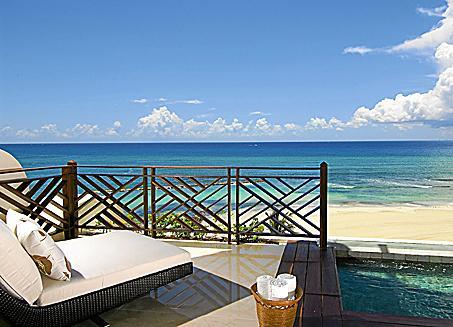
Riviera Maya has always been one of the favorite tourist destinations for Spaniards. But there are still hidden corners, lost islands and formidable lagoons that have not been discovered by mass tourism, where you can enjoy the authentic flavor of the Yucatán Peninsula.
One of the best jewels to visit currently are the ruins of Ichkabal, which opened to the public in January 2025, allowing for a peaceful stroll without the overcrowding of the famous Tulum ruins. Since January 2024, access to these archaeological sites has changed, with an increase in entrance fees, significantly reducing the number of visitors in Tulum.
The Mexican government decided to create the Jaguar National Park to better preserve the area and protect the fauna and flora, which now requires paying two fees: one to enter this park and another to see the Tulum archaeological sites, sparking criticism from local citizens.
Therefore, it is well worth traveling to Ichkabal, even if it means traveling 260 kilometers south from Tulum to explore this archaeological site, which is even older than Chichen Itzá, the legendary Mayan city and Mexico's most visited.
Its great advantage is that Ichkabal is located an hour away from Bacalar Lagoon —another natural paradise— allowing visitors to enjoy both wonders in the same day.
Additionally, now you can reach them with the new Tren Maya, connecting Tulum with Bacalar, and then hire a driver from there to access the ruins. This train —monitored and controlled by the Army— is Mexico's most important railway infrastructure and a major investment by the country's government to boost economic and tourist growth in southeastern Mexico.
If the traveler has time, it is also highly recommended to spend a couple of nights staying in the small and charming hotels around Bacalar Lagoon, which offer spectacular views of the crystal-clear waters.
Another option is to stay at one of the five luxury resorts of Bahía Príncipe by Soltour in the Tulum area, offering the all-inclusive option so that guests do not have to worry about anything. At the reception of these hotels, guests can also book various excursions, such as the one to the Ichkabal ruins.
This Mayan city is also known as the Mesoamerican Egypt due to the grandeur of its structures, with some pyramids over 40 meters high, larger than the Kukulcán Temple in Chichen Itzá.
The site is located in the middle of the tropical jungle, with remains dating back to 300 or 400 years before Christ, remaining hidden for many decades under the vast vegetation.
The ancient city was the political center and the most important city of the Mayans in the Yucatán Peninsula, accidentally discovered in 1995, but remained closed to the public for all this time due to its extensive size, making it difficult to protect.
Finally, it opened a year ago and offers free admission. Additionally, visitors can climb the numerous steps of the pyramids, providing a very authentic experience.
From there, travelers can head to Bacalar Lagoon -known as the seven-colored lagoon- with seven different shades of turquoise and blue-green, due to the varying water depths. In fact, there are three cenotes inside, whose waters overflowed and created a single lagoon.
Bacalar is one of the few water bodies on the surface of the Yucatán Peninsula, where its limestone soil does not allow surface water retention, resulting in underground currents and cenotes scattered throughout the region.
The best way to visit the lagoon is by taking a boat tour or sailing on a sailboat, where various water sports like kayaking or paddle surfing can also be enjoyed.
This location has several beach bars for dining by the shore, such as La Playita, offering shrimp tacos, shrimp aguachile, or grilled octopus, accompanied by a good margarita, their spectacular strawberry lemonade, or delicious mango smoothie.
CONTOY ISLAND, A SMALL PARADISE
Another hidden treasure to visit in the state of Quintana Roo is Contoy Island in the Caribbean Sea, a protected area with very few tourists, contrasting with the crowded Isla Mujeres. Contoy is a small paradise away from the hustle and bustle, allowing only 200 visitors per day to preserve its natural beauty.
Declared a National Park, this island boasts 98 plant species, 14 reptile species, and 173 bird species, as it is the most important nesting place for marine birds in the entire Caribbean region of Mexico.
Not only that. South of the island, between the warm waters of the Caribbean and the Gulf of Mexico, lies the Ixlaché reef, part of the largest reef barrier in Latin America and the second largest globally.
Contoy Island is reached by boat from Cancún, where visitors are advised to bring only the essentials, as sunscreen and even backpacks are not allowed. There are no restaurants on the island, but the boat crew prepares fresh grilled fish marinated with achiote in a covered area, a delightful treat.
On this island, there are also 10 turtle nesting sites for species like loggerhead, hawksbill, and green turtles, laying their eggs between June and November.
During these months, the beaches are monitored day and night to protect them from poaching and egg theft for human consumption. For this reason, Grupo Piñero, owner of the tour operator Soltour, established the Eco-Bahía Foundation in 1999 to preserve marine turtles.
This Foundation offers a program to care for the beach at the Bahía Príncipe Riviera Maya hotel, one of the most important nesting sites in Quintana Roo for green and loggerhead turtles, both endangered species.
The institution organizes various activities for hotel guests, such as releasing turtle hatchlings into the sea when they hatch from the eggs, along with numerous children's workshops to raise awareness about the environment.
Another adventure not to be missed in Riviera Maya is visiting one of the 10,000 cenotes scattered throughout the Yucatán Peninsula. These water wells can be open, semi-open, or fully underground, waiting to be discovered by swimming and diving with a wetsuit and a guide.
Twenty minutes from Tulum, you'll find Dos Palmas, a semi-open cenote ideal for swimming and snorkeling, home to a small Mayan community that still speaks their language. What makes this cenote interesting is the opportunity to experience the Temazcal ritual, a shamanic purification ritual physically, emotionally, and spiritually.
The ceremony takes place in small groups and minimal clothing, as it is a traditional steam bath used by indigenous peoples like the Mayans. The experience unfolds in a dome-shaped hut, symbolizing the womb of Mother Earth, where volcanic stones -referred to as grandmothers- are heated inside to generate steam.
Participants sit in a circle while the shaman introduces the hot stones and pours water with medicinal herbs.
During the 30-minute ritual, the shaman chants in Spanish in four rounds dedicated to fire and earth, water, wind, and spirit, while the participants endure the intense heat in the hut, sweating profusely, only to emerge completely purified.
This is another unique experience on the Riviera Maya, a destination that has been diversifying its tourism offerings for some time, becoming a place that offers much more than just sun and sand.
PRACTICAL GUIDE:
How to get there. World2Fly, Iberojet, and Air Europa have direct flights to Cancún.
Where to eat. Taboo Beach Club is a paradisiacal beach bar with live music in Tulum.
Where to stay. Bahia Principe Grand Tulum, part of the Soltour Group, is a luxury all-inclusive beachfront resort with three swimming pools and a children's water park.