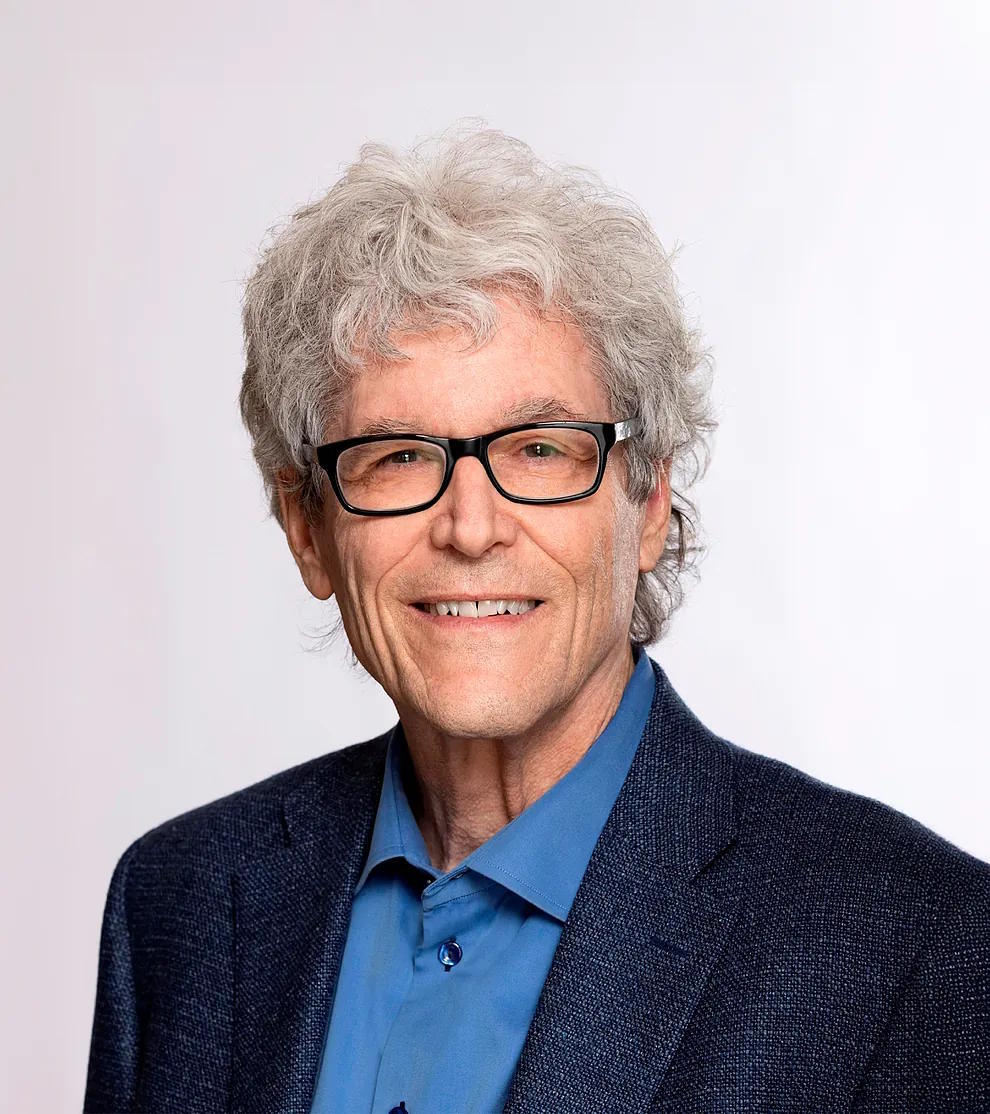
He is probably one of the men who holds the most secrets on the planet. The information he possesses may not be able to change the world, but any word that comes out of his mouth will surely cause a cataclysm in the global entertainment industry. Donald S. Passman delved into the study of laws after a failed career in music. He played the guitar in a college rock band, submitted a demo to a friend of his parents, a powerful music producer, and he said, "Don... Go to law school."
He has not stopped playing, but now he only does it on the domestic stage. "I realized it wasn't for me", he admits with laughter from Los Angeles, where he has lived since his family moved from Dallas, Texas when he was 12 years old. "I speak a little Spanish, living here almost requires it," he introduces himself, with an enviable Latino accent and a background that places him directly on the Abbey Road crosswalk. "Have you seen how good I look here?".
Passman is friendly and talkative, decisive and frenetic in speech. And that friendliness also permeates his writing. The superstar lawyer, who made Janet Jackson the highest-paid singer of her time in 1991 and took R.E.M. from independence in the late 80s to signing the biggest record deal in history eight years later, poured all his wisdom into a reference manual at the beginning of that decade, considered the Bible of the music industry, which is now arriving in Spain through Liburuak: Everything you need to know about the music business.
With an engaging language and even four itineraries - an "ultra-fast" route for the curious, a "fast" one for beginners, an "advanced" one for professionals, and one directly "for experts" - he explains over more than 700 pages what a record contract entails, what an artist should consider when choosing a manager, or how to set up a world tour. Ready to reveal all the secrets of a constantly changing world, and even shed some light on the uncertain future that the emergence of artificial intelligence in the creative industry brings, Passman sets only one red line in the conversation: "I don't talk about clients, neither present nor past".
Not even about Taylor Swift, for whom he fought the fierce battle that ended with the singer regaining the rights to all her songs. "All the music I've made, now belongs to me," she announced herself tearfully on her social media last spring. The only name her lawyer will mention throughout the 40-minute conversation will be Bad Bunny. He won't even reveal what music he listens to in private, you know, in case it causes a cataclysm.
The current edition of your book in Spanish is the eleventh. Did you imagine, when you wrote it in 1991, that it would reach this status as the industry's "Bible"?
Well, that was the idea [laughs]. My hope was that it would be. When I wrote it, there was only one relevant book about the music industry, and it was very difficult to read. I wanted to write something easy, without complex words, with many images and large text because musicians are guided by what they hear, not by what they see. My intention was to create something easy to digest for artists, who generally have little interest in business but for whom it is vital to be able to manage their own professional careers. That's how this guide was born. And now, I ask you: Did you find it too long? Intimidating, perhaps?
A "Bible" is never too long, I suppose. I took the "fast track" and I admit that, at times, I laughed a lot.
You bring me joy, as without humor, it would be nothing more than a textbook, right?
Was this edition the most complex to update?
Actually, it was the tenth, published in 2019, that marked the shift from physical media to streaming. That completely changed the music industry ecosystem. Before, music was always monetized by selling something. It could be sheet music, a player piano roll, a wax cylinder, and later, of course, a vinyl, a cassette, or a CD. But something was always sold. So, if I buy your album, it doesn't matter if I listen to it once, a thousand times, or never, you still receive the same amount of money as an artist. Now the system is completely different. It is based on how many times people listen to you, which imposes a completely different monetization model. It also completely changes the way music is consumed: before, a big hit would attract people to the record store, benefiting other artists. Since you were there, you would buy more vinyl. Streaming has the opposite effect. The more someone listens to me, the less they are listening to you. And I earn money based on how many listens I have compared to others, so the more I earn, the less you earn. It is the first time something like this has happened.
Is this the most brutal competitive environment that artists have ever faced throughout history?
"Brutal" is a complicated word. The scene has always been highly competitive, but in a different way. Certainly, this zero-sum game had never existed before. In that sense, yes, the competition is fierce, but on the other hand, the environment is also more democratic than ever because anyone can publish their music. Over 100,000 new songs are released every day. The million-dollar question is: how do you stand out among all that noise? How do you get people to notice you when there is so much product available?
You say: "Streaming has saved us from the jaws of despair." Has its emergence been more of a lifesaver or disruption, in retrospect?
It has represented both, but it has been more of a lifesaver. Until streaming arrived, the music industry had been in decline for 16 years.
But many artists and songwriters still complain that the monetization model harms them.
Well, justice depends on the observer; it is not a fixed point on the map. It pays better than in the CD era when sales were declining. Probably, an individual artist does not earn as much today as if they had sold 10 million physical units, but they earn much more than if the business had not improved. The real reason piracy exploded was that it provided users with the listening experience they were looking for: people wanted to hear a song without having to buy an album. They wanted to share it with their friends, and that was not possible in the CD world. Until the industry managed to recreate that experience in an environment where it could monetize it, the business did not recover.
Another recent major transformation is the impact of platforms like TikTok on defining an artist's success. Are algorithms more ruthless than record labels in shaping a career's future?
Well, they are ruthless in the sense that if you follow their rules, you will do great. And if not, you won't. They have no conscience, so to speak. Their only goal is to maximize user engagement. Digital service providers don't care about what people listen to; they just want their clicks.
And in this environment, what role do major record companies continue to play?
Ah, that is the big question in the industry today. Most successful artists nowadays have to start on their own, build their own fan base, and kickstart their careers. Once they achieve that, the question is: do they need the support of a record label? And my answer is based on evidence: to this day, no one has had an international superstar career without a multinational behind them. They have a lot of money to invest, international experience, a lot of information, contacts that can propel a career.
So, the music business as we know it is far from dying.
It may change someday, but that day has not yet come. Bad Bunny works with an independent label, okay, but his international takeoff has come hand in hand with a multinational distributor. A career like his requires a huge investment of money. If you are a niche artist, with few but very loyal followers, you probably don't need a record label. But if you want to be a global superstar, you have no choice.
You start your book with a warning: "Use common sense and be careful!" Do artists generally lack common sense?
Some do, yes, of course, even some quite famous ones. The problem, in general, is that artists are not interested in the business side of their careers. They see it as a necessary evil but don't pay attention to it. What I have been trying to convey for over 30 years, through this book and through practicing law, is: pay attention to your own business because no one else will take care of it with the same care and attention as you. And surround yourself with trustworthy people to take care of you, your career, and allow you to focus on the creative side without worries.
You claim that artists have more power today than ever before. Is it precisely due to this greater awareness of the importance of the business side of their career?
In part, yes, but I think it is also due to how things work now. New artists have to generate interest in themselves. And once they gain followers and engage on social media, suddenly, record companies come offering money and conditions. That gives the artist the power to access contracts they would never have gotten before. Although I hope to have also contributed to that empowerment, of course [laughs].
In recent years, we have seen multimillion-dollar sales of artists' catalogs, from Bruce Springsteen to Bob Dylan. [Hours after this conversation, Britney Spears signed a "historic deal" for the rights to her entire work]. You make it clear in your book that you are not very favorable to this type of transactions. You even say: "If your songs are timeless classics, selling them is like parting with the Mona Lisa."
The reason I don't like sales is that historically, everyone who has sold their songs has regretted it. It's a matter of numbers. You sell your songs for a huge amount of money. Then you pay your expenses and taxes. How much do you have left? If you invest it, will you earn more than what the catalog provides? And even if you earn the same, does it have the same growth potential? Usually not. Many times, these are artists who basically live off the royalties of their repertoire. So, how will they live after the sale? It only makes sense in certain situations. An older artist may want to sell because their family doesn't know what to do with the catalog, or because they have no relationship with it, or perhaps they need to sell it to pay inheritance tax, for example. It may make sense for some older artists, but in general, for young ones, I think it's a mistake.
And shifting from selling to buying, you managed the tough battle for Taylor Swift's catalog rights, which she finally regained last spring. Surely, it has been the most high-profile case of your career. Has it also been the most complex?
I can't talk about my clients, I'm sorry.
I understand. Can I ask then about the historic deals you secured in the 90s for Janet Jackson or R.E.M.?
I'm sorry, I don't talk about my clients, present or past [shrugs with a smile].
Let's talk about the future, or the present. Artificial intelligence is already the next disruption in the music business. Is it foreseeable to have regulation in the short or medium term, or will it continue to be the Wild West?
It seems to me that for a while both approaches will be correct. The issue with regulations is that the tech industry has much more money than the music industry, so it exerts enormous pressure to prevent legislation that restricts its interests too much. Like digital service providers, AI companies just want people to use their product, pay as little as possible for it, and have easy access to it. So, it is expected to be a very long process. There have been some timid but not very effective advances so far, and the lawsuits have not necessarily favored copyright owners, which is concerning because ultimately, they are using copyrighted material to train these systems. It's like wanting to set up a furniture factory but expecting to get the wood for free, even if it's mine. Ridiculous, right? Agreements are starting to be signed between major record labels, publishers, and AI companies, still experimental, small, and confidential. But things are going to get interesting in the coming years.
I understand that you believe more in a 'de facto' regulation through commercial agreements than in a large public regulation through laws.
Well, I think both will develop, but these lobbies are so powerful that I am concerned that legislation may end up harming copyright owners. In the UK, for example, there is pending legislation that allows the training of these technologies with copyrighted material unless explicit exclusion is requested. The problem, of course, is that the request may come after they have already absorbed all your material. We are not in a good place right now.
You describe music as the "canary in the coal mine" of the entertainment industry. How is the health of that canary?
I think it's much better than six or seven years ago when it really needed life support. It's quite good. Not as good as 20 or 25 years ago either. It has had a virus around for some time, so it has to be careful if it doesn't want to get sick.
What change would you like to see in the music industry someday?
We need to strengthen artists' rights to prevent anyone from using their voices, names, and image. I would like to see AI regulated in some way. The idea that technology can be trained for free with copyrighted materials is particularly concerning to me. They should pay for it, but no one has found the formula, and we are all groping around trying to figure it out.
Are you optimistic?
Look, music will never disappear. It has existed since time immemorial, it is something integrated into our genetics, into our soul. But we need an industry that allows creative people to make a living. If it is destroyed, musicians will die with it.
You started in law after a frustrated career as a guitarist. How do you handle that other facet?
I assumed it wasn't for me. Now I only play with family, with the kids, you know...
What music is on your playlist?
It's really eclectic. There is a lot of old disco from my youth, a lot of classical music, some bluegrass, some contemporary artists...
You're not going to give me any names, right?
[Smiles and winks] I'd prefer not to.