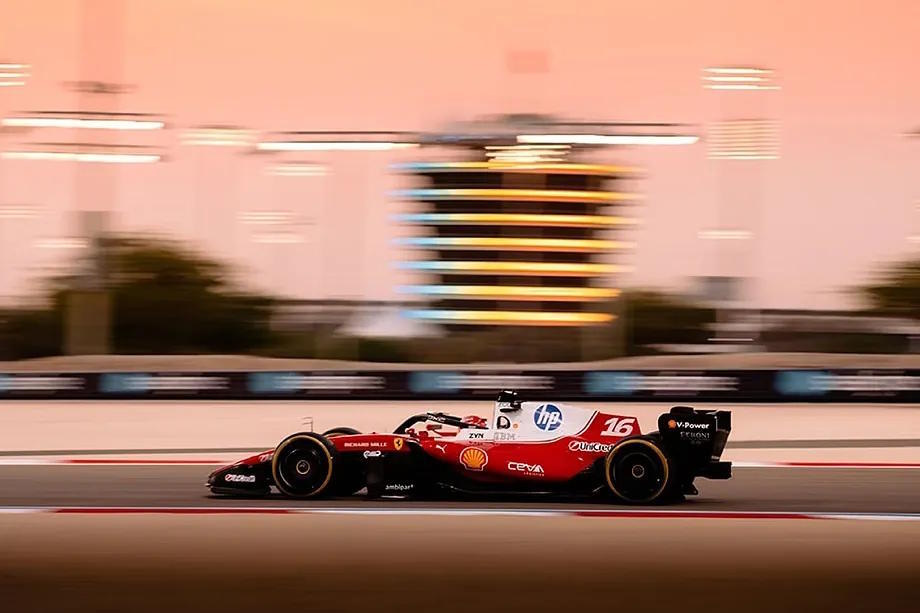
Television audiences grew by 21% in 2025 compared to the previous year, and profits for Liberty Media increased by 14%, reaching nearly $4 billion. On such compelling data is based the fantastic health, financial, and social status of F1, the pinnacle of motor sports, which kicks off again this weekend in Melbourne. The 2026 World Championship will be one of regulatory revolution, but also of questions and contradictions. A decisive moment where F1 threatens to undermine its very essence. As some of the most authoritative voices in this sport have pointed out, the relentless pursuit of limits on the asphalt could be a thing of the past.
"The new rules prioritize energy management, of course. From now on, we will have to find the best areas of the track to distribute it and the most efficient points to collect it. And of course, we could all suffer serious problems at Albert Park, Jeddah, or Monza," explains an engineer from McLaren to EL MUNDO, the champion of the last two Constructors' Championships. Their uncertainty stems from F1's decision to deepen the transition to electric motors, whose batteries represent 50% of the car's power, almost in the same proportion as the internal combustion part. With the current distribution, the cars will lack power in Melbourne, the second circuit in the World Championship where energy recovery is most challenging.
During the six official test days in Bahrain, scenes of discouragement unfolded. On the straights, many drivers had to lift off the accelerator to charge the batteries. They also had to abruptly slow down in the corners until engaging first gear. "In Australia, we could see ridiculous situations, where a car that is charging its battery crosses paths with another that is delivering it at full throttle," adds the employee from the Woking team. No trace of the on-track battles that F1 has boasted about. Only mere overtaking, with speed differences as vast as they are dangerous.
"If strange episodes occur in the early races, the FIA will intervene to introduce some adjustments to the regulations. In reality, it would be a simple software to vary the power distribution," explains a former member of the International Federation to this newspaper. Without pointing fingers at Nikolas Tombazis or Pat Symonds, two of the architects of the new regulations, this expert insists that the text was conceived four years ago "solely based on simulations." The current regulations do not allow the MGU-K, the system that recovers kinetic energy during braking, to exceed 250 kW, so a short-term solution would be to open the tap for the electric motor to operate at full capacity, with 350 kW. Another more drastic measure, although hardly applicable due to its political implications, would be to increase the fuel flow.
If in recent seasons drivers had to constantly adjust buttons on their steering wheels, in 2026 even more adjustments are expected between corners. To the point that driving errors will shift from being a possibility to a certainty. A few weeks ago, Lewis Hamilton described the current landscape as "incredibly complex." "I don't think any fan understands it. The other day I was in a meeting, and they explained it to us. It's as if you need a university degree to understand it all," illustrated the Briton. His verdict was not much more flattering than that of Max Verstappen. "The car feels more like a Formula E on steroids. As a pure driver, I enjoy driving flat out. And right now, you can't drive like that," added the four-time champion.
Thus, drivers will not only have to go against their own intuition, lifting much earlier instead of pushing the braking limit in each corner. They will also face critical moments with the new overtaking mode, which will require several laps to reach full charge but will leave them in a very vulnerable position just a few meters later. These factors, as Hamilton referred to, jeopardize the spectacle, becoming less intuitive for the audience and more dependent on engineers.
"We come from a 2025 World Championship that had the lowest average quality in recent times. There was a three-way fight, but quite unrealistic, with too many car processions and little excitement. So, this year will be key to defining the guidelines for the future," adds the former spokesperson of the organization chaired by Mohammed ben Sulayem. For now, we all must get used to a new concept of qualifying sessions and race starts. From now on, the pole sitter could be the driver who knows how to accumulate more energy to unleash it on the straights, rather than the one who is faster in the corners. Similarly, the grid procedure seems much more complex. This was evident during the tests, where Ferrari showed that they knew better than anyone how to get their turbo working earlier. An astonishing solution that allowed Hamilton to gain four positions in one go.
Throughout its history, the best F1 teams have been distinguished by their struggle to find the gray areas of the regulations. In 2013, for example, Mercedes was caught conducting illegal tests with tires that would ultimately tilt their tyrannical dominance in the hybrid era. This winter, the Silver Arrows have also found a way to increase the compression ratio of their engines without violating the regulations, giving them an advantage of about 15 HP and greater fuel efficiency. Absolutely game-changing factors in the current context. Similarly, Ferrari seems to have hit the mark with their rear wing design that makes them fly on the straights.
"I no longer hear those who said that these cars would be much slower. I even believe that soon we will also lower the lap times from 2025," predicts the McLaren employee, with an eye on the 1:31:992, the best lap of the pre-season in Bahrain, set by Charles Leclerc, just 272 milliseconds off Verstappen's 2022 mark when the ground effect era began. However, these achievements clash with another more uncomfortable reality. The top four teams (Mercedes, Ferrari, Red Bull, and McLaren) have widened their lead over the rest. "We are in a very changing environment, but it is true that the teams that could lead the midfield, like Alpine or Haas, now seem further away. Have we wanted to change things so that today everything remains the same or worse?" hints the former FIA employee.
The answer to this question will begin to emerge at Albert Park, although it will be necessary to wait until June, with the traditional arrival in Europe, to establish definitive guidelines. "I know that the drivers are spending a lot of time in the simulator to define their new role in the car. We are facing a new era, but I can certainly understand those who argue that the races have lost their soul," concludes the McLaren man.