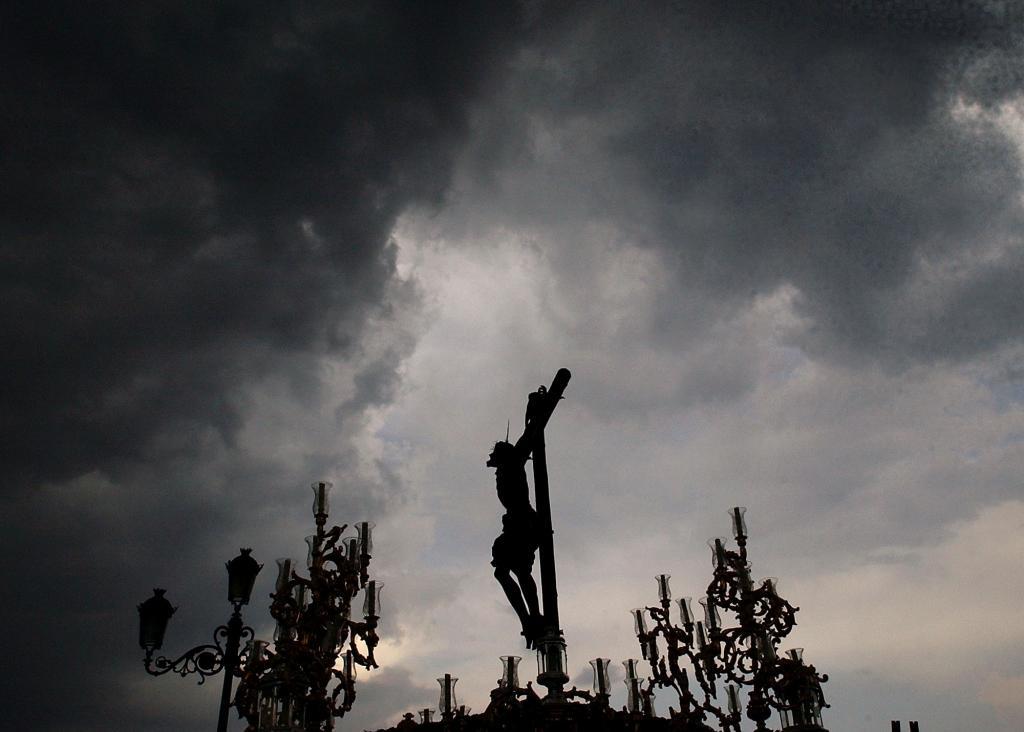
t may not be Spain's oldest Holy Week (that title belongs to Medina del Campo in Valladolid, dating back to 1411, although the first brotherhood was established in Toledo in 1085 by King Alfonso VI and El Cid Campeador), but it is certainly the most emblematic and popular. It is highly recommended to attend at least once in a lifetime. We are talking about Seville's Easter, which gathers locals and visitors alike from Palm Sunday to Easter Sunday to enjoy intense days filled with processions, early morning events, flamenco songs, Stations of the Cross, abundant devotion, incense aromas—and spinach with chickpeas, honey flowers, and freshly made torrijas—around every corner.
However, it is easy to get lost amidst so much activity and fervor during this celebration declared as a International Tourist Interest Festivity in 1980. Therefore, here is a complete itinerary to make the most of your stay, whether you are a beginner in these matters or a seasoned attendee eager to discover more.
Let's start at the beginning, with the first blood brotherhoods that emerged in Seville during the Middle Ages to carry out public acts of piety related to the passion, death, and resurrection of Christ. Documents from 1340 describe them, becoming more established after the Council of Trent (1545-1563) and the Counter-Reformation. Trade with America only accentuated the city's power, and in 1604, Archbishop Fernando Niño de Guevara decided to regulate the processions with the "cardinal's decree," which established the basic rules to put an end to the irreverent attitudes that, in his opinion, were proliferating during these days.
Many of these rules are still in force, such as the official route (which all processions must follow) ending at the Cathedral. The Baroque period would shine brightly during this time by focusing on sacred art. In 1923, the General Council of Brotherhoods and Fraternities was founded, which continues to coordinate all activities during Holy Week.
The celebration kicks off on Friday of Sorrows (March 27), although the actual start takes place on Palm Sunday, when Sevillians (and the first tourists arriving) dress in their best to visit churches in the morning and witness the first processions in the evening, when there is the highest influx of people. Among the most prominent on that day are the processions of the brotherhoods of Jesús Desposado, La Cena, San Roque, or La Paz, the first to depart and one of the largest, with 2,500 penitents. The more than 70 processions that crisscross the city from north to south and from east to west continue each day following their scheduled times and routes until six in the morning, with the famous madrugá of Maundy Thursday standing out as the most emotional moment of these days.
Then, iconic brotherhoods such as Gran Poder, La Macarena, Esperanza de Triana, El Silencio, El Calvario, or Los Gitanos take to the streets. Mario Niebla del Toro knows all about them, a journalist and protocol expert who is familiar with the best-kept secrets of Seville in general and its Holy Week in particular. Not in vain, he is the chosen guide by hotels like Hesperia to lead guests who sign up for his experience to live the Passion firsthand. "The goal is to discover the true essence of the city not as a tourist but as a Sevillian," he points out. To achieve this, he takes them to the hotel's private balcony facing the Cathedral to watch the processions and organizes a guided tour to the Museum of Sacred Art, which we will discuss later.
This proposal is part of the chain's 'Hesperiential' program, which allows guests to enjoy local plans in the city and at the hotel itself, offering typical Easter dishes in its Barbarita restaurant such as stews, torrijas, or honey roses. Niebla del Toro also encourages clients to witness the procession of Christ of Atonement (El Cachorro) over the Triana bridge on Good Friday, another must-see, or those of La Soledad and the Holy Burial on Holy Saturday, when their 800 brothers do not wear tunics but formal attire. On Easter Sunday, do not miss the Resurrected Christ's journey, the grand finale.
Yes, there are also child penitents who participate in the first part of the processions, from 4:00 to 8:00 p.m., when they are given candies and holy cards. It is the best time for them to witness the floats without crowds, especially if you want to avoid the most congested areas: Sierpes street, Campana square, El Salvador or San Francisco squares, and the surroundings of the Cathedral. Children usually enjoy the processions with music bands that are less solemn. Good options are those of Santa Marta or La Borriquita, composed of minors under 14 years old symbolizing Jesus' entry into Jerusalem. The adult version arrives in the late afternoon with the brotherhood of El Amor, dating back to the 16th century.
The sculptural images in the processions turn the streets into an open-air museum, as many bear the signature of great Baroque Andalusian sculptors such as Juan de Mesa, Alonso Cano, Francisco Antonio Ruiz Gijón, Pedro Roldán (and his daughter Luisa, la Roldana), or Juan Martínez Montañés. Their works include supreme examples of iconographic realism like the Christs of Gran Poder, El Cachorro, La Misericordia, Las Tres Caídas, El Buen Ladrón, or the Yacente of the Holy Burial brotherhood, as well as the four evangelists of the Museum's brotherhood or the figures of the Descent from the Quinta Angustia brotherhood. There are also key anonymous pieces like the Esperanza Macarena.
Many of these treasures are adorned by masters like Francisco Carrera Iglesias, known as Paquili, president of the Guild Association of Sacred Art of Seville and Gold Medal for Fine Arts. His workshop on San Isidoro street, in the city center, is a journey through almost 50 years of history of artisanal embroidery among backdrops, needles, and spools of gold threads. He and his team (seven people) turn canopies (the canopy under which the Virgin stands on the floats), mantles, and skirts into true works of art "combining traditional techniques with innovation," says Paquili as he shows a 18th-century skirt he is restoring, just as he did with the mantles of the Cathedral's Custody.
The expert draws not only on his almost ancestral knowledge but also on 3D technology to create the base of his pieces before hand-embroidering them. The Esperanza de Triana and La Macarena are not his only clients. He has also worked for firms such as Loewe, Balenciaga, Chanel, Dior, and DelPozo, the Paris Opera, for which he has designed various costumes, and the Teatro Real in Madrid, whose Royal Box is decorated with his fabrics.
We conclude the tour with a visit to the new Museum of Sacred Art, located among the archaeological remains of San Jorge Castle, at the entrance to the Triana neighborhood. There, treasures such as the old Macarena canopy from 1940, the canopy of the Virgen de los Desamparados, a candelabra from the float of the Queen of All Saints, and the diadem of the Virgen de la Estrella, a unique example of Baroque art created by Luisa Roldán, are on display. Such a center was necessary in a metropolis like this, where the history of sacred art is written in capital letters. "It's not only part of Holy Week, known throughout the world, but it's also a testament to the historical, cultural, and spiritual impact of our city," explains Ramón Vergara, a curator specializing in high-quality Spanish craftsmanship.