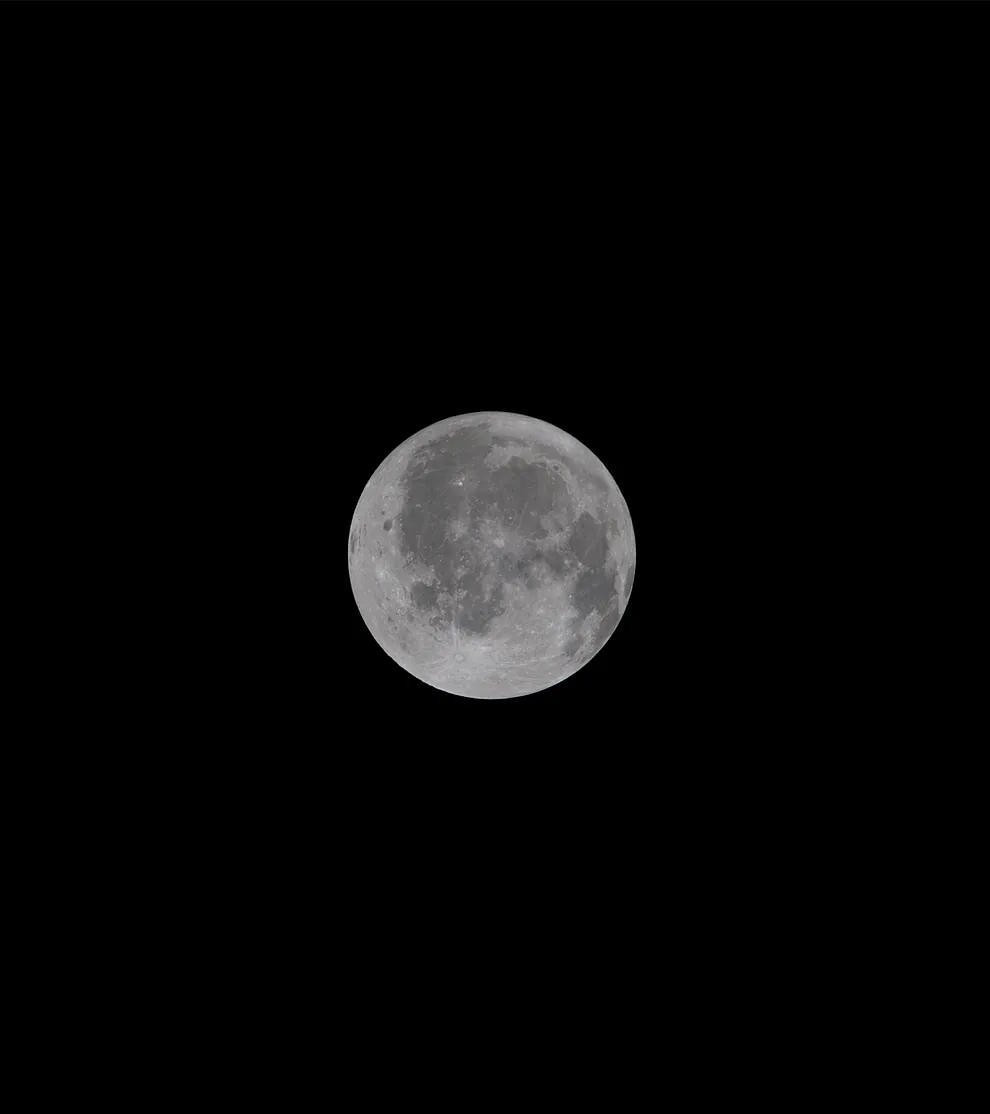
Planetary geologist Jesús Martínez-Frías (Madrid, 1960) has the Apollo 11 moon landing engraved in his memory: "I remember being with my parents, my brother, and some neighbors in front of the huge black and white television. Although it may seem strange, at that early age I already loved everything related to nature and the universe," recalls this expert in Planetary Geology and Astrobiology at the Institute of Geosciences (IGEO/CSIC-UCM).
The man's arrival on the Moon in 1969, he says, "undoubtedly" marked him, and along with the influence of works by Jules Verne and other authors, as well as the programs Cosmos by Carl Sagan, The Man and the Earth by Félix Rodríguez de la Fuente, and those of Jacques Cousteau, his career headed towards planetary geology and astrobiology.
What he could not imagine back then is that he would end up being part of the most important robotic exploration missions of our era by NASA and the European Space Agency (ESA), such as the Martian robots Curiosity,Perseverance, and ExoMars.
The president of the Spanish Network of Planetology and Astrobiology is following with "great anticipation and enthusiasm" the Artemis 2 mission, which this Monday (early Tuesday in Spain) will have its big day with the arrival of the Orion spacecraft at the Moon, which will fly over at a distance of 7,400 kilometers.
He watched the launch from a small town between the Gredos and Béjar mountain ranges, where he enjoyed Easter, as he recounts during an interview.
This Monday, the astronauts of Artemis 2 finally arrive at the Moon. They are going to fly over the far side, and it is said that they may see geological features that no human has seen yet, although the rocks brought to Earth in 2024 by the Chinese mission Chang'e-6, the first ones obtained from this area of the satellite, are allowing for its study. What stands out about the far side?
On Earth, we have the continental crust and the oceanic crust. On Mars, we have the Northern Hemisphere, smoother, and the Southern Hemisphere, rougher and more cratered, and on the Moon, we have the near side and the far side. This is known as lithospheric dichotomy: a curious global geological feature common on the Moon, Earth, and Mars. Geologically, the far side of the Moon is extraordinary and worthy of in-depth study, as it poses many geological questions and issues to investigate. One of them is the practical absence of the large maria, which are the large dark basaltic lava basins that are even visible to the naked eye, formed by gigantic impacts. Other characteristics of the far side include its greater thickness (between 15 and 20 kilometers), its petrology and mineralogical associations formed at apparently colder temperatures, its antiquity, and its differences in radioactive elements compared to the near side.
What value will those high-resolution photos of the far side taken by the astronauts from about 7,000 kilometers away have for scientists?
In this initial phase of Artemis 2, lunar geology aspects are secondary to other topics in space science and engineering, including space medicine, but they are no less relevant. It will be in future missions, with on-site work on the lunar surface, that planetary geology will manifest its full strength and importance.
Artemis 2 has initiated the manned lunar race with China, which aims to send astronauts in 2030. The U.S. will not send them before 2028, but will begin launching components for the lunar base announced two weeks ago. The Asian giant also announced some time ago a lunar base it will build with Russia. How do you view this race?
China is undoubtedly a space superpower, and anything can be expected as they are rapidly advancing in their manned mission programs and projects, both related to the Moon and Mars. However, currently, the U.S. has not only confirmed, with the Apollo program and now Artemis, that it leads the international space race, but also possesses crucial scientific and technical expertise.
Both powers aim to go to the lunar south pole, where it is believed there is a lot of water and helium-3. What is known specifically about the resources in that area?
Lunar resources are very important at different levels: scientific, habitability, economic, and geostrategic. Science can be conducted on the Moon, studying its materials, processes, and evolution; science towards Earth, as it holds fundamental keys to understanding our origins and resources, such as helium-3 and rare earth elements, which could be vital for our future sustainability; science towards space, including astronomy, radiation, and monitoring of potential objects and their impact hazards, and science towards Mars, as an intermediate platform towards the red planet for the development of various scientific and engineering activities, including space medicine. The south pole, the huge impact basin of Aitken, and other subsequent craters, like Shackleton, have ideal conditions for establishing a base.
What advantages does the south pole offer for establishing human bases?
Firstly, the luminosity (up to over 80% in some areas) throughout the year, which facilitates not needing additional energy for work. There is ice of various origins (from the Moon itself and comets), evidenced by previous missions, as well as from other space agencies. Ice (which is a mineral) is a natural geological resource for consumption, extraction of oxygen for breathing, and hydrogen and oxygen as future rocket fuel. Additionally, geologically, this area is a natural laboratory for studying aspects of geomorphology, mineralogy, petrology, and lunar geochemistry, among many other aspects. The use of regolith for plant cultivation and food, as well as the extraction of strategic elements, is undoubtedly an essential factor, as is education itself. In the UNESCO Global Geopark of Lanzarote, we have been developing science projects and astronaut training on these topics.
Do you have an estimate of the amount of water that may be present at the south pole? Is its utilization viable?
Approximately 5.6% of water by mass was detected in the ejected regolith of the Cabeus crater. This indicates that Cabeus could have between 20 and 50 million tons up to one meter deep, and Shackleton, between one and four million tons. Detailed maps already exist on the quantity and distribution of ice on the Moon. In my opinion, its extraction and utilization will not be easy, but I believe that gradually, we will develop technologies that make it possible. That's why it is important for us to be there and experiment from there.
There is also interest in helium-3, as it is a potential fuel for nuclear fusion and, therefore, for generating clean and abundant energy, almost unlimited.
I consider the topic of helium-3 very relevant, but its geological and industrial utilization, if ultimately viable, will be more towards the future, probably within decades. Estimates indicate that there could be between 600,000 and 2.5 million tons of helium-3 trapped in lunar regolith, but its low concentration requires processing millions of tons of regolith per year for extraction. With an average concentration of helium-3 in regolith of 10 ppb (parts per billion), approximately five million tons of regolith would be needed to extract 33kg of helium-3. Therefore, I believe that geological and engineering work is currently only theoretical. We will need a more established presence on the Moon to carry out its extraction and use.
Do you consider the south pole to be the most interesting area for a lunar base, or do you think there are others?
Yes, based on what we currently know, I believe it is the best area. As our geological knowledge advances, we will likely find other areas important for more specific reasons and not in a generic sense.
There is great interest in obtaining certain metals and rare earth elements necessary for electronic devices. Are any of the most valued elements by the tech industry found on the Moon?
Yes, the Moon holds significant resources of strategic elements and minerals. I wrote my first article on lunar resources in 1998 and in this newspaper, on our return, in 1999. Regarding rare earth elements, in the basaltic maria, there are KREEP basalts, named for their content of potassium, rare earth elements, and phosphorus. If we could harness them in the future, we would not have to deplete our own planet, polluting oceans, ecosystems, the atmosphere, aquifers, etc. However, I see this also as a future prospect as it requires a geological and extractive industry, although I do not rule out that we may achieve it. It would be very positive for Earth's sustainability and future generations.
The Moon could serve as the station or intermediate point to launch missions to Mars (where they would be supplied with fuel developed on the Moon), but also to asteroids to exploit their minerals. Many companies are trying to develop technology to achieve this. How does a planetary geologist like yourself view space mining plans?
The Moon is a crucial intermediate platform towards Mars and will be even more so in the future. From that perspective, space mining is a term not quite fitting for the current phase we are in. I would speak of ISRU (in-situ resource utilization), which is the term used in the current state. More than mining, as we understand it on Earth, it would be about having basic resources (which are geological resources) to maintain and supplement the needs of a small lunar base, using regolith to build launch and landing pads, roads, radiation shields, greenhouses, etc. It may seem very modest, but it would save costs by avoiding transporting materials from Earth, as we would already have them there.
On March 9, a Chinese team published a study in Nature Astronomy proposing the areas they considered most suitable for a Chinese manned mission, all in the Rimae Bode region, located in the central part of the near side of the Moon, at the boundary between Mare Vaporum (Sea of Vapors) and the highlands. What do you think of that choice?
The Highlands are still largely unknown to us, and having a different lunar geodiversity allows us to delve into other topics. "The Moon is a world" still to be fully discovered in all its magnitude. At the current moment, I lean towards the Aitken region, but as a planetary geologist, I would like to understand and know our entire satellite.