Among acacias, baobabs, and shea trees, in the arid plain of the African savannah - except during the rainy season when it turns intense green - lies a small village of adobe huts with thatched roofs: Gando. It is about 200 kilometers from the capital of Burkina Faso, Ouagadougou. But in that rural region, where ancestral customs mixed with Muslim beliefs and animist rituals are still maintained, just 15 kilometers represent an odyssey: that is the distance separating Gando from the nearest city, Tenkodogo, and the distance children had to walk to the only school in the area. Over four hours on foot, one way. But today, if you search for Gando on Google Maps, the first thing that appears is its primary school, a symbol of new African architecture: simple and modern, with adobe bricks and a wavy roof that is not a whim but the best design to harness the wind and geothermal energies.
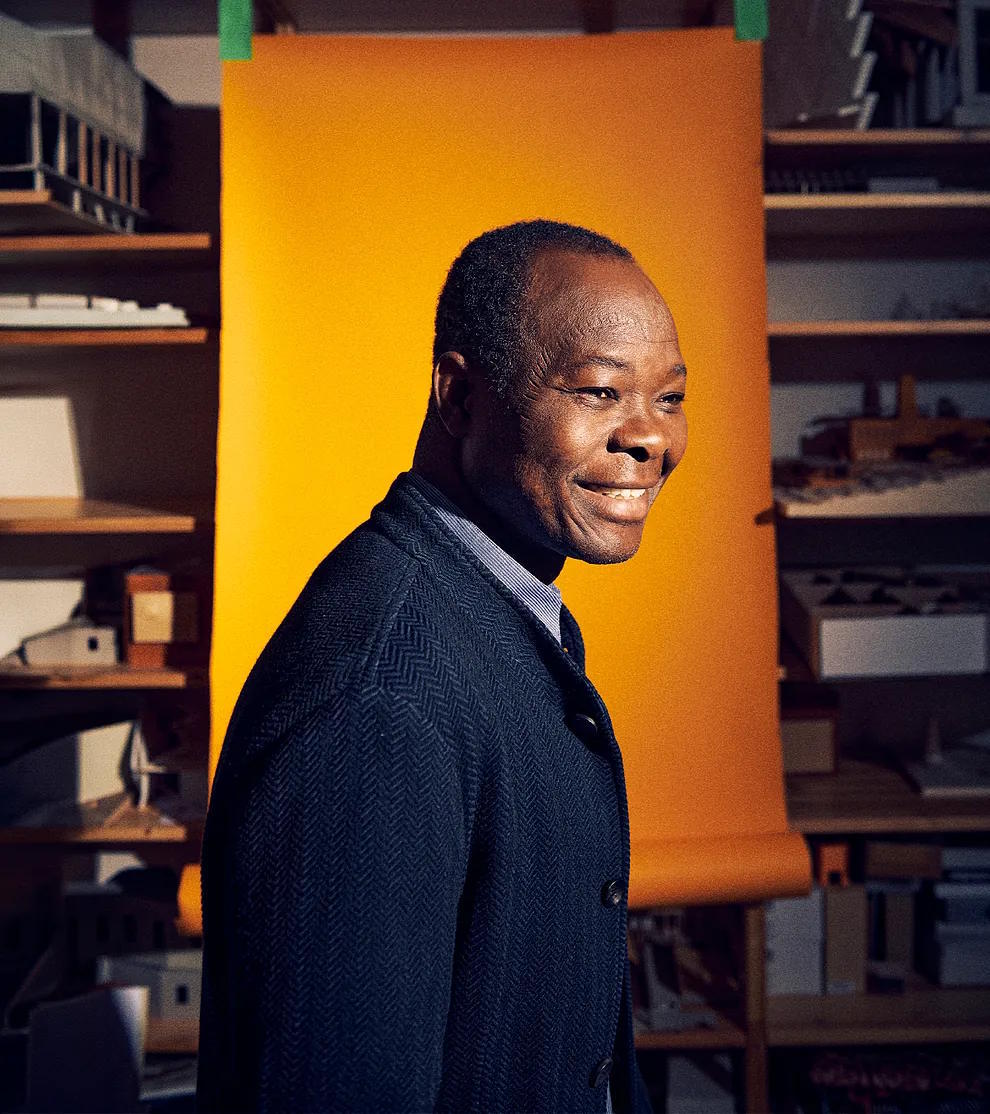
That school was the first work of Francis Keré (Gando, 1965), the first African - and so far only - to win a Pritzker Prize, the Nobel of architecture. When he was seven years old, his father, the village chief, decided to send him to school to learn to read and write. "So he would have someone who could read him the letters that arrived from the government," Keré recounts from his studio in Berlin. "It was very hard to leave my home at that age. They sent me to a foster family so I wouldn't have to walk eight hours every day...," he recalls. This is how the career of one of the best contemporary architects begins: with a school. And this is how his delightful book Building Stories (Taschen) begins, compiling his main works, from a clinic in Léo (Burkina) to the Serpentine Pavilion in London or the future Museum of Art in Las Vegas. His latest milestone: designing the grand Biblioteca dos Saberes in Rio de Janeiro. But Keré's true essence is in Burkina Faso, in its landscape and its people, even though it is a complex destination.
Since its independence, the country has experienced nine coups (an unsuccessful attempt occurred earlier this January) and the Ministry of Foreign Affairs, like most EU countries, strongly advises against traveling (there isn't even a Spanish embassy, it's in neighboring Mali) due to high political instability, terrorist threats, and the risk of kidnappings. Not to mention violence against women, forced marriages, and one of the highest rates of polygamy in the world (around 36%).
"Africa will only truly develop if we put women at the center, our future depends on taking the female condition seriously, otherwise we will fail," defends Keré, who when building a house for his mother designed a home specifically tailored to women's needs. With his architecture, he is redrawing a new country, a new continent. He does it from Berlin, the city where he studied, and from his office in Burkina, which he has never completely abandoned.