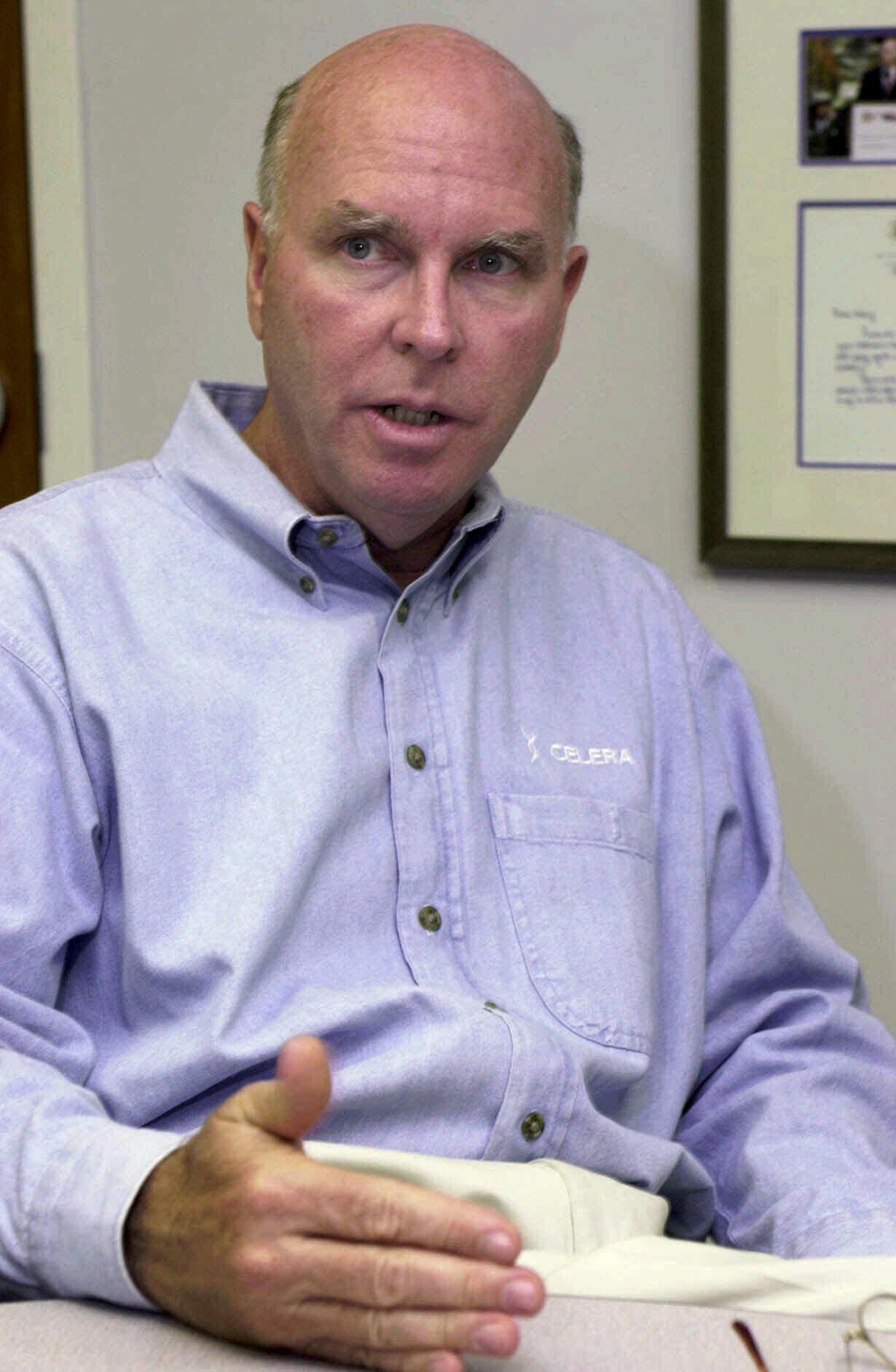
American scientist Craig Venter, a global pioneer in genomics and one of the main drivers of the complete sequencing of the human genome, has passed away in San Diego (United States) at the age of 79 after complications from cancer he had recently been diagnosed with.
This was confirmed by the J. Craig Venter Institute (JCVI), the non-profit organization founded and still led by the American scientist, in a statement highlighting his visionary nature. "His work helped define modern genomics and drove the field of synthetic biology. He promoted scientific and technological change by creating interdisciplinary teams, fostering bold ideas and faster methods, and insisting that discoveries must have a real impact on the world. He was also a staunch advocate for solid federal funding for science and collaborations that accelerate progress between government, academia, and industry," the statement reads.
The researcher was awarded the Prince of Asturias Award for Scientific and Technical Research in 2001, along with other pioneers of the human genome (John Sulston, Francis Collins, Hamilton Smith, and Jean Weissenbach), in recognition of his fundamental role in sequencing and mapping the human genome, leading private research through Celera Genomics.
However, his figure has also been controversial and often surrounded by controversy.
"He was undoubtedly an exceptional scientist," summarizes Jose Tubío, a scientist at the Center for Research in Molecular Medicine and Chronic Diseases (CiMUS) at the University of Santiago de Compostela (USC), "but he also had a somewhat bad reputation in the field. Some called him Darth Venter" for issues such as his intention to patent genes.
Tubío, who co-authored an article with Venter on the genome of the louse, always recommends his students his work 'A Life Decoded,' "a precious work that explains, gene by gene, what genetics entails.
According to Lluis Montoliu, Researcher at the National Center for Biotechnology (CNB-CSIC) and at CIBERER-ISCIII, Venter was "one of the most influential, vehement, aggressive, and ambitious scientists of our time. Surely an unrepeatable personality who deserves to be remembered not for his frequent personal stances, but for his contributions," he stated in remarks to SMC Spain.
"The race to obtain the human genome in 2001 has been described as a battle between the public project, which began in 1988, led first by James Watson (Cold Spring Harbor Laboratory) and then by Francis Collins (NIH), in collaboration with the Sanger Institute in Cambridge and many other laboratories, and the private project, led by the company Celera Genomics, founded by Craig Venter in 1998. In reality, there was no such battle, and it was more of a collaboration than a competition."
Montoliu continues, "Venter developed the DNA sequencing method called "shot-gun," based on breaking down DNA molecules into numerous small, easily sequenced fragments, which were then assembled in the correct sequence. But for this, he needed external references, a map, a well-established physical map that was provided by the public project." In other words, both projects needed each other. "The mapping allowed knowing where to place the DNA fragments that Celera and Craig Venter were sequencing. And the numerous fragments produced by these allowed the public project to also complete the genome. The result was a dual publication in February 2001. Craig Venter published his "private" genome in the journal Science, and the public project of the human genome was reported in the journal Nature."
"The scientific community and society in general benefited from this apparent struggle that turned out to be more of an effective collaboration, mutual aid, although initially reluctant, face to face. But even the proudest and most arrogant of scientists, like Venter, who wanted to outdo and surpass the public human genome project, crushing it with his state-of-the-art machines and massive sequencing applications, had to eventually acknowledge that without the general map they had built (and freely shared), the public genome project could not have completed the puzzle, could not have placed their millions of small DNA fragments in the correct place. Unity is strength."