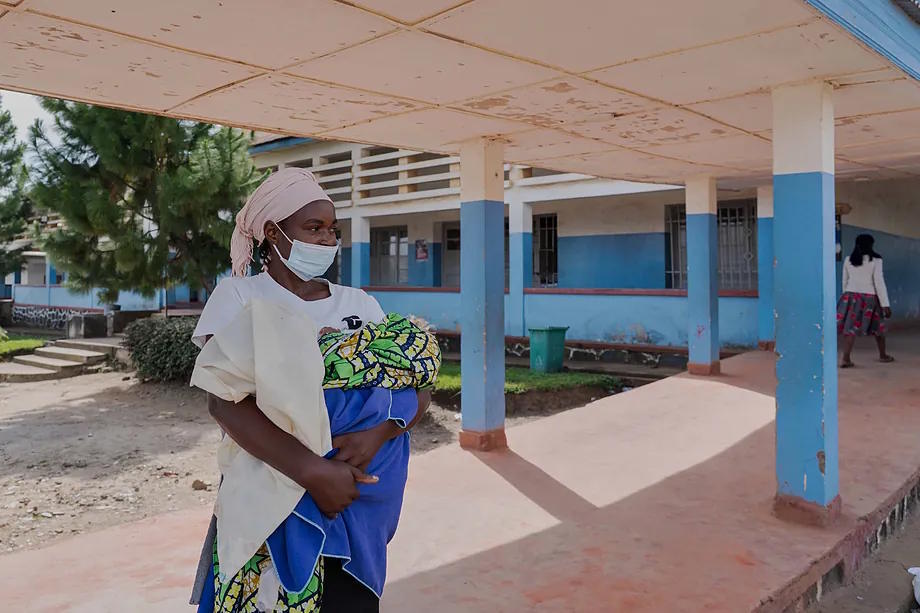
The European Centre for Disease Prevention and Control (ECDC) is sending experts to support the response to the Ebola outbreak occurring in the Democratic Republic of the Congo (DRC).
ECDC Director, Pamela Rendi-Wagner, met with Jean Kaseya, Director General of the Africa Centres for Disease Control and Prevention, to discuss the current situation and ongoing measures. They agreed on collaboration details, and ECDC will promptly send its experts to the region.
As a first step, ECDC will immediately send an expert from the EU Health Task Force to the Africa CDC headquarters to support coordination and operational planning. Simultaneously, ECDC is in discussions with the EU Directorate-General for Civil Protection and Humanitarian Aid Operations and the Global Outbreak Alert and Response Network about the possible deployment of additional experts as the situation evolves, for example, in infection prevention, epidemiology, surveillance, and risk communication to support response activities in the DRC and Uganda.
As of May 16, 2026, 246 suspected cases and 80 suspected deaths have been reported in at least three health zones in the Ituri province, DRC. Two cases with travel history from the DRC have also been reported in Uganda.
There remains significant uncertainty regarding the extent of transmission, and the outbreak could be larger than currently detected. Response measures are further complicated by insecurity and humanitarian challenges in the affected areas, as well as the fact that the outbreak is caused by the Bundibugyo virus, for which there are currently no authorized vaccines or specific treatments.
Daniela Manno, Adjunct Clinical Professor at the London School of Hygiene & Tropical Medicine (United Kingdom), stated to SMC UK that "the declaration of a Public Health Emergency of International Concern (PHEIC) reflects that the event is considered sufficiently serious to require coordinated international action, enhanced surveillance, resource mobilization, and cross-border collaboration."
Manno added that in practical terms, "the declaration helps mobilize international attention, funding, technical support, and coordination among countries and public health agencies."
Increased Attention and Funding for the Growing Number of Infectious Disease Outbreaks
The World Health Organization (WHO) has warned that current funding is insufficient to address the increasing risk of pandemics and has cautioned that the world faces even greater consequences if health preparedness and response systems are not strengthened.
This is revealed in a report by the Global Preparedness Monitoring Board (GPMB), an independent monitoring and accountability body established in 2018 by the WHO and the World Bank to strengthen preparedness for health crises.
The document points out that as infectious disease outbreaks become more frequent, they also become "more damaging", with increasingly significant impacts on health, economy, politics, and society, and a reduced capacity to recover from them.
The Board warns that a decade of investment has not been sufficient to address the growing pandemic risk. While acknowledging that new initiatives have improved some aspects of preparedness, overall these efforts are countered by "the increasing effects of geopolitical fragmentation, ecological disruption, and international travel, especially as development aid falls to levels not seen since 2009."
The report analyzes a decade of Public Health Emergencies of International Concern (PHEIC), from Ebola in West Africa to COVID-19 and MERS, assessing their impacts on health systems, economies, and societies. "In key measures, such as equitable access to diagnostics, vaccines, and treatments, the world is regressing," it adds.
The document emphasizes that the real and immediate risk of another pandemic would affect a more divided, indebted world with less capacity to protect its population than a decade ago, exposing all countries to potentially greater impacts on health, society, and economy.
"The world is not lacking solutions. But without trust and equity, those solutions will not reach those who need them most. Political leaders, industry, and civil society can still change the course of global preparedness if they turn their commitments into tangible progress before the next crisis erupts," stated GPMB Co-Chair Kolinda Grabar-Kitarovic.
GPMB identifies three specific priorities for political leaders to reverse these trends: establish a permanent and independent monitoring mechanism to control pandemic risk; promote equitable access to life-saving vaccines, tests, and treatments through the conclusion of the Pandemic Accord, and ensure robust funding for both preparedness and response activities for 'Day Zero'.
"If trust and cooperation continue to deteriorate, all countries will be more exposed when the next pandemic arrives. Preparedness is not just a technical challenge but a test of political leadership," noted GPMB Co-Chair Joy Phumaphi.
The report concludes by highlighting that this leadership will be tested this year as governments work to finalize the WHO Pandemic Accord and agree on a significant United Nations political declaration on pandemic prevention, preparedness, and response.