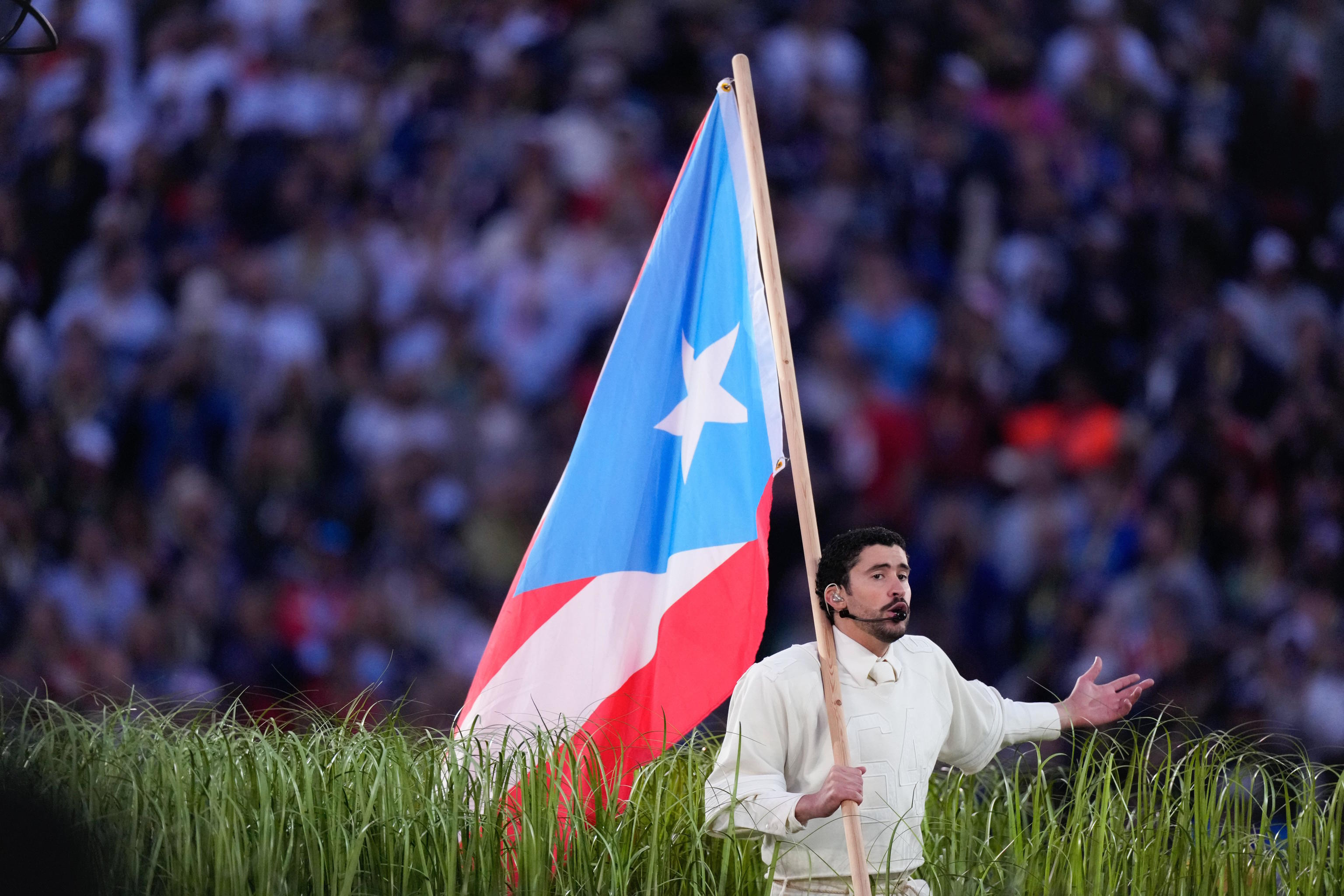
In 2012, at the Arecibo campus of the University of Puerto Rico, a young man stood out in the back rows of the classroom for his size, his silence, his smile, and his impeccable mastery of music production tools. When his audio production teacher, Manny Gutiérrez, asked him when and where he had acquired that mastery, he confessed that since middle school - equivalent to Spanish Secondary School - he had been tinkering with a digital audio program, Fruity Loops. He was a first-year student in a class for third or fourth-year students and already knew how to create tracks, produce, compose his own lyrics, perform... without the need for formal training or even reaching his twenties. It was said that from his pre-university days, he already had a group of devotees following his Soundcloud channel. In those campus classrooms, that small group of fans grew. His name? Benito Antonio Martínez Ocasio.
"Years later, a student came to tell me that Benito was having great success in the music industry. That he called himself Bad Bunny. I had heard of this Bad Bunny, I looked him up and there he was. I started listening to him and in that music were many of the things we had discussed in class, things that his classmates had also raised and that he had put into practice. Wow, how exciting," explains Manny Gutiérrez on the other end of the phone. In his classroom, there was a silent and persistent young man, and over the years, he has become the greatest Latin star of our time and one of the biggest worldwide. That student, who officially debuted in 2016 with the song Diles, is on his way to becoming an indisputable music legend. With a decade-long career and eight studio albums, Bad Bunny is breaking down barriers just as he created his first tracks. Pure momentum.
No artist had ever won the Grammy for Album of the Year with a Spanish-language project, Bad Bunny did it with Debí Tirar Más Fotos in the latest edition of the awards. The Puerto Rican is the singer with the most listened-to album in Spotify history, Un verano sin ti; he holds the record for the most songs with over a billion streams, and he is the only Latin artist with three albums with over 11 billion streams on the platform. His Super Bowl halftime show, last February, is the fourth most-watched in NFL history: it gathered 128 million viewers, four million more than the average for the game itself. Singing in Spanish and amid a White House anti-immigration campaign.
Bad Bunny's figure is studied in American universities: from Yale to Princeton, several offer courses with him as the subject of study. His current tour is breaking revenue records wherever he goes: in Spain, the 600,000 tickets for his 12 stadiums, two in Barcelona - the first one this Friday - and ten in Madrid, sold out in just a few minutes. It is impossible to know how many more he could have filled if he had chosen to add more dates.
Chartmetric data, the application used by much of the music industry to monitor the careers of their artists, accessed by this newspaper, shows that limitless growth of the past decade. But, above all, it shows that this curve has not yet doubled, it remains upward without reaching its peak. Bad Bunny is still, therefore, an artist "on the rise" even though his Spotify listeners have increased from 41.3 million in May 2020 to 102.1 million in the same month of 2026. His fan conversion rate on the platform - a metric that explains how many casual listeners become loyal fans of an artist - has grown from 51.9 to 113.2. Visits to his YouTube channel have multiplied by five - from 8.5 to 45.9 million - and the use of his songs in TikTok videos has increased almost thirtyfold - from 5 to 147 million - in the same period. In fact, after the Super Bowl, the figures for use on the Chinese social network have increased from 58 to 147 million.
And these are just absolute data that allow us to measure the Puerto Rican artist and confirm a numerical dominance that can be seen at a glance. There is massive listening to his music regardless of the platform, no doubt. His figure grows with the years, of course. But there is something more. Bad Bunny has thrown the music industry into a blender, pressed the button, and set it spinning until completely revolutionizing it. He has crossed dimensions, shattered stereotypes, rebuilt genres, and, yes, propelled Latin urban music to the top.
In the United States, the world's largest market, Spanish-language music already accounts for 8.8% of recorded music revenue after growing by 30% in five years, according to the latest report from the Recording Industry Association of America, which encompasses most record labels. The main attraction of this genre is none other than Bad Bunny, who, according to Charmetric data, has his second-highest concentration of listeners in the country of Trump. 20.2% of his followers are in Mexico; 19.8% in their northern neighbors, with four cities among the top 15 - New York, Los Angeles, Chicago, and Miami - and eight in the top 50. Spain is the fifth most important market, with 6.4%.
"I teach here at the university and I don't only have Latino students. When all the Super Bowl explosion happened, I prepared a talk about Bad Bunny; there were white and black students who sang and followed with a Puerto Rican inflection all the songs from the show. When I removed it, they were unable to converse with me in Spanish. It's the same as with the Beatles in Latin America, they sing their songs even if they don't understand them," explains Juan Carlos Quintero-Herencia, writer, professor at the University of Maryland, and promoter of the course Contemporary Puerto Rican Musicality: From Plena to Bad Bunny.
This scholar of Caribbean literature equates Benito with Celia Cruz, the queen of salsa, and Fania All-Stars, the orchestra reference in the history of that same genre. "We are facing the most important contemporary poet of Puerto Rico and one of those chosen musicians who never considered giving up Spanish and yet conquered the world. His musicality is so overwhelming that it surpasses language itself. I really liked something I read about his very particular sound that said it was as if he was singing under the bass. And that mystery of his voice makes him even greater."
The focus on race is also important because, although his fans are of Hispanic origin by 65%, a quarter - 24.7% - are white and Caucasian, and that figure has remained stable since 2020, with some slight variation depending on the year observed. What has changed more is the language spoken by his fans. In December 2019, when Charmetric set the initial data, 51.4% of his listeners spoke Spanish and 22.3% spoke English. Seven years later, the percentage of Spanish speakers has been steadily increasing to reach 77.1%, leaving English at 17.4%. This can be explained by the fact that wherever Bad Bunny has gone, he has never renounced his mother tongue. His show at the Super Bowl is a great example, but on top-rated American programs like Saturday Night Live or The Tonight Show with Jimmy Fallon, he has not renounced his mother tongue either. His entire speech when receiving the Grammy for the best album of 2025 was in Spanish except for his final message.
In Japan, on March 6th, Spotify organized a free and exclusive concert where the artist sang and addressed the audience in the same language; the response from his fans was perfect Spanish with a Puerto Rican accent in all their lyrics. "This shows that Bad Bunny is much more than an artist, that there is also something of an activist in him. Through his music, he demonstrates a strong historical awareness and social commitment, especially to his country of origin," says Soledad Valdivia, a professor at Leiden University and promoter of the colloquium Bad Bunny at the Super Bowl: Dissecting Latino power, language, and culture at this university in the Netherlands.
This social commitment has been demonstrated by the artist for years. Songs like El apagón or Lo que le pasó a Hawaii are two examples against US colonialism, the privatization of the electrical system, and gentrification in Puerto Rico. In the latter of those songs, he sings: "They want to take away my river and also the beach/ They want my neighborhood and for your children to leave/ No, don't let go of the flag or forget the lelolai/ I don't want them to do to you what happened to Hawaii".
Because Bad Bunny has grown up in a territory where US fiscal control has intensified, especially since 2016, just as his career was becoming public. The island's debt level skyrocketed from the late 90s, and laws required it to be addressed as a top priority, leading to a period of austerity, continuous privatizations of public services, waves of worker layoffs, and massive protests by the population in the streets.
Already a star, in fact, Bad Bunny was one of the artists who led the marches in the summer of 2019 to force the resignation of Governor Ricardo Roselló, alongside Ricky Martin and Residente. For the 2024 elections, he financed billboards against the New Progressive Party (PNP) with messages like "Voting PNP is not loving Puerto Rico" or "Voting PNP is voting for corruption." Even for those same elections, he participated in a demonstration at the closing of the campaign for the Alliance - a coalition of the Puerto Rican Independence Party and the Citizens' Victory Movement. "I will never forget how they abandoned us during the hurricane [Maria]. This November 5th, we will be the storm, and there is no one to save them," he defended in that march across the island.
"He talks about colonialism, he talks about the return of fiscal control, he talks about corruption, he talks about femicides of women... All of that is in his music. Especially in his latest album, which is very focused on Puerto Rico. And that has allowed him to connect with other generations that were not his own. My mother is 81 years old, she listens to the lyrics of this latest album and feels connected by that nostalgia of what the past was and better times," points out Sarah V. Platt, a professor at the University of Puerto Rico in Arecibo, the same campus that Antonio Benito Martínez Ocasio attended.
In October 2018, this teacher presented a paper at the Colloquium on Men and Masculinities at the Faculty of Humanities of the University of Puerto Rico titled How the Bad Bunny phenomenon is redefining masculinity. And time has proven her right. Reggaeton - and also Latin trap - has historically faced criticism for the misogyny in its lyrics. With Bad Bunny, that has changed. Solo de mí, one of his songs from 2018, already addressed female empowerment against abuse. In the music video for Ella perrea sola, released in 2020, where he appears transformed into a woman, there are two neon signs that read "Ni una menos" (Not one less) and "Las mujeres mandan" (Women rule). At the end of that video, there is also a message in red on a black background: "If she doesn't want to dance with you, respect it. She dances alone." Andrea, from his album Un verano sin ti from 2022, tells the story of Andrea Ruiz Costas, a woman burned by a man whose body was found on the side of a road despite having requested protection from the authorities in Puerto Rico on two occasions. This also explains the audience that the artist has reached.
According to Chartmetric, in December 2019, 36.6% of his audience was female. By January 2021, that figure had risen to 48.9%, with an increase of almost 10 points the day after releasing Dákiti with Jhay Cortez - still one of his most successful songs. And since January 2025, continuously for a year and a half, Bad Bunny has more female listeners than male. Today, 51.9% of his audience is female. "Many of his political themes appeal to single mothers or women who lead their families. The theme of resistance to colonialism, the trauma from hurricanes and blackouts... Most households here are headed by single mothers, and all of that connects with them," says Sarah V. Platt.
All of this - along with the use of traditional genres like plena or salsa in his latest album - has also changed his audience. In 2019, the age group between 18 and 24 years old accounted for 65.8% of his listeners compared to 19% of listeners between 25 and 34 years old. This trend has been changing year by year until almost reversing. The listeners have grown at the same pace as Bad Bunny, and his audience today is much older than at the beginning of his career. The 18 to 24 age group has decreased to 43.8%, and the 25 to 34 group has surged to 41.1%. Both are almost equal. "My nephew is Mora, who collaborated with him, and he has always told me that he is a genius, that he can reach whoever he wants. What poets do is summon people, make them enjoy and make them think differently. Bad Bunny has achieved all of that at the same time," highlights Juan Carlos Quintero-Herencia.
It happened at the Super Bowl as well. The audience was massive, the driving force of the show was the celebration of being Latino, and the purpose was to protest against Donald Trump's immigration policies. Light enjoyment turned into a strong message. This fact prompted Elisa Alt, an associate professor at King's College London, to conduct research titled Bad Bunny, the entrepreneur: Lessons from the Super Bowl halftime show on creating opportunities for positive social change, where the Brazilian teacher explains why the singer has many of the characteristics attributed to an entrepreneur. Specifically, a social entrepreneur who prioritizes the positive impact of his work without forgetting the economic aspect.
"This arose from a discussion with students about the Super Bowl, but we must go further. His residency in Puerto Rico is a good example of how the image and narrative of his origin are used to tell a story that has a very strong social and economic impact. There is a theory we teach in class, Effectuation: to be successful, you don't start looking for it with a formula, but you take advantage of surprises and opportunities from where you are.
Now that he is a global star with many resources, he can do what he wants," explains this teacher. Platforms like Chartmetric allow for a deeper measurement of Bad Bunny as an economic product. According to this tool, his fans show a greater affinity for brands like Nissan, Reebok, Honda, Vans, Gucci, Adidas, Versace, or BMW. All urban clothing, luxury items, or cars, compared to those that engage them less: Star Wars, Polaroid, Pioneer, and surprisingly, the NFL.
And he, in the meantime, filling stadiums and spreading his culture. From the back row to music legend.