No one does television like Americans. It's not just about the budget, creativity, muscle, imagination, or the ability to surprise and excite. It's not the endless list of personalities capable of dazzling with all kinds of talents. It's not the music, with the best artists on the planet. It's all that and much more, starting and ending with their way of breaking barriers, crossing limits, and bending the rules.
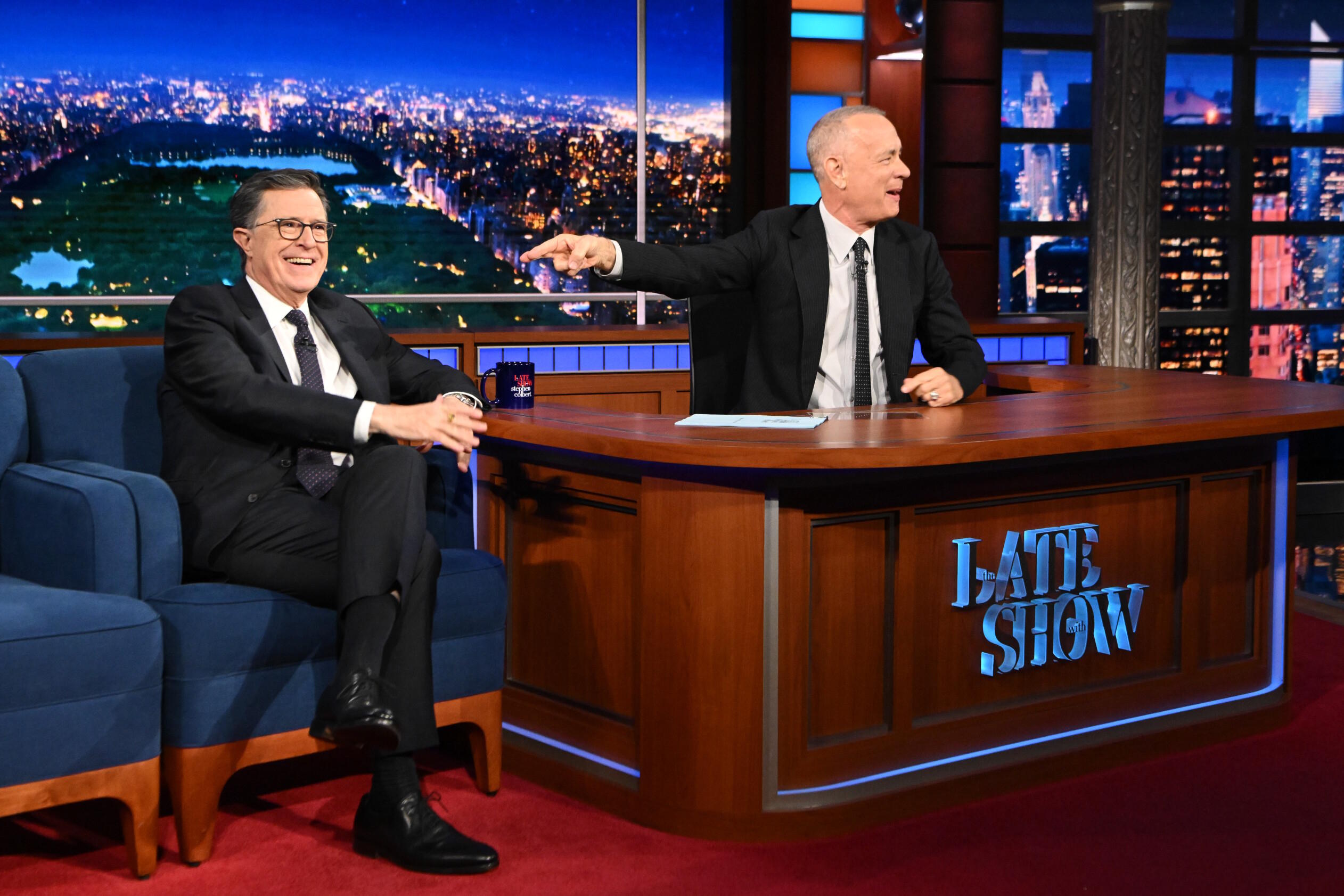
This Thursday, The Late Show with Stephen Colbert, one of the CBS's flagship programs, a show with three and a half decades of history, aired its final episode. It did so true to its style: with a cascade of renowned guests, humor, and irony, and with a very deliberate decision. The main reason for the cancellation is political. It's Donald Trump and his pressure. But on what was his last night leading a television juggernaut on one of the five major national networks, Colbert decided to completely ignore the man who led to his dismissal. There were repeated jabs at the network's decision and its motives; there were veiled references to how he was the first, but probably not the last of the late-night giants to go home. But there was not a single mention of the president. It was the program's last night and it belonged to no one but its leader, his team, and his audience.
In recent weeks, and especially in the last few days, the pilgrimage of stars has been extraordinary. On Wednesday, at the Ed Sullivan Theater in New York, Bruce Springsteen was there singing Streets of Minneapolis, and chef José Andrés with the Spanish national soccer team's jersey. Before them came Michael Keaton, Aubrey Plaza, Billy Crystal, Mark Hamill, Martha Stewart, Robert De Niro, Jon Stewart, Julia Louis-Dreyfus, Steven Spielberg, or David Byrne. Hugh Jackman sang a dedicated version of Sweet Caroline by Neil Diamond, and actor John Lithgow recited a poem titled The Mighty Colbert.
Last night, everything was special yet ordinary. The same format, the same jokes, the same old friends. With Colbert joking about starting a new career on OnlyFans, getting into drugs, or ironizing about how the decision to cancel the program was solely due to economic reasons. Or how much he would regret it if the network received a fine after instructing the band to play copyrighted songs.
Actors of the caliber of Bryan Cranston, Paul Rudd, Ryan Reynolds, or Elijah Wood made a final cameo. Also comedians Tim Meadows and Tig Notaro, or astrophysicist Neil deGrasse Tyson. But the main guest was Paul McCartney, a symbolic closure that recalled The Beatles' debut in the United States on that same stage, the Ed Sullivan Theater, in 1964. The final song that dimmed the lights, Hello, Goodbye, put the finishing touch on a drama-free farewell.
Colbert, without getting emotional or shedding tears—as Jimmy Kimmel did when he was on the verge of losing his job last year—kept his composure. It was a quiet celebration, surprisingly not very confrontational. Without speeches or direct reproaches, because it was unnecessary. The message was clear, and after eleven years accompanying the United States in the early hours, the entire country already knows his worldview.
Colbert left, but he did not do it alone. His rivals and main competitors, but also friends and colleagues, were by his side: Seth Meyers, John Oliver, Jimmy Kimmel, Jimmy Fallon. And, of course, Jon Stewart, his mentor, the man who gave him the opportunity and launched him to stardom.
The decision was made by the network in July of last year. CBS cited economic reasons, which is partly true. The program no longer had the audience it once did, it was expensive, and was losing money while Colbert was making millions. But the trigger was also the brutal pressure from the American president against comedians and hosts who criticize him every night, in an unprecedented offensive based on lawsuits and threats to revoke licenses or block business operations.
People show their support for Colbert outside the Ed Sullivan Theater.Charly TriballeauAFP
Specifically, the announcement of the cancellation came just three days after Colbert unabashedly mocked the agreement by which Paramount, CBS's parent company, agreed to pay Trump 16 million dollars to settle a lawsuit related to an edited interview with Kamala Harris. Something completely ridiculous, but apparently essential for federal regulators—completely aligned with the president—to approve Paramount's merger with Skydance, an $8 billion operation.
CBS is now in the hands of Trump allies, who are changing the editorial line without any subtlety and who have sacrificed, to the president's satisfaction, one of their most visible faces. "I love that they fired Colbert. His talent was even less than his audience. I heard that Jimmy Kimmel is next. He has even less talent than Colbert! Greg Gutfeld is better than all of them combined, including the NBC idiot who ruined the once-great Tonight Show," celebrated Trump on Truth Social, praising the king of Fox News nights. Kimmel, by the way, was next, although the decision to remove him from his ABC show ended up being only temporary. For now.
Before becoming a CBS star and one of the most recognizable faces on American television, Stephen Colbert became famous in the late nineties as one of the funniest characters in the universe created by Jon Stewart on The Daily Show. Colbert devised a caricature of a typical conservative pundit in the era of powerful figures like Bill O'Reilly: pompous, nationalist, aggressive, and always self-assured, especially when what he said was most absurd.
In 2005, Comedy Central gave him his own spin-off: The Colbert Report, where he maintained that character and style. But in 2015, CBS chose him to replace the legendary David Letterman, who made a final cameo just last week. Together, the historic program's creator and its last host did something unthinkable: they bid farewell while mocking the network and its motives. In a brutal sketch where both, from the studio's rooftop, threw the set's furniture into the void to shatter it on the CBS logo.
For two decades, Colbert did things that had never been imagined on television. Nothing to do with Johnny Carson's golden age or the style of figures like Jay Leno. It's not just that he stopped seeking the center, proving that the idea that hosts should be balanced and impartial belonged to another era. Colbert grew practically at the same time as Trump's political career, which ended up becoming the nemesis, the protagonist, and the driving force of the program and its evolution towards a permanent political critique through humor.
Colbert, a devout Catholic who joked yesterday about the Pope and the Church's sins, never stayed on the sidelines. But he used the program for much more than mocking the president and his allies. Almost in the style of John Oliver, albeit with a different tone, he wanted to show the country how easy it is to manipulate, deceive, or interfere. He did this by launching an absurd political candidacy in South Carolina, mass-editing Wikipedia, or creating a Super PAC, one of those vehicles used by millionaires to finance electoral campaigns. He made the most brutal jokes and the sharpest monologues so that, at a time when everything seemed to make no sense, millions of people would go to sleep convinced that they were not the ones who had lost their minds. Denouncing an authoritarian drift, he said, was not being partisan: it was a patriotic duty.
The Late Show will be replaced by Comics Unleashed, a stand-up comedian interview program created and directed by Byron Allen, who honed his craft making jokes in the seventies alongside Leno and Letterman and ended up building a multimillion-dollar media empire. CBS does not produce the program: they simply "rent" the time slot to Allen in exchange for several tens of millions of dollars, an investment he hopes to recoup through advertising.
Colbert, one of the biggest experts and fans of the Lord of the Rings universe, is already working with his son on a script for a possible new movie set in Middle-earth.