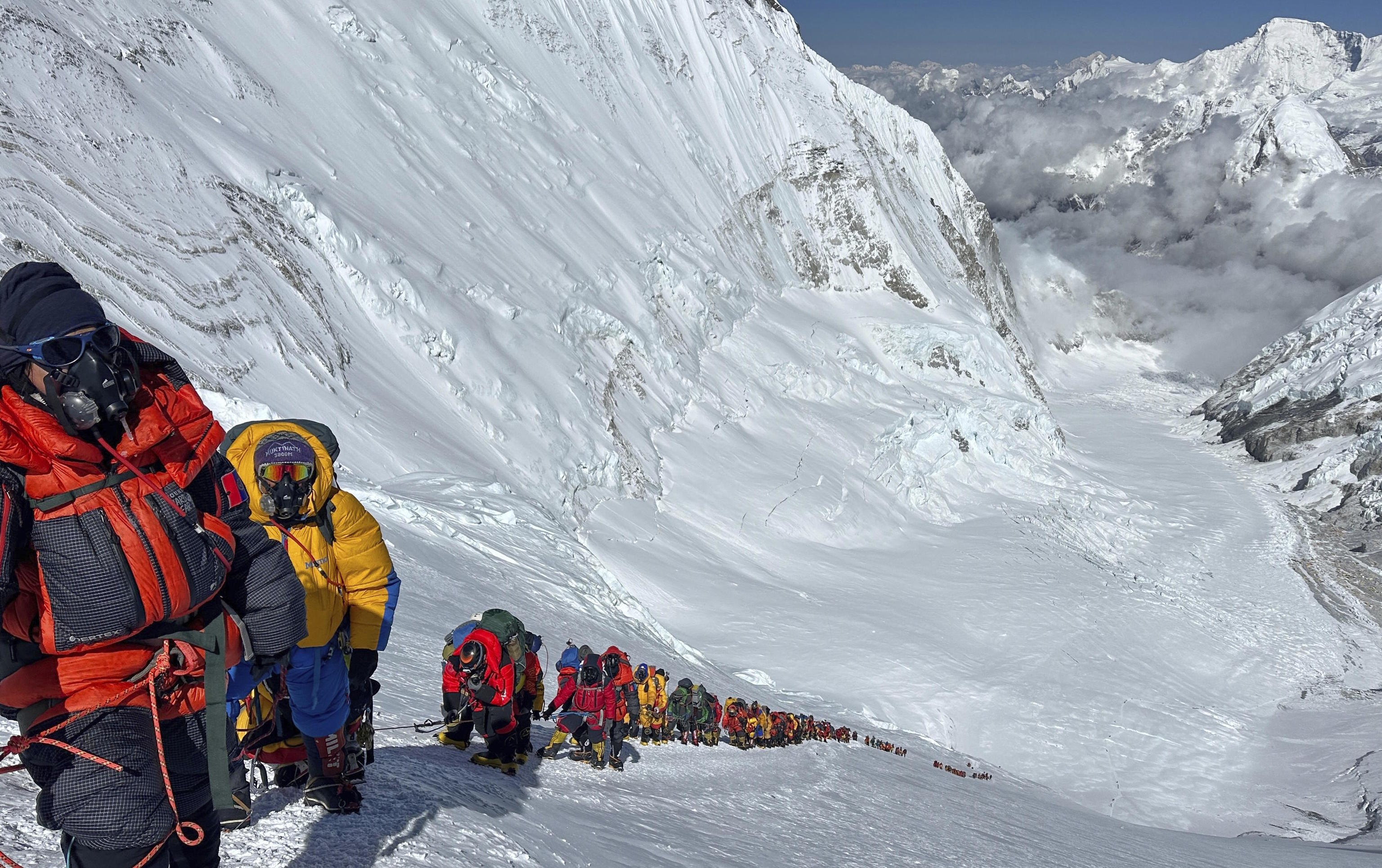
Last Wednesday, May 20, 2026, the highest mountain on the planet recorded its highest influx in a single day, surpassing all previous records and reigniting the intense debate on safety and management of commercial expeditions in the Himalayas. According to Nepalese hiking authorities, the number of people who managed to reach the highest point on Earth far exceeded the record set in May 2019, when 223 climbers summited in a single day.
"On May 20, 2026, around 274 people successfully reached the summit, including climbers and Nepalese Sherpa guides," officially confirmed Rishi Bhandari, Secretary-General of the Nepal Mountaineering Expedition Operators Association. This influx of climbers occurred despite the efforts of the Nepalese government to tighten access conditions. According to witnesses and photographic records, "Such a large number of climbers had never been seen climbing to the highest peak in the world," with rows of climbers crowding the path to the highest peak.
Neither the high price nor the stricter requirements seem to deter global interest in Everest. This year, Nepal has issued a total of 494 climbing permits, each with a cost set at $15,000 per person. Despite the significant increase in the price for foreigners, the flow of expeditions has not decreased, maintaining a "boom" that challenges government controls. The overcrowding has put mountaineering experts on high alert, criticizing the permission for such a large number of climbers to ascend simultaneously. The main concern lies in the formation of risky bottlenecks or long queues in the so-called "death zone," located just below the summit.
In this area, the oxygen level is dangerously lower than necessary for human survival, so any delay can have fatal consequences. Although Bhandari has tried to downplay the alarm by ensuring that the climbers were distributed in different camps, he admitted that for the future, it would be preferable to limit summit attempts to no more than 250 people per day. Currently, Nepal is at a crossroads between the economic benefit of high-altitude tourism and the need to introduce stricter controls to ensure the lives of mountaineers.