Imagine a bearish investor. I'll give you time... in the meantime, you should know that they don't work in dark basements, smoking tobacco in the wee hours of the morning, nor do they have to look grumpy or unpleasant, they don't have to hide their faces behind a black hood, nor be ashamed of what they do, even though their bad reputation precedes them. It is true that those who always bring bad news are less liked, especially when money is involved, but their activity is part of the market's fair play: not all companies will endlessly rise in the stock market, even though Wall Street insists year after year on proving otherwise. "In general, markets are designed for stock prices to rise. Everyone benefits from it, from bankers who receive higher bonuses to fund managers and company owners. There is a lot of literature on this, but the target prices of bank analyses are not what they seem. You can use them as toilet paper. There is a lot of research showing how wrong and overly positive analysts' target prices tend to be. I believe that in an honest, open, and transparent market, it is healthy to have voices that show the other side of the coin; the risks, not just the opportunities," says the founder of a prominent firm that invests on the downside in Wall Street.
Currently, our interviewee manages a fund with around 30 short positions for every 10 long ones, which is the term used when someone buys shares expecting them to rise. Being bearish is not easy or cheap. It requires a lot of company analysis, the courage to open a short position, and to bet money when winning is not always guaranteed. How does short selling work? Let's say Medias Puri, a successful haberdashery chain in the early 2000s, is selling fewer and closing more stores. Well, an investor who believes its end is near buys a share of this company for 10 euros and lends it to a third party with the promise to buy it back in the future and the hope of doing so at a lower price. When that happens, the bearish investor repurchases at 6 euros, returns them to the initial seller at 10, and keeps the 4, which is the difference. Voilà. This is the simple theory, but reality is much more complex, as short sellers hedge with their broker and commit to guarantees to cover themselves in case of losses. "I can make up to 100% [if the shares drop to zero], but I can lose thousands," confesses this bearish investor if the market does not follow the path they predicted.
Hence, neither Europe, much less Spain, is their natural paradise, although there have been recently high-profile cases here such as Grifols, Dia, Banco Popular, or Let's Gowex a decade ago. The New York-based manager tells us that Europe is much less profitable for large hedge funds due to "less liquidity, which ultimately implies being able to open smaller positions and make less money, in the end (...) Furthermore, the lower market liquidity is more dangerous for us because it means a higher risk of a short squeeze," which occurs when a stock rises sharply and forces these managers to quickly close their positions to avoid further losses.
But what are the numbers? It's not easy. In Europe, for example, each regulator is responsible for collecting and compiling this data, but they disclose positions starting from a minimum weight on capital of 0.5%. In Spain, the National Securities Market Commission (CNMV) used to provide more detailed information until 2019 when it stopped, arguing that it disadvantaged our market compared to other competitors.
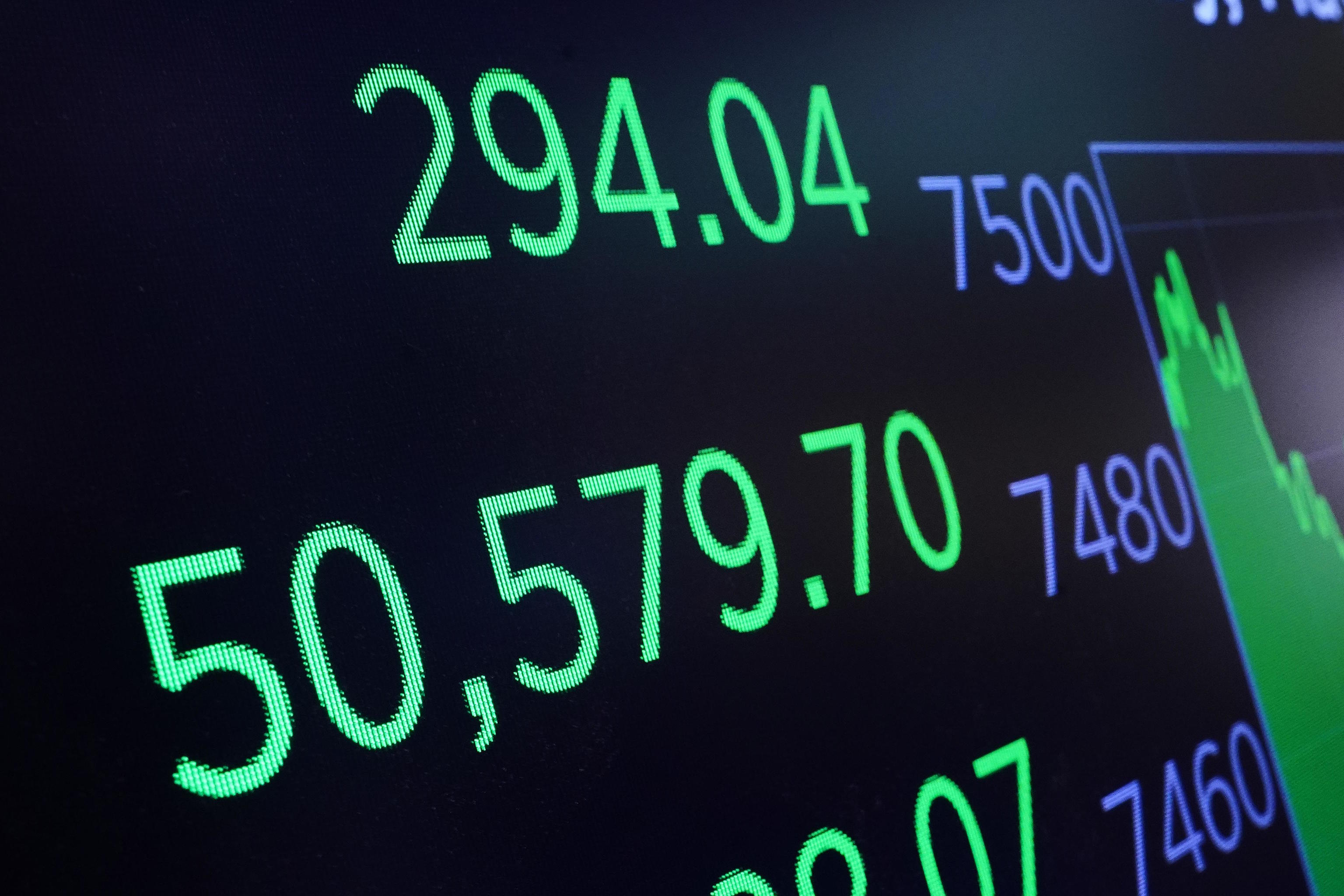
According to data compiled by S&P Market Intelligence in April, currently short sellers manage around $0.294 trillion on European stocks. This is 16 times the bullish figure in the market, with over $4.8 trillion. Globally, the agency reveals about $1.8 trillion invested in short positions on global stock exchanges, which is almost 22 times less than all the money invested by bullish managers.
Twenty major asset managers control the short market in Europe with a portfolio of over 100 open positions in listed companies waiting for their prices to fall. The most relevant names include the American fund AQR Capital Management (involved in the downfall of Ángel Ron's Banco Popular), Citadel Advisors, founded by billionaire Ken Griffin, and Marshall Wace, a British-origin hedge fund that combines the surnames of its two founders who have sometimes defended opposing positions, as happened during the Brexit campaign in the UK, where Paul Marshall emerged victorious. But there are many more names... starting with major banks like JP Morgan or BlackRock, asset managers like Capital Management or the British Qube Research and Technologies, a spinoff of Credit Suisse from the past decade, which bases its analysis on technology.
In terms of market size and liquidity, the UK ranks first in terms of short positions, with 205 companies. It is followed by Germany, Sweden, France, and Italy, with between 171 and 54. To find Spain, you have to go down to the eighth position. 25 listed companies in our market have seen a short position emerge. This is crucial because not all reveal their cards if they remain below 0.5% of capital, allowing them to operate in the shadows while the market is unaware of the real weight of short sellers in a company. S&P Market Intelligence estimates, as of May 8, reveal how the Spanish Indra was the listed company in all of Europe -excluding the British market- with the highest short interest in its shareholding. They held the equivalent of 15.5% of the company's capital, currently chaired by Ángel Simón (formerly Criteria) alongside CEO José María de los Mozos, following Ángel Escribano's departure last April promoted by the Government. According to CNMV, AQR is the largest short seller, with a 3.39% position, followed by World Quant (with 0.69%) and the 0.62% from Canada's pension fund, one of the world's largest. In fact, for AQR, Indra is its largest short bet out of the 133 it holds throughout Europe.
Within Indra, firms like Morgan Stanley, Goldman Sachs, or ING also have borrowed shares. So far this year, the Spanish defense giant has risen by 1% compared to the over 30% gains it made in the first two months of the year. Twenty days ago, the Escribano family sold a 14% stake in Indra for 1.338 billion euros, with the merger with the Escribano subsidiary still pending.
Another company where short sellers have surged this year is eDreams. They have increased their stake from 2% to almost 12% since January 1. The travel company plummeted by 40% in mid-November last year after lowering its profit estimates for this year, due to disappointing figures from the subscriber payment model. The ongoing war in the East as a backdrop has not helped either... and the reality is that it has lost 60% of its value in a year, down to a market capitalization of 365 million euros.
Among the major European names targeted by short sellers are the French Eurotunnel operator Getlink, Logitech, Telecom Italia, Danish transport company Maersk, Pernord Ricard, or Aeroports de Paris, among others.
I'll spare you another summary of the classic movie 'The Big Short,' which tells the story of how a contrarian or bearish investor struck gold after years of suffering when only he, -and a few others- were able to see the subprime mortgage bubble and how it loomed over them. That bearish investor, the most famous of all time, was Michael Burry, a contemporary of hedge fund founders like Bill Ackman (of Pershing Square Capital Management) or Dan Gold (CEO of QVT Financial), who also foresaw the great financial crisis. Today, Burry sees signs of a bubble in US technology similar to the "last months of 1999." By the way, he has not had a success like that of 2008 again. But it's worth trying.
Swimming against the tide is not easy. A recent Barclays report shows how the shareholder base of large American listed companies is increasingly sheep-like. Only 5% of the S&P 500 capital is in the hands of hedge funds, which are funds that operate independently, among other things, to invest in short positions. 46% is held by long-only investors ('bullish'), and another 28% in indexed products. However, in the market of small and medium-sized US listed companies -the Russell 2000- there is more room for criticism. The weight of hedge funds has increased by 65% in the last 15 years, now holding almost 18% of the market capitalization of these companies.