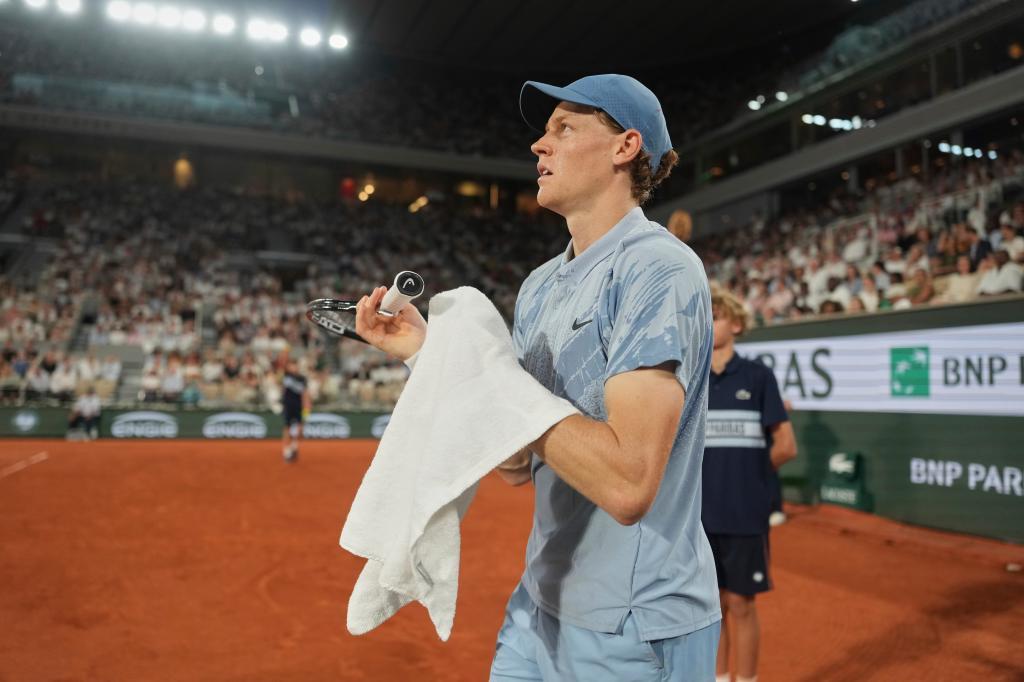
At this Roland Garros, Jannik Sinner, Aryna Sabalenka, or Coco Gauff have limited their press conferences to 15 minutes and have refused to participate in the tournament's social media activities. It's a revolution. A revolution! A somewhat strange revolution, yes, but a revolution. Days before the start of the Grand Slam, the players agreed on a joint protest against the economic distribution, and although the initial measures approved were very timid, the possibility of a boycott that could halt activity on the courts looms on the horizon. It won't be this year in Paris, but it could be in any major tournament in the coming seasons. They have plenty of arguments.
Tennis is a peculiar sport economically. The champion of Roland Garros will earn 2.8 million euros this year, and with that figure, it is difficult to understand the complaints. What more do they want? Well, they want their fair share. Beyond the flashy prizes, the distribution is very unbalanced. In this edition, players will receive 61.7 million euros, while the tournament will generate over 400 million, so they will not even reach 15% of the loot. If the players were to receive the 22% they are asking for - a figure already reached by the Masters 1000 and WTA 1000 tournaments - they would get 30 million euros more per year. And even then, it would be insufficient.
Tennis players do not receive a salary, they do not have contracts with the Grand Slams or the ATP, and their expenses are not covered. They are self-employed individuals who compete for prize money and bear the costs of their travels, hotels, and equipment out of their own pockets, not to mention that all the announced figures are gross amounts. The 2.8 million for the champion can go a long way. But for the rest, the math is different. A first-round loser earns 78,000 euros, from which taxes and expenses must be deducted, and someone who falls in the qualifying rounds, before even reaching the main draw, barely receives 21,000 euros. For players outside the top 100 of the ATP rankings, tennis can be unsustainable. According to some estimates, only 15% of professional tennis players earn enough to make their careers viable.
Furthermore, the comparison with other sports is striking. In European football, players have managed to earn between 50% and 70% of what their clubs generate through individual negotiations: if they don't pay me what I want, I'll go to another team. In American sports, collective agreements in the NBA or NFL also hover around 50% after decades of union struggles and some strikes. In tennis, there is neither. Those battling on the court are unable to reach agreements off the court, limiting their bargaining power. Only the biggest names have a chance of being heard, and they do not seem willing to stop playing. Novak Djokovic has criticized in the past the passivity of Jannik Sinner and Carlos Alcaraz regarding these demands, and although this time the Italian has gotten involved -"without the players, there is no tournament," he threatened- the leadership remains unclear.
The issue is that the Grand Slams are not clubs or franchises that need their players to survive. They are tournaments with centuries of history, their own infrastructure, and global audiences that would exist even if the players were paid less. Or so their organizers believe. Amélie Mauresmo, director of Roland Garros, made her position clear before the tournament began: "We are not going to budge." She argued that prize money has doubled in ten years and that the French Tennis Federation is a non-profit organization that reinvests all its income.
The question is whether the players will dare to take further action. So far, their measures have been timid. Press conferences already tended to last less than 15 minutes - on Monday, Rafa Jódar took six minutes to answer all the questions - and the social media dynamics proposed by the tournaments were already uncomfortable for them. The protest at this Roland Garros has not compromised anyone, and above all, it has not cost anyone a single euro. Are the tennis players right? Yes. Earning less than 15% of the revenues is an anomaly in sports. Does their protest make sense? Not really. Until there is a real threat of a boycott, the distribution will remain the same.