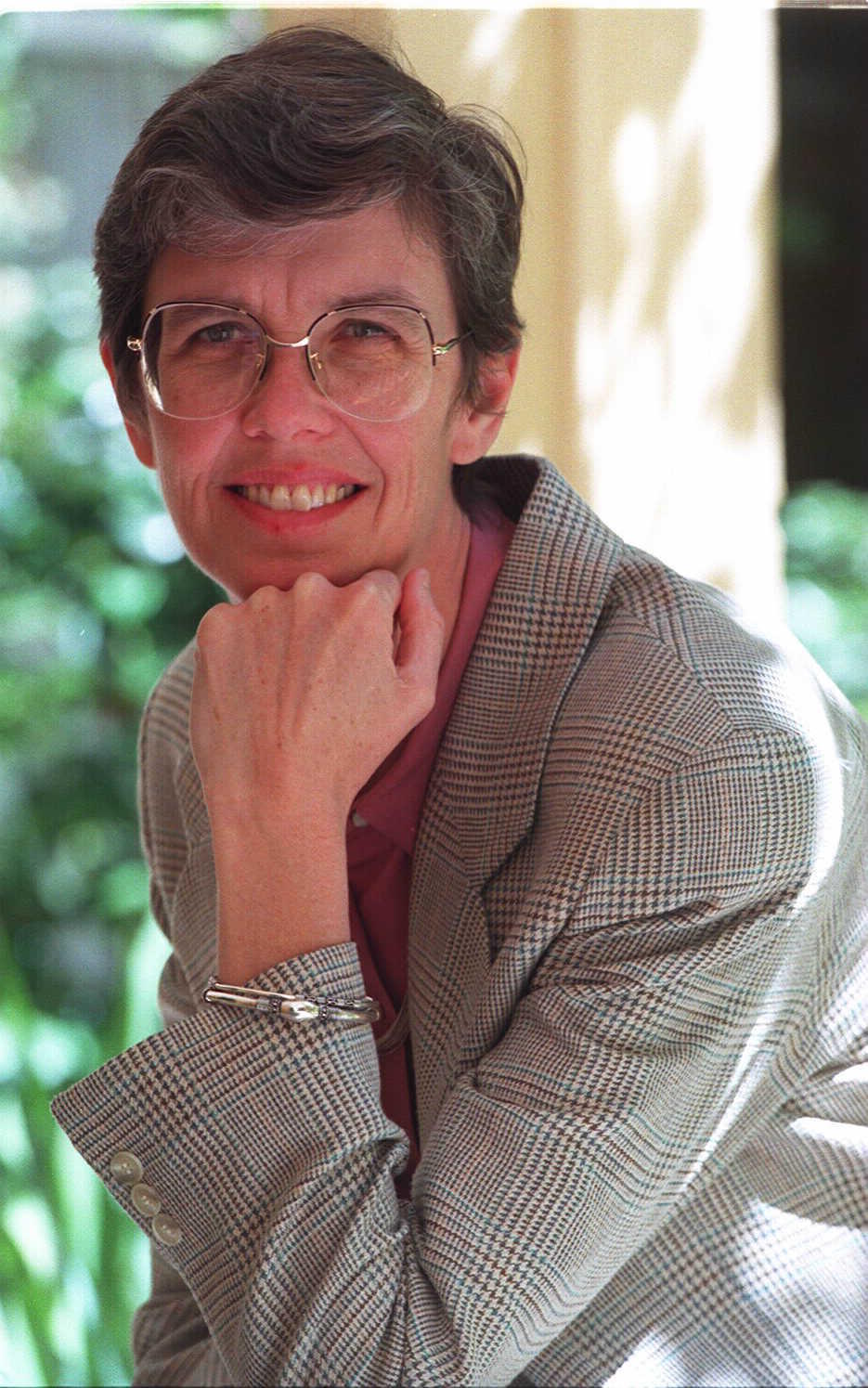
For decades, the literature of the academic and Pulitzer Prize winner Jane Smiley (Los Angeles, 1949) has been mapping an intimate portrayal of the United States where History does not appear as a grand abstract narrative, but as something that happens to people as they try to live, raise children, fall in love, make money, or simply understand what the heck is changing around them. Therefore, her monumental Trilogy of the Hundred Years - A Bit of Luck, A Warning, and The Golden Age, now published by Sexto Piso - ends up functioning not only as a family saga that begins on an Iowa farm but as one of the great novels about the moral, economic, and sentimental transformation of her country during the 20th century.
In this sense, it is significant that Smiley has never wanted to explain America from Washington, New York, or Silicon Valley, but from the deep Midwest, a territory that much of contemporary culture views as an almost invisible periphery and that, however, in her books becomes the true emotional heart of the nation. "Any country should be a human experience before a political idea," firmly states the writer, who speaks slowly, with that quintessentially American mix of pragmatism and intellectual curiosity. Ultimately, all of Smiley's literature seems to stem from one place: "The fascination with how people make decisions and then end up living within their consequences," she reflects.
As she converses, the writer constantly returns to her own family, to the stories she heard as a child, to the oral memory of her grandparents and her mother, as if every novelist were actually someone who learns to listen before writing. In fact, this trilogy was born from that autobiographical impulse, although Smiley always resists turning her novels into personal confessions. "When I thought about doing this, the family that came to mind as a model was my mother's," she recalls. "She was born in 1921 and her name was Frances, that's why I thought I wanted to start around 1920 and the first child would be named Frank."
That Frank Langdon who leaves the familiar agricultural horizon to engage in American financial capitalism ends up becoming one of the great narrative vehicles of the saga and exemplifies a key aspect of the books: the distance between dreamed lives and truly lived lives, between individual expectations and the unpredictable way time distorts them. "My only plan was to learn to understand each generation from birth and then see how they understand what happens in the United States," she summarizes. "I didn't want everything to revolve solely around Frank's success or something like that, but for the book to be about what it was like to live during that century. What it meant to grow up there, leave, have children. Everyone seemed interesting to me."
This is probably the deepest key to Smiley's work, observing how History slowly settles on private lives. That's why in The Golden Age, which spans from the 80s to 2018, Reagan, Wall Street, AIDS, the culture wars, financial capitalism, and the scandals of the 90s coexist without any of these events ever appearing as mere historical context. Everything happens within families, within marriages, within bodies.
"History is something that is experienced," she states, before recounting how her mother decided when she was young to go to Europe by secretly enlisting in the Women's Army Corps. "The war was chaos, of course, but arriving in France excited her immensely. And that completely changed her way of thinking about what was desirable for the rest of her life," recalls the writer, who wanted that freedom for her characters. "I wanted everyone to do something, even if it was small, and then discover that it completely changed their way of seeing the world."
"People who manage to have a reasonably good life are usually those who understand social changes and adapt"
She then begins to talk about her uncles and aunts with the enthusiasm of someone who continues to observe humans as if they were fictional characters. A sister "obsessed with elegance." Another determined to build a stable middle-class life based on "a respectable marriage." A brother who became rich in the shoe business and ended up being loved by all thanks to his generosity. "I was fascinated by how people who come from exactly the same place end up being completely different."
And precisely that fascination with the internal divergences of the same family is what allows the trilogy to also function as a kaleidoscopic portrait of the United States. The Langdons do not represent a single America, but several coexisting at the same time. Conservatives and progressives, farmers and financiers, characters fascinated by modernity and others deeply frightened by it. "For me, writing has always been an exploration, not an autobiography. Nothing truly terrible or special ever happened to me, so my idea of literature is based on telling other lives in the best possible way."
There is something profoundly nineteenth-century, in the best possible sense, in that defense of the novel as a space for moral understanding and observation rather than an ideological tribunal. Smiley clearly belongs to the tradition of Dickens, Trollope, or Balzac, writers obsessed with observing how people behave when the world changes around them. She defines herself with laughter as a "snoop." "I like to listen to what people say and observe what they do. Dickens was a wonderful snoop and so was Trollope. They looked around and thought, 'Ah, there's a good story.'"
And the truth is that her entire work seems permeated by the awareness that the world never stops transforming. And as in reality, some characters experience these changes as a liberation and others as a form of uprooting. "When I studied History, I understood something very simple: the world is always changing, in any era, and the people who manage to have a reasonably good life are usually those who understand the changes and adapt. Those who suffer the most are those who hate those changes or wish everything stayed the same."
This idea runs through the entire trilogy and is particularly visible in the country's economic evolution, the shift from family agriculture to Wall Street financial capitalism. Smiley avoids making definitive diagnoses, but her words hint at a deeply critical view of the growing inequality and a certain moral drift of the American Dream. "In my country, there are more and more people who want to have everything for themselves," she denounces. "They want houses with 100 rooms where no one enters. And one thinks: why? Why do you need that? But they want it because it makes them feel important. And that seems very strange to me."
"In my country, there are more and more people who want houses with 100 rooms where no one enters. They want it because it makes them feel important"
Then comes the laughter and the phrase that sums up much of the author's political disillusionment: "If I really said what I think about what the famous American Dream has become, they would kill me or kick me out of my country," she quips. Then she qualifies her words and talks about taxes, billionaires, and an economic system that seems to be functioning worse and worse. Also about the nostalgia she still feels for the America of the 50s in which she grew up. "Thanks to Eisenhower, there was a sense that everything was nice and stable. You could live in a nice house without it costing a fortune, there was food, people seemed to get along... Of course, there were conflicts too, but I feel fortunate to have grown up in that era. That gave me hope."
That tension between hope and disillusionment is precisely what makes Smiley's work so powerful because although her novels portray the progressive deterioration of many promises, they never fully surrender to cynicism. After living with that family for years, the writer faced the dilemma of how to conclude the story. "I knew that certain things were possible, but I couldn't predict them. And then you have to ask yourself what kind of ending you want to give the book, optimistic or pessimistic."
She ultimately chose a middle ground, neither total redemption nor absolute disaster. An ambiguity that refuses to simplify the human experience and present her country as an abstraction. "Simply, I wanted to show the US for what it is for most people, a place where people are born, fall in love, work, argue, age, and try to understand, while everything changes, what kind of life they want to live."