In March, the Evil One strolled through Rome, but the Roman, who has seen so many things, from demented emperors, rogue popes, and barbarian looting, is not one to be scandalized by anything. The tech mogul Peter Thiel, representative of libertarian right and main supporter of Donald Trump before his tech bros colleagues bowed to him as enthusiastic converts upon his return to the White House, gave a very exclusive conference in the Italian capital where he spoke of the Antichrist as a metaphor to describe environmental policies, bureaucracy, and initiatives seeking to regulate technological development. Thiel then attended a Latin mass at the Basilica of San Juan de los Florentinos.
In reality, all this performance was nothing more than a challenge to Pope Leo XIV in his own home. A display of power by the founder of Palantir, a company that represents better than any other the contradictions of Silicon Valley. One day they defend libertarian philosophy and the next they inflate themselves by infiltrating US government and national security agencies. They don't want the State close, except to do business with it.
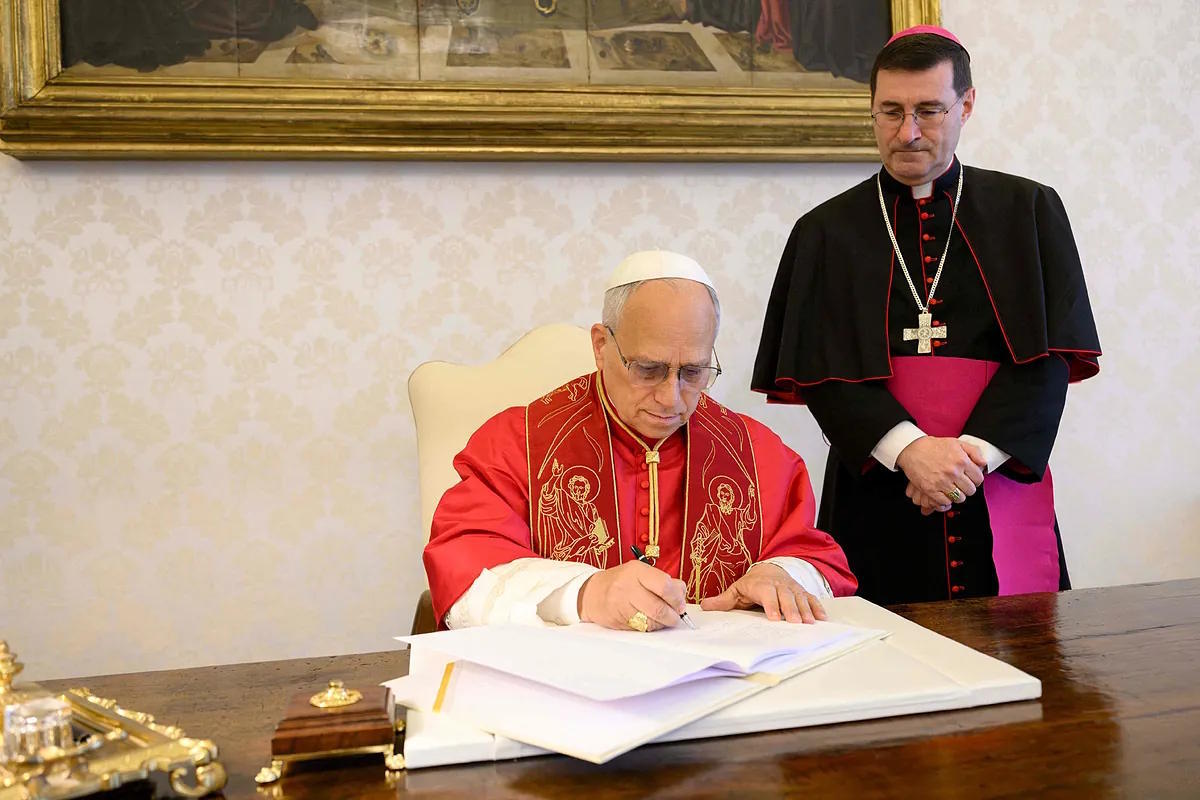
Last week, Leo XIV responded with his first encyclical, Magnifica humanitas, a carefully crafted 39,000-word text in which he addresses all the issues that Thiel detests. In it, the Pope denounced the "culture of power" driving AI and issued a warning that it should be subject to "rigorous" ethical restrictions, given its influence in all areas, from the military industry to the labor revolution.
This technological debate does not catch the Vatican by surprise. It has been preparing for the cultural war of AI for a decade at its innovation headquarters: the Casina Pío IV, a 16th-century villa that houses the Pontifical Academies of Sciences and Social Sciences. Inside, Church representatives have met with executives from Microsoft, Google, and, among others, Meta along with dozens of thinkers and experts to discuss the topic of AI.
That's why the staging of last Monday is so important. Both for the pomp - with the surprising and announced presence of the Pontiff at the event - and for the support of his allies, some as relevant as Christopher Olah, the executive of Anthropic, representing the more moderate wing of leading companies in this field. It was another demonstration that the Pope is fully entering the game of thrones of AI. His future governance aims to be led by one of these antagonistic factions. One could be represented by the papist Anthropic, which prioritizes security and legal limits; another by OpenAI, which advocates for accelerated deployment hand in hand with the State, and the most radical is embodied by Thiel and his refusal to put any brakes on technology.
So far, the Pope has managed to put himself in the spotlight of AI in a way that no politician had achieved before, except Trump. There are technology experts who believe he has gone further than expected, that he has been very brave in giving the importance that the revolution of our time deserves, while others are more critical, considering that his vision, given the list of threats arising from AI described in the encyclical, is more pessimistic than hopeful about the future.
The big question is whether the Pope really has any power to change the minds of Silicon Valley and pressure politicians in his direction. This brings to mind the response given by Stalin when warned of the political influence of Pope Pius XI. "How many divisions does the Vatican have?", said the Soviet, settling the debate. Stalin may have been right and analysts tend to overestimate the influence of the Pope's opinions, although his moral impact should not be forgotten.
Just look at the numbers to see a correlation of forces. Worldwide, TikTok exceeds 1 billion users, ChatGPT has 900 million, and Elon Musk's X hovers around 660. None of these platforms can compete with the spiritual leader of 1.4 billion Catholics. It is not known how much, but the Church's opinion matters, as it has a voice in every town in the world that, if it has a good Sunday in the pulpit, can be more persuasive than the algorithm.