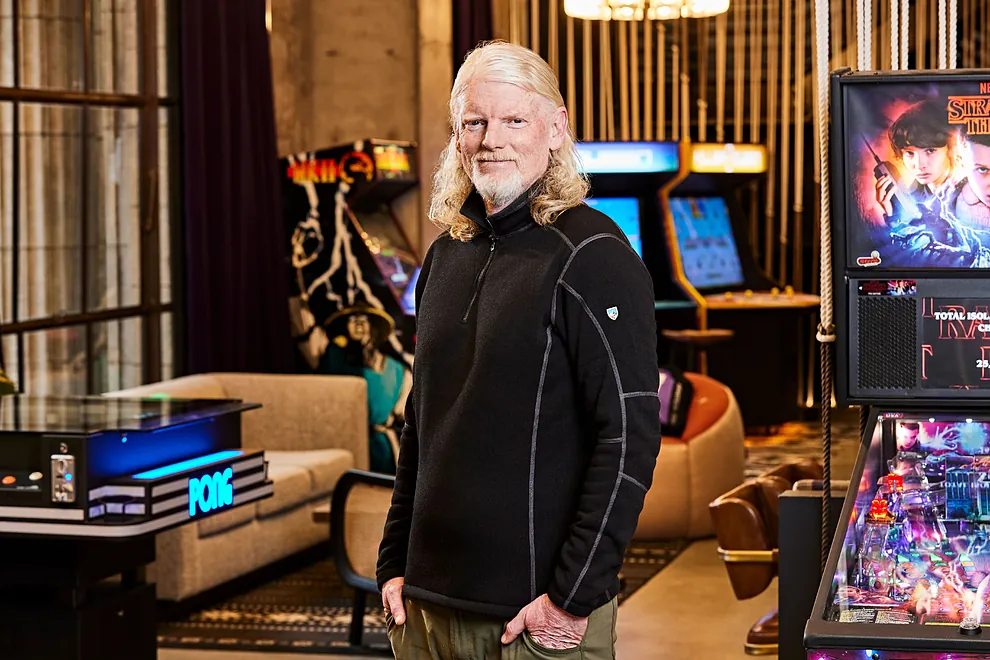
Dan Clancy has been leading Twitch since 2023. The Amazon live video platform reached a peak during the pandemic and remains the most used platform, although the competition is fierce and well-funded. However, for Clancy, the rival is not just YouTube, but the entire entertainment world, where, he says, live content is gaining ground, favoring Twitch.
In an interview with EL MUNDO on the occasion of the Amazon Upfront held in Madrid, the executive argues that the goal is to be profitable in the long term and that the social media battle is no longer just in the streaming world, but in entertainment overall.
Furthermore, he highlights the value of long videos over short ones when it comes to creating communities that allow creators to monetize and achieve better results for advertisers.
How would you rate the current situation of Twitch?
Think of Twitch as the leading long-form, live entertainment service in the world, built around creators and the communities they have created. Each month, nearly five million streamers broadcast live to 105 million viewers worldwide. What truly sets Twitch apart is the depth of connection: viewers return, engage in chat, and build real relationships with the streamers. It goes beyond content and becomes a community. That's why 68% of Twitch's revenue comes directly from viewers supporting the creators they follow.
It's more than just video games.
Gaming remains central, yes, but creators now use it as a springboard for music, sports, lifestyle streams, and much more. It has become a vibrant space where culture is shaped in real-time. When you add it all up, you have a unique environment for brands to reach a young and deeply engaged audience that is genuinely hard to find elsewhere.
Where is the focus? Growth or profitability?
Our focus is on building the best place for creators to find and grow their community and ensuring that our business model is sustainable in the long term. To achieve this, we continue to improve the product — including the mobile experience —, expand the creator base, and make it easier for them to make a living from streaming. The underlying logic is a virtuous circle: when creators earn more and have better tools, they stay and grow on Twitch, attracting more viewers. More viewers mean a larger and deeply engaged audience, attracting advertisers looking to authentically connect with hard-to-reach audiences. As advertising revenue grows with formats like Gameplay Ads and Creator Sponsorships, more money flows back to the creators, reinforcing the cycle.
What are the revenue prospects with advertising?
Advertising, fundamentally, is an emotional transfer. Advertisers want their ads to appear alongside content where the audience is emotionally engaged because the positive emotions generated by that content transfer to the brand. The passion our communities feel for the streamers makes Twitch an ideal place for advertisers. Our viewers create bonds and deeply trust the streamers they follow.
Do you think the streaming market is saturated?
No, not at all. In reality, I don't believe there is a market for livestreaming as such. It's the entertainment market, and what we want is for live content to occupy an increasingly larger part within that broader environment. The fact that more companies are investing in live content is simply a sign that livestreaming is growing within the entertainment industry. And as the leading company in live content, these movements benefit us.
Which regions are experiencing the most growth?
We are seeing strong momentum in several regions and Europe. Where we are noticing significant business growth is in the increasing number of prominent figures — musicians, athletes, politicians, and celebrities worldwide — joining Twitch to better connect with their audiences. For example, Justin Bieber offered a behind-the-scenes look at his daily life preparing for his performance at Coachella. In Spain, Enrique Riquelme included an interview on Twitch on Rubén Martín's channel (Twitch creator and sports journalist) as part of his election campaign, coexisting with more traditional formats.
How is AI transforming the business model?
Our focus is on using AI in a limited and practical way: either to maintain service security or to help streamers create content and grow their business. For example, the auto-clipping tool helps streamers identify, clip, and automatically share the most engaging moments of their broadcast, and we have been using it for security purposes for some time.
Are live creators more protected than those who upload pre-recorded content?
Creators on Twitch are driving the future of the creator economy and shaping culture in real-time with their creativity and communities. This is something that AI can enhance but never replicate.
Are you considering having creators' content used to train AI in exchange for payment?
No, we are not doing that.
What role does Spain play in the Twitch ecosystem?
The Spanish-speaking community on Twitch has grown. What started as a handful of creators entertaining niche audiences has evolved into a vibrant scene. In fact, La Velada del Año 5 was the most-watched stream and event in Twitch's global history. In Spain specifically, 180,000 creators are currently active on Twitch, and the community continues to grow as new voices emerge in highly diverse content categories. The strength of the Spanish-speaking community lies not only in its size but in its level of engagement — these audiences are deeply loyal, highly active in chat, and consistently show up to support their favorite creators.
How does this translate into content?
Most of our top Spanish-speaking creators are from Spain, but they serve a global community built around the language that is the second largest on Twitch. In 2025, over 36 million hours of Spanish-language streams were broadcast, with over 17 million consumed, averaging 120,000 simultaneous viewers and over 7,100 channels streaming at any given time.
The industry seems to be stuck in a loop where there is always someone paying creators more to gain audience. Do you think this trend will continue in the future?
As leaders, our focus is on what we can do to serve our creators, not on competition. Our business is about enabling users to find and build community. We have invested and continue to invest heavily in these areas. In terms of monetization, we offer a wide range of tools, especially when compared to other online services (subscriptions, gifted subs, bits, hype trains, etc.). All are designed so that when the community engages, the creator benefits. This creates a more sustainable and repeatable revenue model than a fixed percentage of advertising revenue or a one-time tip.
How does the long-form video format influence this?
Therefore, the long-form live content also matters. Communities are built by consistently showing up and engaging in real-time — something that short content feeds cannot replicate. In many other services, creators need to reach significant thresholds — thousands of followers or millions of views — before they can even access basic monetization features. So, our roadmap is not about choosing between growth and profitability. It's about continuing to build tools that activate communities because when communities engage, creators win — and that's what keeps them on Twitch.
Another recurring issue is the fight against bots. What measures are being implemented?
Viewbotting is detrimental to our business — it doesn't benefit us; it harms the creator community. It's something we take seriously and have been actively working against for some time. The challenge is that those behind it quickly adapt to each measure, so the fight against viewbotting is ongoing, not one-time. We are constantly evolving our approach. Recently, we announced a new measure that we are implementing in phases, in addition to our existing actions against viewbotting. For channels identified as frequently involved in viewbotting, we apply a limit to the streamer's simultaneous audience across all Twitch surfaces. We will continue to evaluate the effectiveness of this approach and evolve it as needed.
In Spain, there is consideration to restrict minors' access to social networks. What is your perspective on this?
Twitch takes this issue very seriously and has dedicated specialists designing specific solutions to keep young people safe. Our approach is clear: when you operate in a country, you respect its laws. That's how we work wherever Twitch is present. We comply with all applicable regulations in each country, and we will continue to do so as the regulatory framework evolves. Whatever is required of us, we will comply.
In recent years, we have seen a duality between short and long-form video content. Which do you think will prevail?
While most services compete for seconds of attention, Twitch audiences spend over 72 minutes per session actively participating, not passively consuming. And here's the interesting part: Gen Z is driving this change. A recent study by Amazon Ads found that this generation is in a content crisis — 78% believe social media is fake, and 68% say they are drowning in AI-generated "garbage." So, the narrative that Gen Z only wants short content is not entirely accurate. What they want is authenticity, human connection, and community.
Can both formats coexist?
In today's social media landscape, long and short formats complement each other and work synergistically. Short content is where you get reach and discovery, but long-form is where you build community and often make a living. What we have seen on Twitch is that people build their community and then create clips of what happens on Twitch that spread and go viral on social media. This environment is also very relevant for brands. When a brand has an activation on a Twitch stream, it has the potential to reach much further because it will be alongside a memorable moment that spreads across the internet and reaches more people.