For over a century, forgers have tried to do the nearly impossible: paint like Vincent van Gogh. Some were so convincing that they fooled collectors, millionaires, auction houses, and top experts. Now, a group of French researchers believes they have found a kind of invisible fingerprint that could forever change the hunt for forgeries.
The technique, published in the scientific journal Surface Topography: Metrology and Properties, converts high-resolution photographs of a painting into three-dimensional maps capable of analyzing the microscopic roughness of the surface. The result is a fractal signature of brushstrokes, a kind of geometric DNA that each artist unknowingly leaves on the canvas.
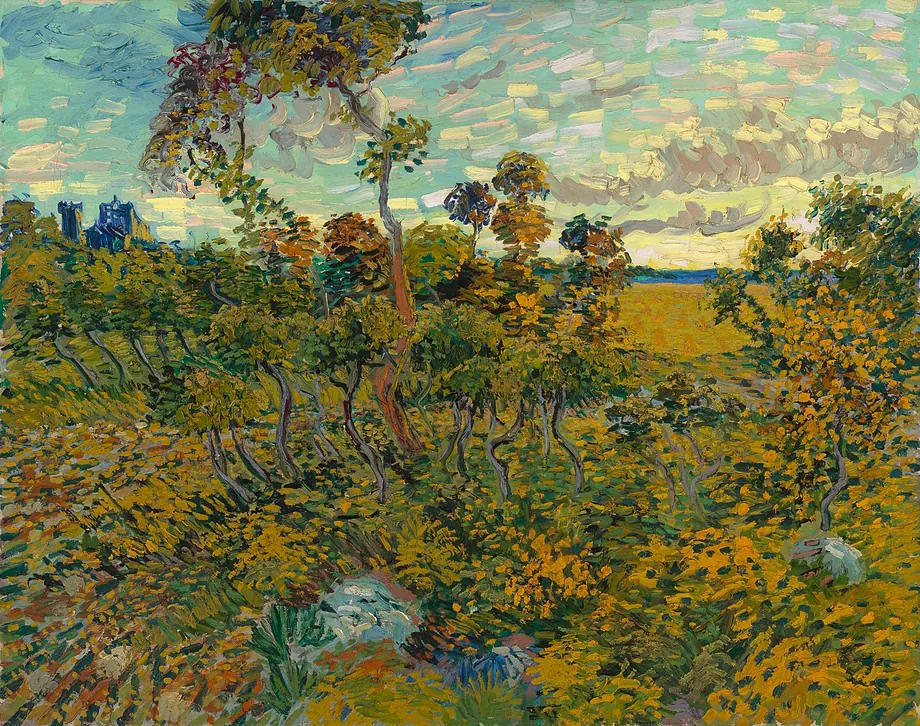
The researchers tested the method with works attributed to Van Gogh and found that it could distinguish the authentic ones from known forgeries. It even flagged a famous copy of The Harvesters as suspicious, while Sunset at Montmajour, whose authenticity was debated for decades before being accepted by experts, perfectly matched the Dutch painter's pattern.
"Fractal analysis provides us with a measurable digital fingerprint of an artist's brushstroke without the need to take samples or alter the painting. This approach will not replace traditional expertise, but significantly reinforces it," says Francois Berkmans, lead researcher of the study.
The news comes at an especially awkward moment for the art world: no one knows for certain how many forgeries are still hanging in museums, galleries, or private collections.
Some authentication specialists have suggested that between 10% and 20% of works attributed to certain great masters could be misclassified or problematic. The figure is impossible to verify, but it illustrates the extent to which uncertainty continues to be part of the art business. In the private market, several experts have claimed for years that fake works could far outnumber authentic ones by some historical authors.
Van Gogh is one of the most delicate cases. The artist only sold one painting in his lifetime and left around 900 paintings. This scarcity turns any new appearance into a potential fortune. Every time an unknown supposed Van Gogh emerges, experts must face a question capable of moving tens of millions of euros: is it real or a masterful copy?
History is full of examples. In 1928, a version of The Harvesters attributed to the painter appeared. For years, it circulated as authentic until subsequent investigations concluded it was a forgery. More recently, the work Sunset at Montmajour spent decades considered fake until new studies convinced the Van Gogh Museum that it had indeed come from the artist's brush.
But Van Gogh isn't even the king of forgeries. That title could belong to Pablo Picasso. The artist himself joked that there were more fake Picassos than authentic ones. Some experts estimate that there are tens of thousands of works attributed to the Malaga-born artist whose authenticity is in doubt. It's not surprising: he produced over 50,000 pieces including paintings, prints, drawings, and ceramics.
Another legendary case is that of Amedeo Modigliani. In 1984, three Italian students carved stone heads with a drill and threw them into a canal in Livorno. When found, several specialists declared them authentic lost sculptures by the artist. The young men had to appear on television showing how they had fabricated the fraud.
And then there's Han van Meegeren, possibly the most famous forger in history. For years, he fooled experts worldwide by selling supposed unpublished paintings by Johannes Vermeer. He was so convincing that, after World War II, authorities accused him of selling national heritage to the Nazis. To save himself, he had to prove that he had painted the works himself.
The amounts at stake explain why the technological battle has become so fierce. An authentic Van Gogh can easily surpass 50 million euros. A significant Picasso can fetch over 100 million. Even forgeries have a market: some historic fake works, linked to famous cases, have been sold for tens or hundreds of thousands of euros precisely for their value as famous frauds.
The rise of artificial intelligence is already adding another layer to this war. A recent investigation detected dozens of supposed works by masters like Claude Monet or Pierre-Auguste Renoir offered for sale on the internet showing signs compatible with forgeries.
Now, the new fractal-based technique promises something that seemed impossible: scientifically measuring a painter's style without touching the canvas. If it works on a large scale, it could force a review of paintings that have been considered authentic for decades and reopen some of the biggest mysteries of the art market.