Gonzalo Ibáñez was desperate. A successful advertiser turned into the culinary business, he managed to make his idea of making traditional ramen, without chemical shortcuts, seduce the palates of the people in Madrid. With two businesses open, which he has named Komainu -the lion-dog statues that protect the entrance of shrines and ward off evil spirits- he plans to open two more. Having achieved the difficult part, when faced with a move classified as "simple," changing the menu with the arrival of the heat and adapting it to more summery tastes, he encountered an unexpected obstacle: the egg. Dishes like tsukune -chicken meatball skewers with a touch of sansho- or the sukiyaki style stew -thin slices of duroc cooked slowly- needed to be dipped in raw egg to maintain their flavor and essence. But in Spain, regulations require the yolk center to reach 63º for 20 seconds or 70º for two seconds before serving it to a customer.
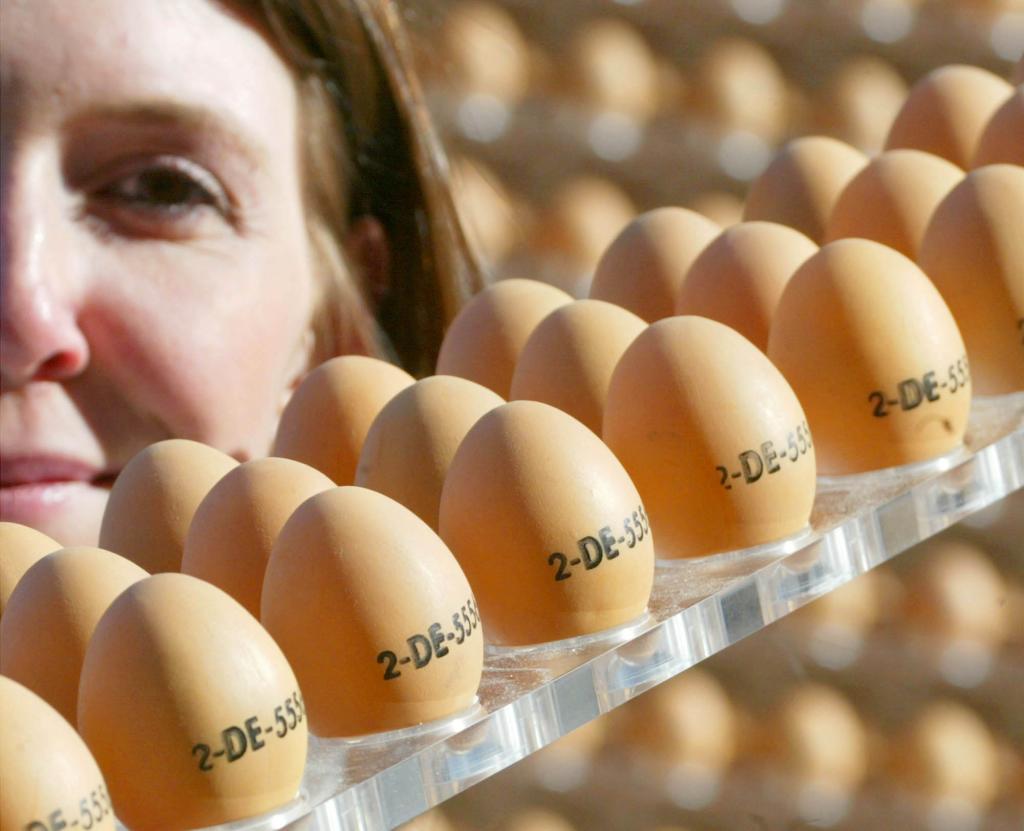
"This causes the egg yolk to cook completely. It's not suitable. I needed an egg that came in its shell but was pasteurized. Only a Belgian company was doing that until a Galician farm, Campomayor, appeared, which has managed to pasteurize the egg inside its shell," explains Ibáñez. An "incredible" innovation that bids farewell to microbiological risks such as salmonellosis.
"We had the egg, a trending consumer product, with regulations pressuring to eliminate it. If when you make a regular egg in a pan you have to pasteurize it, you end up with a boiled egg, not an egg to dip. But we had the knowledge, the technology, and the experience, so we set out to solve that major problem that the hospitality industry had," explains Rodrigo García, commercial director of Granja Campomayor. Their revolutionary pasteurized shell egg allows establishments to serve it as a fried egg with a liquid yolk, a slightly undercooked omelet in the style of Betanzos, or raw, accompanying, for example, a steak tartare.
Outside the shell, its taste is that of a high-quality free-range egg. Visually, the only difference with the pasteurized shell egg is its slightly whiter egg white. It must be kept cold and lasts up to 45 days. The price for a dozen varies between 3.95 and 4.00 euros. "The innovation looks great on paper, but when you start and need to scale the projects, you are not competitive. Its current price is between 30 and 40% higher than conventional eggs, but our goal is to optimize costs so that price is not a barrier," assures García.
The project arose from a challenge from a well-known burger company at the national level. Campomayor had already managed to introduce the low-temperature cooked egg in 2018: after placing it in hot water for a minute, it offers a runny white and a liquid yolk. It was awarded several innovation prizes at Alimentaria and Salon Gourmets. "But you can't live off awards, so we took on the challenge and quickly achieved it. Luckily, unlike other industries that only have one part, we had the prior knowledge, the team, and the entire value chain: from day-old animals to egg laying. It has been a highly sensitive and disruptive project," reveals García. Ironically, although they were concerned about fried eggs, the first customer to use their pasteurized shell egg was a famous tortilla franchise.
A veil of silence falls over the technological process. "In 2015, we set up the first egg pasteurizer in Galicia. And we have patented certain parts of the process, some that are exposed but we consider to have strong protection. But we believe that other parts are better left unpatented. We create our technological cocktail and rely on industrial secrecy. It's like with Coca-Cola's formula, which is not patented," hints the executive.
Campomayor takes its name from the small town in Lugo where it was founded in 1942 and where it still maintains its original facilities, although the company extends to various points in Galicia: in Villalba, the ecological complex is located, where the hens roam the meadows of Terra Cha, and in Ximonde are the central offices, with their classification and packaging plant or laboratories. In its early days, they collected 200 eggs by hand every day. Today, the figure rises to one million daily.
"We are not concerned about volumes, but about innovation. There is still much to develop in eggs," they reveal from the Galician company. García believes that the egg "is a powerful product historically denigrated." "There was false information that if you ate more than two eggs a week, you would turn yellow. But no one questioned when you had five pastries for a snack. The egg is a fascinating product. As I always say: a product from which life emerges in 21 days, how can it be bad?".
Campomayor hopes to be ready for the pasteurized shell egg to reach "high production capacity" by the end of the year. They have made a "significant investment" and proudly receive excellent feedback from the fine dining sector.
"Word of mouth is very positive. It is our strength at the national level, and we expect a progressive growth until reaching the shelves. Luckily, we have many highly specialized distributors throughout the country. We can reach the local establishment that orders three boxes, the franchise with 300 restaurants, and the large retailer that orders a trailer," García boasts. For now, Ibáñez already has several orders placed for the summer menu at his restaurants. And he makes a confession. "It took me 20 years to dare to dip food in raw egg."