The fifth installment of the title that put Pixar on the map and, in passing, redefined animation from its foundations 31 years ago is, in order: a) a beautiful tribute to the fundamental principles of the saga; b) an intelligent and surprising twist to a storyline that seemed exhausted; c) the appreciation and charm of a character like Jessie, so far removed from the somewhat sexist category of toys of almost always; d) a return to simple, good-hearted stories, and, perhaps most debatable, e) a calculated somewhat conservative display very much to the liking of grandparents and parents almost by definition technophobic (and always obsessed with the very boring educational toys) of how to have your cake and eat it too. Paying tribute to toys, to the traditional ones, when the screen fever haunts us is exactly what is expected of a series of films whose great success was nothing other than to vindicate the secret life of those not so inanimate beings.
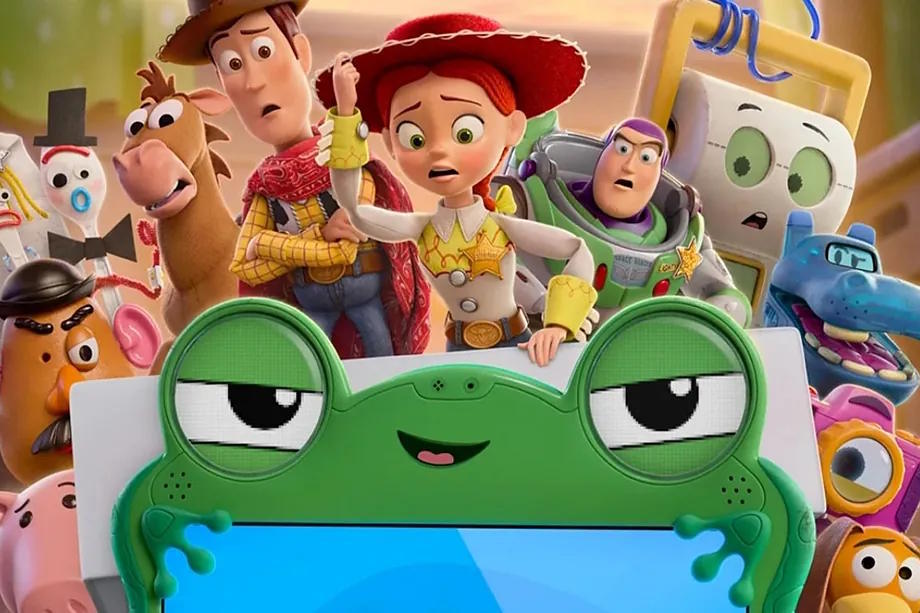
Basically, Toy Story 5 is presented as a survival movie. The already well-known characters with Jessie at the forefront, supported by Rex, Slinky, Forky, and the newly arrived and brilliant Smarty Pants —not forgetting of course Buzz and an aging Woody who is forced to leave his peaceful retirement as a démodé toy— must face the very formidable Lillypad. And who is this woman? Well, exactly what she seems: the screen that absorbs everything. She is not evil in the strict sense, they just made her that way. It is in her toy nature, no matter how technological, to wish and strive with all her effort for the best for her owner. But the zeal with which she carries out her purpose makes her unaware of her overwhelming power to feed anxiety and destroy neurons and friendships. Nothing that has not already been read in any adult newspapers or that has not been detailed by the redeemer Byung-Chul Han.
Andrew Stanton, founding father alongside Pete Docter (who signs in the production) and the fallen in combat John Lasseter, applies himself with affection, overflowing imagination, and the required technical precision to close a circle that, truthfully, seemed already closed. If viewed with perspective, we had seen the toys act as servants of tyrannical and capricious masters, but guarantors of life: toys only made sense if they were played with. They had no purpose if they were replaced by another (1) or collected (2). Their true drama was the arrival of their owners into adulthood (3). Perhaps the last step to take was to imagine the total independence that, from a somewhat eerie perspective, equated to their suicide. This happened in the 4th installment where our protagonists proclaimed loudly, clearly, and Nietzscheanly that their god was dead. Well, what the fifth installment proposes is not so much the resurrection of another god, a bit also, as the advent of the very demon itself: the toy that instead of activating the child's imagination, destroys it. A good twist, indeed.
To a large extent, Toy Story 5 goes against the foundational rule of the entire saga, which is to leave humans in a very secondary role. In the original movie, in fact, the child was barely seen for an instant. Pixar, all of it, has always played with this artifice: the important things are always on the other side: be it on the dark side (Monsters Inc.), be it inside the head (Inside Out), be it in the realm of the afterlife (Coco or Soul). Animation, all of it, is almost by definition the other side. Now, the world of toys and children share the film's runtime almost 50/50. It's not serious, but the change in direction entangles the plot with a slight tendency towards didacticism that seems as novel as unnecessary. The entire movie plays it safe, very concerned not to enter any cultural war or contravene any common and, therefore, hegemonic place. The fact that the company that has done the most to make us love the creative power of technology (the program used to make the first movie was intended to be a good tool for X-rays) shows caution with technology itself is not necessarily contradictory, but, let's admit it, it is striking.
It is also true that the slight feeling of estrangement from the previous paragraph quickly dissipates. There are so many discoveries and devotion to detail by Stanton and his team that any hint of caution is pushed into the background. The hilarious appearance of the horses, the frenzied army of Buzzlightyears, each of the brilliant interventions of the aforementioned Smarty Pants (a technological sphincter controller, as is) or the overflowing energy of Jessie manage together or separately to break through the defenses. The toys are back and they have a message for you: exactly what any boomer desires for their grandchildren now. After all, 31 years have passed.
Director: Andrew Stanton. Cast (original voices): Tom Hanks, Tim Allen, Joan Cusack, Greta Lee, Conan O'Brien. Duration: 102 minutes. Nationality: United States.