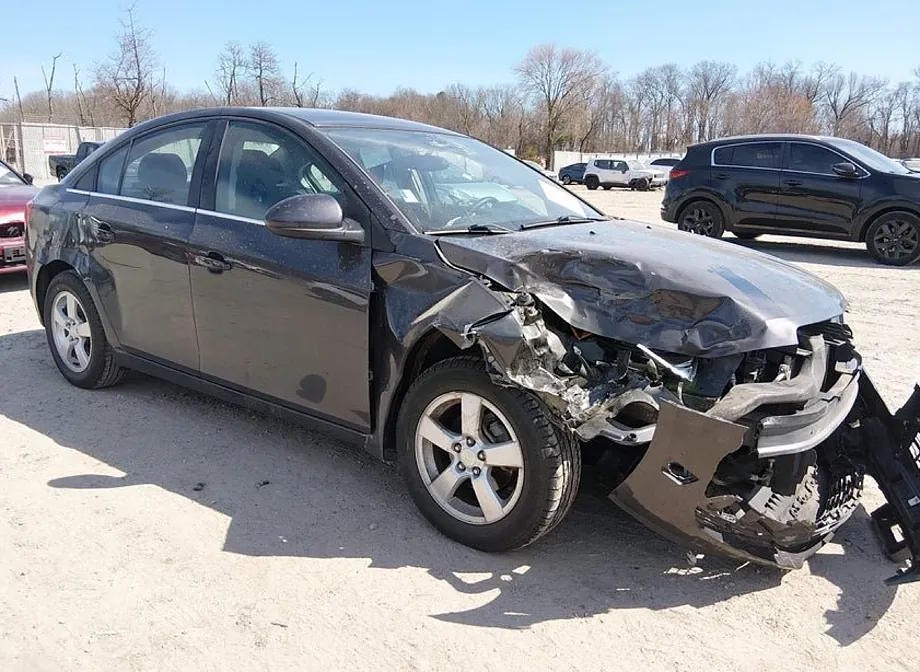
Buying a second-hand car without knowing its history can hide much more than just wear and tear over time. Various international investigations have uncovered how organized crime networks have introduced thousands of severely damaged vehicles into Europe, mostly from the US, to later sell them as seemingly good-condition cars.
Investigations have even documented cases of vehicles with manipulated security systems, missing airbags, or serious structural damage that ended up being sold to buyers unaware of their real history.
The extent of this fraud has been reflected in the international operation "Nimmersatt," coordinated by the European Public Prosecutor's Office (EPPO) and supported by Europol. Between April 2025 and February 2026, 1,000 police, customs, and tax inspection agents participated in raids in several EU countries and concluded that at least 16,500 vehicles reached the European market solely through Lithuania, generating over 144 million euros in illicit revenue. Additionally, the fiscal losses associated with this activity would amount to at least 31 million euros, not including the costs of future repairs, accidents, or other material damages these vehicles could cause. The result is a significant risk to road safety, as well as million-dollar losses for consumers and public administrations.
Particularly concerning is that, in many cases, these vehicles managed to pass the mandatory technical inspections to circulate on European roads despite being severely damaged. In the case of Germany, over 30 cases have been documented where authorities investigated industry professionals for issuing false reports. In fact, several inspectors were convicted of crimes related to bribery and document forgery, some even receiving prison sentences.
Imported crashed vehicles were hastily repaired, with critical safety components being poorly repaired or even replaced with counterfeit parts. In these cases, the technical certifications issued by the competent German authorities attesting to their roadworthiness no longer fulfilled the guarantee and safety function that consumers expect from them.
This highlights the importance of complementing technical inspections with information about the vehicle's real history, especially when dealing with imported vehicles or those from other markets.
A lucrative and high-risk business model
The import of accident-damaged vehicles is a multi-billion-dollar industry. According to data analyzed by Carfax, the leading private provider of vehicle histories in Spain and Europe, during 2024, around 303,000 used vehicles were exported from the United States to Europe. Of these, approximately 220,000 had been declared total loss by US insurers before leaving the country. And although these vehicles cannot be registered in that country, they fetch high prices in Europe after being reconditioned.
An example from the investigation files shows how a severely damaged sports car is bought at auction for around 10,000 euros, then resold for 50,000 euros. Furthermore, the less invested in repairs, the higher the profit margin, at the expense of passenger safety and the vehicles on the roads.