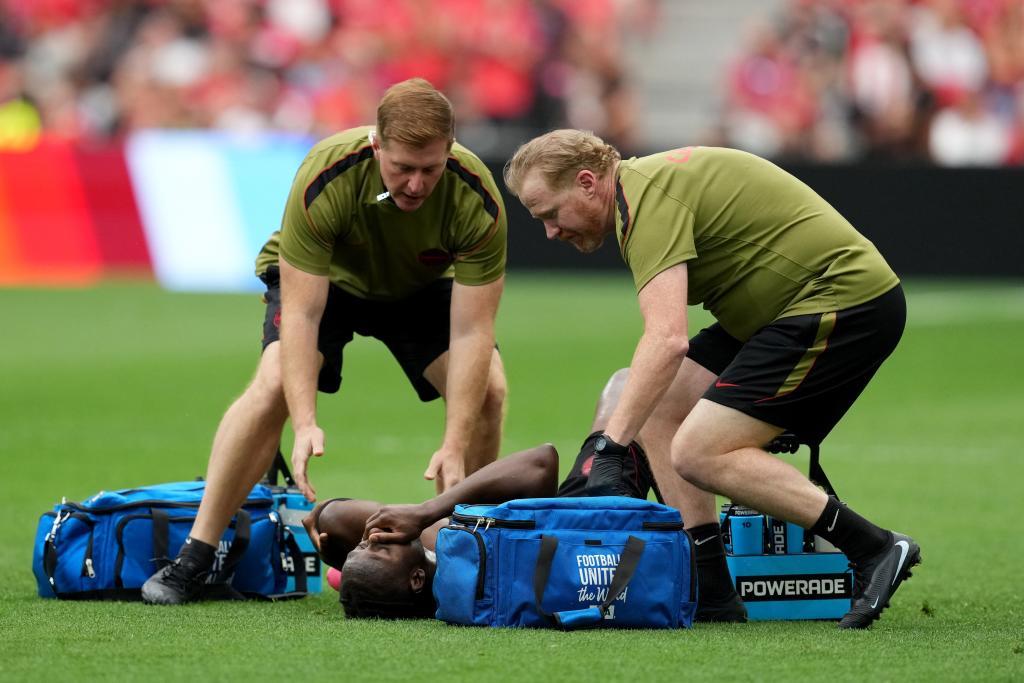
The resounding 6-0 victory of Canada over Qatar was marked by the chilling injury of midfielder Ismaël Koné. After a tough collision with Qatari player Assim Madibo, medical assistance had to rush onto the field to alleviate the pain of the Canadian player, as his leg suffered a shocking fracture later confirmed to be a tibia and fibula fracture.
The severity of the scene left the audience speechless. However, tension turned into intrigue when fans noticed that medical staff handed a mysterious "green whistle" to the player. Thanks to this device, Koné was able to be carried off on a stretcher while remaining calm and even bidding farewell calmly to his teammates and the crowd. But, what is this device really?
Penthrox, the "unicorn" inhaler
To resolve all doubts, we consulted critical care nurse and renowned health communicator Héctor Castiñeira. He confesses that it is a kind of "unicorn" inhaler: he knew of its existence but admits he has never had one in his hands. We are talking about Penthrox.
It is a rapid-action inhaled medication based on methoxyflurane, specifically designed to relieve moderate to severe pain in medical emergencies, such as accidents or bone fractures.
The medication is a fruity-smelling liquid that evaporates inside this special device. Thus, the patient (who remains conscious at all times) can breathe through it to self-administer relief under medical supervision. Its effect is almost immediate and drastically reduces suffering, although with a nuance: it alleviates pain but does not fully anesthetize or put the person to sleep.
As Castiñeira explains, although Penthrox is used in emergency situations similar to the famous fentanyl, its potency is "milder." The specialist clarifies that this medication is "not suitable for severely ill patients", as the person receiving it must be fully conscious and have enough strength to "breathe and inhale the medication on their own."
This analgesic was used years ago as an anesthetic in operating rooms but was eventually withdrawn due to the availability of safer alternatives at high doses. However, as seen in this World Cup, it has "resurfaced for use in non-hospital settings". This trend, well established in countries like the UK and Australia, has become the perfect ally for medical emergencies on the field, as evidenced by the calmness with which Koné could face such a serious injury that will keep him off the field for several months.