Do not think that the United States is a newly arrived team in the World Cups and in success, although it is true that there are no living fans who remember it. The Americans were semifinalists in the first World Cup, in Uruguay 1930, returned in Italy four years later, eliminated in the group stage, and defeated England (1-0) in Brazil in 1950. Since then, and until 1986, it disappeared. For that edition, which would be played in Mexico, they had already tried to be hosts, but had to wait until 1994. Before that, and as a condition, FIFA had given them homework: to create a national professional club championship. That's how the Major League Soccer (MLS) was born, whose growth has already provided the United States with talent to nourish a team that started by beating Paraguay and will measure its strength against Australia and Turkey.
Only five of Mauricio Pochettino's 26 players in this World Cup have been trained in European academies of the Premier League, the Bundesliga, or the Dutch championship. They are Sergiño Dest, Robinson, McKenzie, Tillman, and Balogun. Some were born American by chance and even played in the youth teams of their parents' countries or where they grew up, but then chose to play for the North American national team. This contrasts with eight, who are none of the above, currently playing in the MLS. A hybrid national team that shows how the investment in talent over four decades has led to American players in teams from the five major European leagues being trained in the MLS. Soccer is now football, and from Europe and South America, it is not looked down upon nor seen as a golden retirement.
Now, its 30 franchises spread throughout the country led to more than 11 million spectators in stadiums in 2025, with an average that set a record in 2024, 23,234, the same as some stadiums in the First Division. The team that attracted the most spectators in 2025 was Atlanta United, with an attendance of 43,992 spectators, similar to what is recorded in each League match at Mestalla. In this World Cup, there are 44 players playing in the MLS, making it the sixth league that contributes the most players, behind the five major leagues and the Saudi League.
This rise of soccer in the United States has had three major phases. The first began in the 1970s when the North American Soccer League (NASL) attracted legends like Pelé towards the end of their careers, and later Franz Beckenbauer and Johan Cruyff. It was still a sport enjoyed by immigrants from countries with a tradition like England, Italy, or South America. However, they failed to establish a championship, something that FIFA required of them to be the host in 1994.
The MLS started with 10 teams without their own stadium, sharing with the NFL or baseball. The economic losses were evident despite the World Cup bringing 3.5 million fans to the stadiums, a historical record for FIFA at that time. This did not prevent, in 2021, a significant economic downturn that led to a reconsideration of the format and even the existence of the league.
In 2007, the beginning of the recovery was marked by the arrival of David Beckham to the Los Angeles Galaxy. The British star, whose figure transcended football, focused on the competition, and big players and sponsorships began to arrive. This required the 'Designated Player Rule,' also known as the Beckham Rule, which allowed clubs to bypass the salary cap to sign three players, paid not by the league but by each franchise owner. This allowed the entry of players like Kaká, Henry, Ibrahimovic, Pirlo, or David Villa. A year later, the price to invest in a franchise had multiplied by ten, and yet they expanded.
For the first time, the arrival of professionals who improve domestic physical and tactical levels, and increase competitiveness, was encouraged. From 13 teams, it grew to 29, the commercial impact was very high, and the perception of the competition changed. However, the Beckham rule did not change the salary cap imposed on most players, which began to cause the emerging talent to migrate at their peak performance.
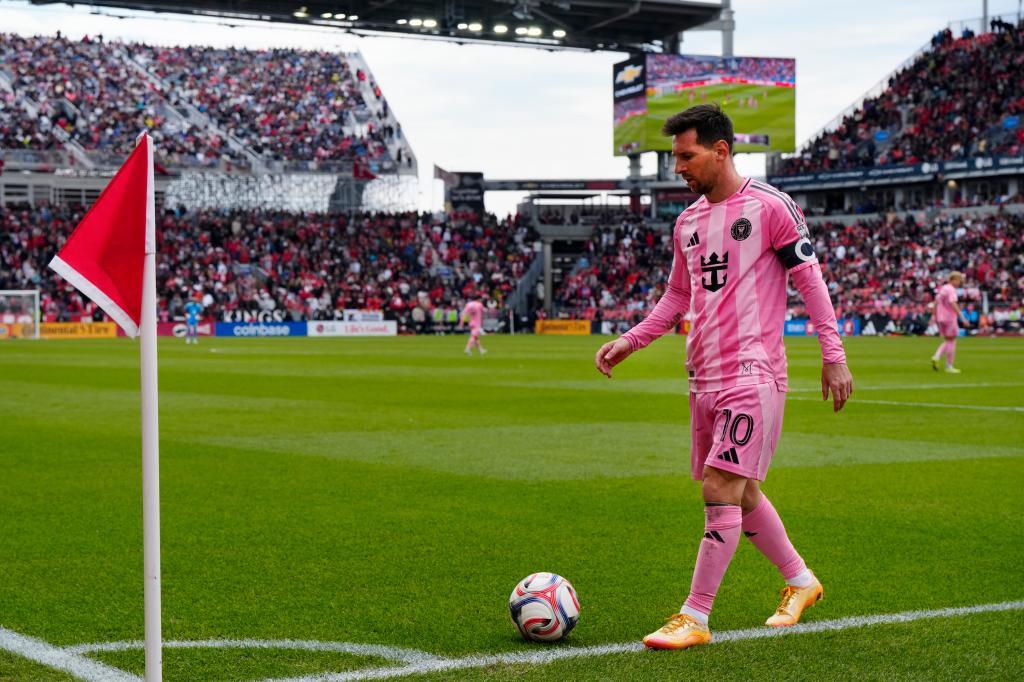
However, the competition found another way to continue its ascent, and it goes by the name of Leo Messi. The active Ballon d'Or winner, after leaving PSG, chose the MLS to continue playing. Specifically, Inter Miami, where he was joined by Sergio Busquets, Jordi Alba, and now Rodrigo de Paul, all World Cup champions. The MLS had reached an agreement a year earlier with Apple TV as the official streaming platform, and just the announcement of the Argentine's arrival doubled subscriptions, with over 50% of the audience switching to watching games in Spanish. Attendance grew, and rivals noticed an increase in their revenues when hosting Inter. Soccer started to interest in the United States and the MLS in the rest of the world.
This momentum is causing large attendance figures at local World Cup matches and exponentially growing support for a national team that could become one of the surprises of the tournament. Their benchmark remains in the quarterfinals, reached in the 2002 World Cup in Korea and Japan when Germany, with a goal from Michael Ballack in the 39th minute, prevented them from returning to a semifinal. Now, on the way there, there will be one more round.