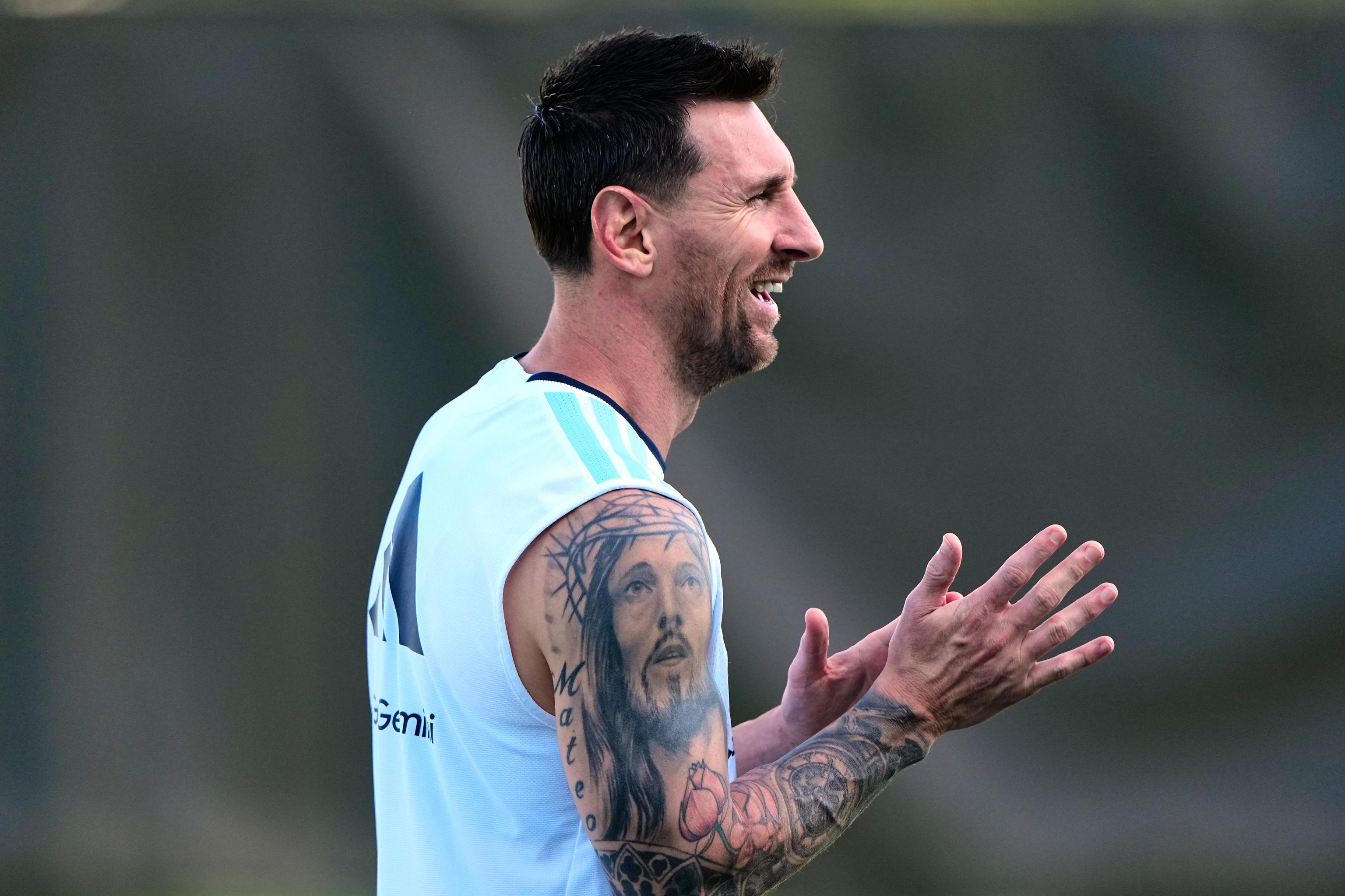
The World Cup of the stars is also the World Cup of goals. Logical. The five goals by Leo Messi and the four by Kylian Mbappé and Erling Haaland lead the galactic list of top scorers, where names like Vinicius, Harry Kane, or Cristiano Ronaldo also appear, all with two goals. The galaxy has descended upon the United States, Mexico, and Canada like never before at the start of a World Cup.
Before the start of the third matchday and after 48 games played, the tournament has seen 141 goals. This results in an average of 2.94 goals per match, the best since the 1958 Sweden World Cup and the seventh in history, surpassed by the Nordic tournament (3.60), Uruguay 1930 (3.89), Brazil 1950 (4), Italy 1934 (4.12), France 1938 (4.67), and Switzerland 1954 (5.40). In other words, a World Cup from another era.
The event from four years ago in Qatar had already been the best of the modern era with 2.69 goals per match, but the current one has surpassed it, with the stars taking on the responsibility of scoring goals. For the second time in history and for the first time since Switzerland 1954, the World Cup has seen three players score four or more goals in the first two matchdays of the tournament: Messi, Mbappé, and Haaland. 72 years ago, Hungarian Sandor Kocsis, Austrian Erich Probst, and German Max Morlock had achieved this.
And they have done it at lightning speed. The 2026 World Cup is now the edition where the 100-goal mark was reached the fastest since 1958. Cody Gakpo, in the Netherlands' victory over Sweden in the 33rd match, scored the centennial goal.
"Is this the best World Cup in history?" wondered Tom Brady, American football legend, after Cristiano joined the galactic start with his brace against Uzbekistan. The legendary quarterback may not be the biggest expert in soccer among those available, but his argument aligns with several atypical situations. Messi becoming the all-time leading goal scorer in the World Cup, surpassing Miroslav Klose, or Cristiano scoring in his sixth World Cup and becoming the oldest player to score a brace (41 years and 138 days), almost impossible feats to surpass in the future. Mbappé scoring 16 goals in 16 matches in the tournament, Haaland being the sixth player in history to score in his first two matches, Lamine Yamal finding the net in his first start...
Looking at the list of the most valuable players of the tournament, all have made an impact: Lamine, Haaland, Mbappé, Vinicius, Michael Olise (goals or assists in both matchdays), Joao Neves (scored against Congo), or Jude Bellingham (found the net against Croatia).
They have all been supported by Gianni Infantino, FIFA president and advocate for expanding the tournament to 48 teams. The addition of 16 teams has gifted this World Cup with 40 more matches, from the previous 64 to the current 104, making it evident that this World Cup will be the highest-scoring in history overall. The 141 goals scored between the first two matchdays have surpassed most editions, nearing figures like Spain 82 (146) and are on track to break Qatar's record (172). Hence, focusing on the average would be ideal.
This expansion has also benefited the players, who now have an extra round, the round of 16, which did not exist before, to add more goals to their tally. On the horizon are the 13 goals scored by Frenchman Just Fontaine in 1958. This figure serves as a target for Messi and Mbappé, expected to go far with their national teams, or for Haaland, whose Norwegian team aims to cause an upset.
The weaknesses of some of the countries that have qualified for the World Cup have also been exploited by the stars, like Messi against an Algeria that had not participated in the World Cup since 2014, Cristiano against debutant Uzbekistan, or Mbappé against Iraq, absent since Mexico 86. Nevertheless, the underdogs have also surprised against the favorites, with Cape Verde, Congo, and Ghana holding Spain, Portugal, and England to draws, proving that this World Cup is not just historic for the goals.