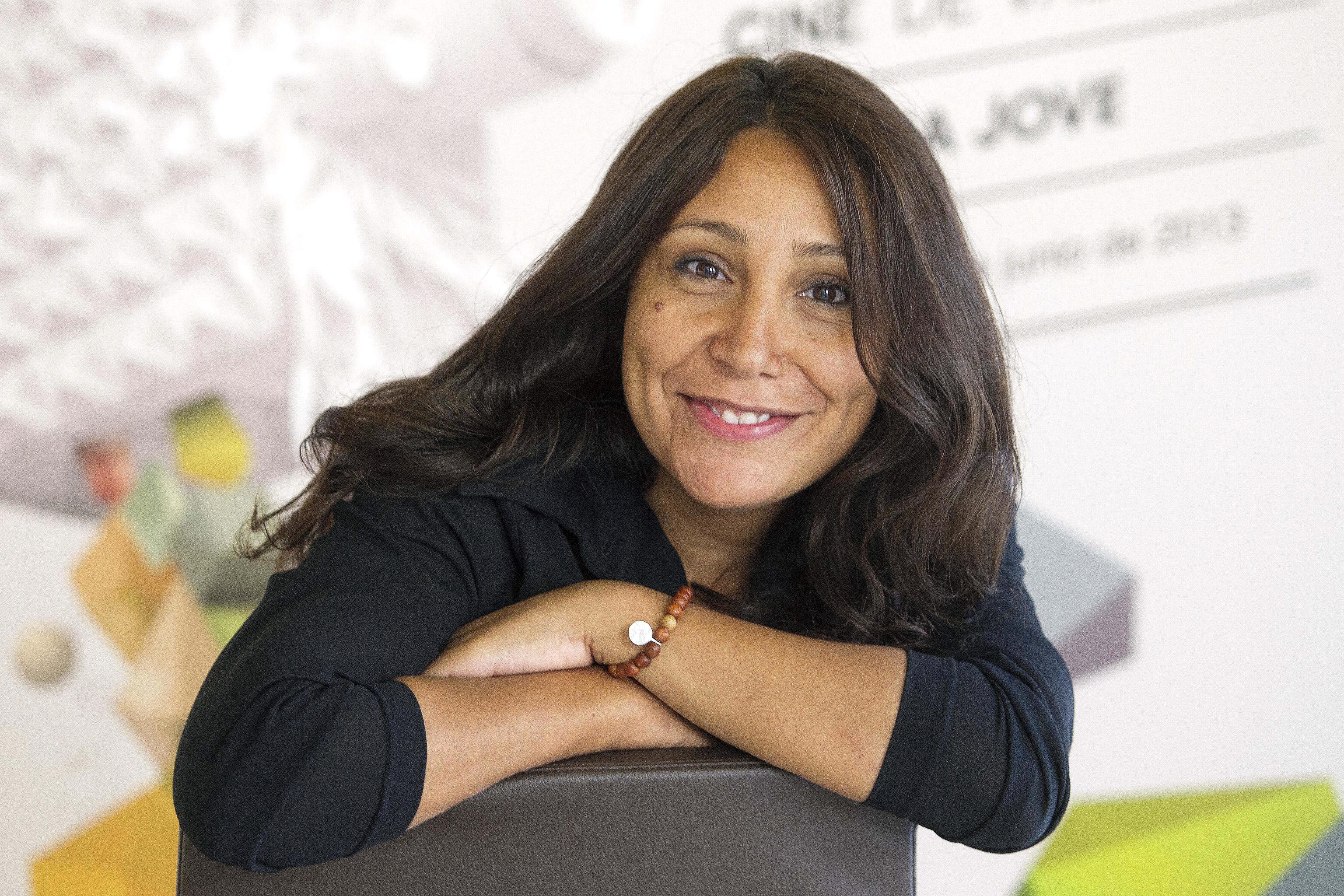
Almost three decades ago, Haifaa Al-Mansour (Riyadh, 1974) had the brilliant idea of filming a movie in a country where there were no cinemas or female directors. There was only her and her movie. The story of Wadjda, the Saudi girl who wanted to do something as forbidden as riding a bicycle (that's what the movie is about), quickly became a symbol and a banner not exactly of a revolution, but of a perhaps unstoppable change. Al-Mansour's debut with Wadjda came just after the Arab Spring and, whether she wanted it or not, it has remained there as a reference and, to some extent, a warning of many failures, but also of an unrenounceable desire. "I have never felt like a symbol or a pioneer or anything like that. I wanted to tell a story and I did. I hope my work opens the eyes of many women, but that was not the driving force behind the movie. I simply stayed true and honest to my vocation. And I hope that is what remains," says the director from Los Angeles over Zoom, presenting The Woman with No Name, a thriller that concludes the trilogy of women that began with Wadjda (2012) and continued with The Perfect Candidate (2019).
Many things have changed since that debut. Al-Mansour has completed an international career that embraces everything, from series like The Walking Dead to elegant period adaptations like Mary Shelley, and she is no longer the only female director in Saudi Arabia. "I look around me and I feel accompanied by countless women who dare to defy the world they have grown up in. Saudi society is very conservative and understands women's freedom in its own way. It likes us to be teachers, nurses, or doctors, but it struggles more to understand us as actresses or directors," she says, pausing to reflect on the character of the protagonist of her movie. "I have never intended to preach to anyone. I see cinema basically as a craft to entertain. That doesn't prevent you from designing and thinking about characters from, if you want, desire. That's why the women in my movie do not see themselves as victims. They know what they want and fight for it. And that's why the male characters, especially one of them, is a understanding and kind man who maintains a professional relationship with the protagonist without it necessarily leading to a romantic relationship. I believe that changes in the imagery of popular cinema can penetrate and change reality itself," she adds.
The movie adopts the rules of film noir to trace the wounds of a society that still allows polygamy, still restricts women's movements, and still prioritizes family permission for certain things. "I am an optimist because it is the only way to survive. I cannot help but acknowledge that things have changed a lot and very quickly for Saudi women. And always for the better. The veil is optional, we can now drive, apply for jobs, and travel without the husband's permission. Believe it or not, when I made my first movie, I had to present written consent from my husband. Of course, there is still a certain family code that weighs heavily, which is very important in Saudi Arabia, but the change is so noticeable...," she says, leaving an argument in favor of her enthusiasm with ellipsis: "It's strange because my country has always been the example cited by everyone as a symbol of women's repression. But just look around to realize that things are getting worse everywhere, except in Saudi Arabia. In Turkey, the great example of a secular country within Islam, is becoming increasingly conservative. And what about Iran? We no longer have something like the morality police. Whether you like it or not, we are moving towards modernity with the Western world."
There are now cinemas in Saudi Arabia, and Haifaa Al-Mansour is not alone. "That's true, but I know that I will carry the label of the Saudi director with me all my life," she concludes.