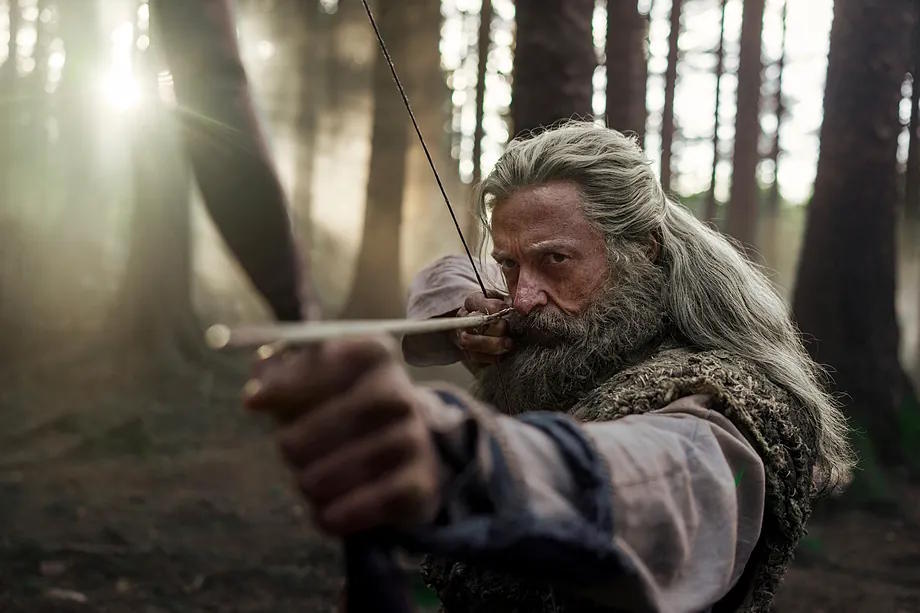
Cinema was born with Robin Hood. The first adaptation with classic flair was directed in 1922 by Allan Dwan with a Douglas Fairbanks in tights that not even Errol Flynn could surpass a decade later. And since then, over a hundred revisions, reinterpretations, copies, versions, and even absurdities have completed the legend of a legend larger than life itself and indeed any other legend. The latest of them, The Death of Robin Hood, is directed by Michael Sarnoski and stars a dying Hugh Jackman, who, let's admit it, is excessively cruel. Suddenly, the often repeated story of the good thief takes on the murky gesture of a criminal haunted by his misdeeds and, once again, his own legend.
"What interested me was to explore the power of storytelling," comments the director from the other side of the zoom to justify his audacity. And he continues: "If we look closely, Robin Hood himself used the stories told about him as a weapon of power to perpetuate his violence. His cousin, the prioress of the convent who betrayed him and caused his death according to the canonical text, did something similar, but in the opposite direction. She healed with her stories. Well, it is precisely this that makes the story of a bandit and a murderer who passed into everyone's memory as the Disney hero we all remember so current. We live surrounded by narratives thanks to the internet and social networks with which we build myths and create heroes and villains; with which we pigeonhole ourselves in our ideologies resorting to lies and rumors if necessary. Our Instagram profiles do nothing more than mythologize us and create a false legend of ourselves. We are determined to be protagonists and to treat others solely as secondary characters in a story that belongs to us. We should take responsibility for the stories we tell ourselves."
Did anyone have any doubts that Robin Hood speaks of us?
The film, as the title promises, narrates the last days of the hero. Wait a moment, of the hero? Jackman's character, somewhat far from the popular myth, is closer to what historians not dazzled by the romantic construction still describe as a simple bandit and a seasoned killer. "In reality," Sarnoski adds, "the idea was not so much: 'I will surprise by telling just the opposite.' Nor is it a historical study in search of the truth that denies the beloved rumor by Hollywood. My intention, if you will, is more modest. The idea was to turn two characters, Robin and the Prioress (portrayed by Jodie Comer), into two human beings stripped of the legend that surrounds them, but at the same time, very aware of that legend. Robin sees himself as he really is while grappling with the guilt of all the crimes committed and with the guilt of, indeed, his legend." It is clear.
The director, who previously directed films like Pig and A Quiet Place: Day 1, insists on describing characters who are lonely, desperate, and with a rare suicidal vocation. "I am fascinated by starting right at the moment when all is lost. It's a bit like telling the story in reverse. It starts with a guy who is spiritually dead, who tells himself: 'I accept my fate. For better or for worse, I am finished.' What follows is a pure exploration to understand the world and those around him. We know we must accept the darkness and sadness of our lives, but still we must move forward and maintain hope. Rarely before in human history do I believe this message is more relevant," he says, and we believe him.
The legend of Robin Hood has fueled popular and inherently optimistic cinema like no other myth, from its beginnings to the present day. "It is fitting then that the legend of the legend itself now sheds light on these somewhat darker times," he concludes.