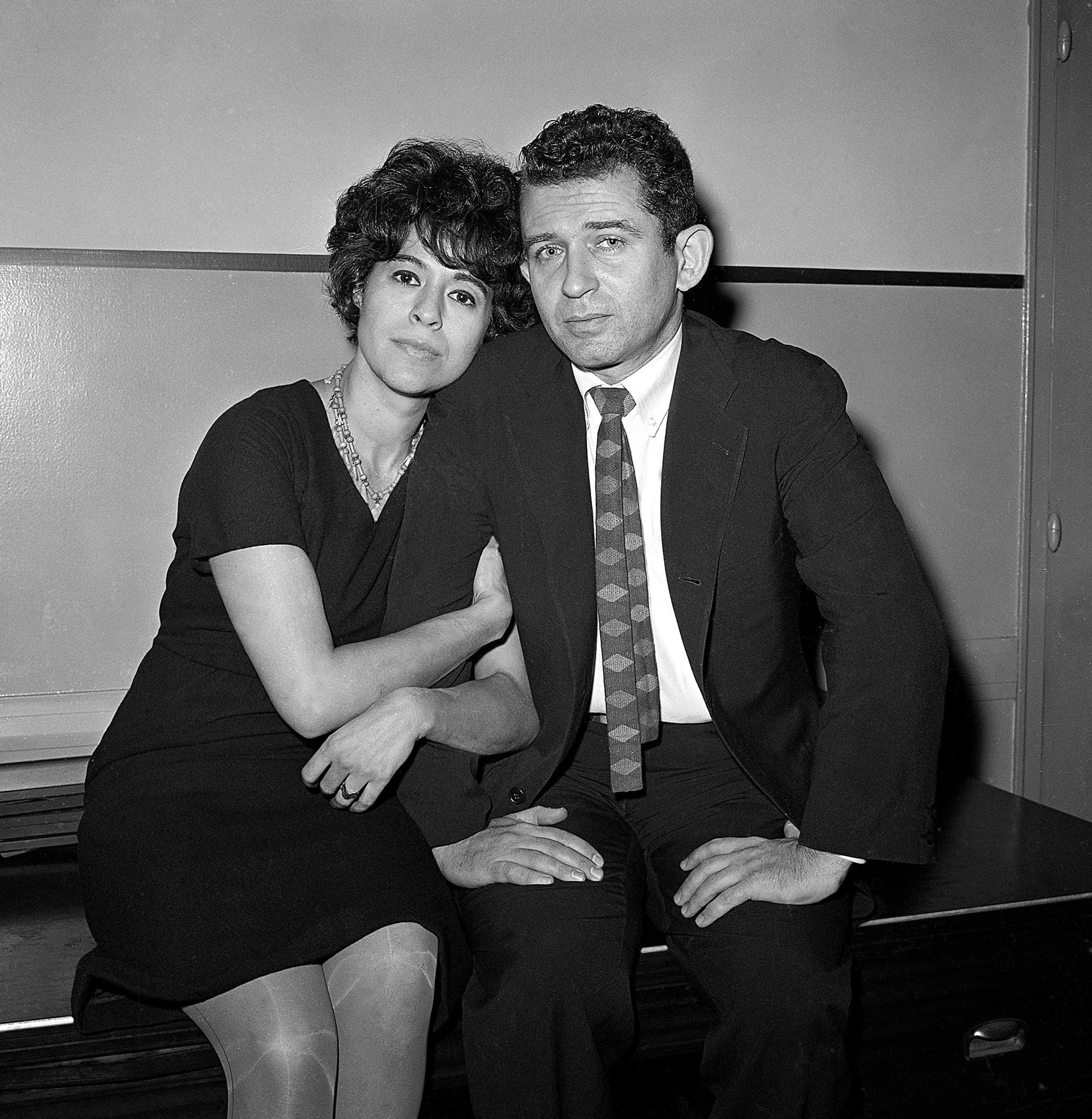
If one starts by stabbing his wife, even if she forgives him, it is likely that he will end up believing himself to be the innovator of American literature and journalism. With the permission of Thomas De Quincey, this maxim could be applied to Norman Mailer (1923-2007), despite the fact that the American writer had achieved literary glory in 1948 with the publication of The Naked and the Dead, a text in which he narrated his experience in World War II, many years before attempting to murder his second wife, Adele Morales, a Hispanic-Peruvian painter whom he had married in 1954.
It was November 18, 1960. Shortly before, Mailer, who enjoyed a good position and was highly regarded in the New York literary and journalistic world, had interviewed John F. Kennedy during the electoral campaign that would take him to the White House. He was so convinced that the new president would call him to work as an advisor or consultant in his administration that he even considered running for mayor of New York in the following 1961 elections.
Hunting for the Great American Novel
At that time, Mailer, according to the researcher Richard Bradford, author of Norman Mailer: The Tough Life, which the Erasmus publishing house has just translated into Spanish, "drank a bottle of bourbon during a party night, in addition to any wine, cocktail, or liquor offered by his hosts. During the day, he smoked marijuana non-stop, which made him oscillate between states of restlessness and anger." That Friday, November 18, while finalizing his candidacy, which he would announce the following Tuesday, with Cuba under "Comrade Fidel" as a political model, he had organized a promotional party that got out of hand. After several fights with other guests, around three in the morning, "staggering and bloodied, he walked directly from the lobby to where his wife was, in the dining room, and stabbed Adele twice, once in the back and once upwards, below the lower ribs. The second stab was almost fatal, as it pierced the pericardium, the conical membrane that surrounds the heart and contains most of the veins and arteries closest to it." All versions of the incident, Bradford continues, "quote Mailer shouting at those trying to help her: 'Don't touch her. Let it die'."
Years later, in The Last Party (1997), Adele stated that that night the responsibility was hers, as she had mocked his masculinity and sexual potency by provoking him. That's why she forgave him, did not press charges against him, and testified in court that they were "perfectly happy together." Furthermore, she "was convinced that being stabbed was a reasonable price to pay for being the wife of a genius, as she would make clear in her memoirs." She even welcomed a poem published months later in which Mailer wrote: "While/ one/ uses/ a knife,/ there remains/ something/ of a master."
In 1962, they divorced. "According to Adele's friends, along with their two daughters, she never fully recovered from the psychological trauma of the attack. Her bewilderment at having been on the verge of dying at the hands of a man who regularly proclaimed his love for her persisted over time."
This episode in Norman Mailer's life reflects his character better than any other in his biography. In 1969, the year he won the Pulitzer for non-fiction for The Armies of the Night (a critical essay on the Vietnam War), he ran for mayor of New York again. Mailer's political principles, explains Bradford, "were a shoddy, tailor-made version of his personality: violent existentialism was his cover to hide his irresponsibility and hedonism, and his commitment to social equity softened his misconduct. Despite his wealth and status, he believed himself to be one with the people."
Bradford's book does not paint a flattering portrait of the writer: a man who claimed to be a sex addict, who married six times, fathered nine children, cheated on all his wives, and—with the exception of Bea, the first, and Norris, the last—"often mistreated them." A man who would strip naked when drunk; who publicly insulted and belittled other writers—such as Salinger, Bellow, Tom Wolfe, Capote, John Updike, and Gore Vidal (whom he even struck twice and insulted over his homosexuality). A man, in short, who held racist views and who, following the attacks of September 11, 2001, declared that Bush's response "reflected a sense of political and sexual impotence among white American men. Women—specifically feminists—had humiliated them, and Black people had demonstrated through sports that WASPs were physically inferior."
And his literature? Bradford is also clear on this, even though Mailer died believing he had revolutionized American literature and journalism. "He did not give up on novels (he received his second Pulitzer in 1980 for one, The Executioner's Song), but his most famous works are non-fiction books about real people and events in which he allowed himself the creative license of a novelist, pretending to be serious while making things up as he went along.