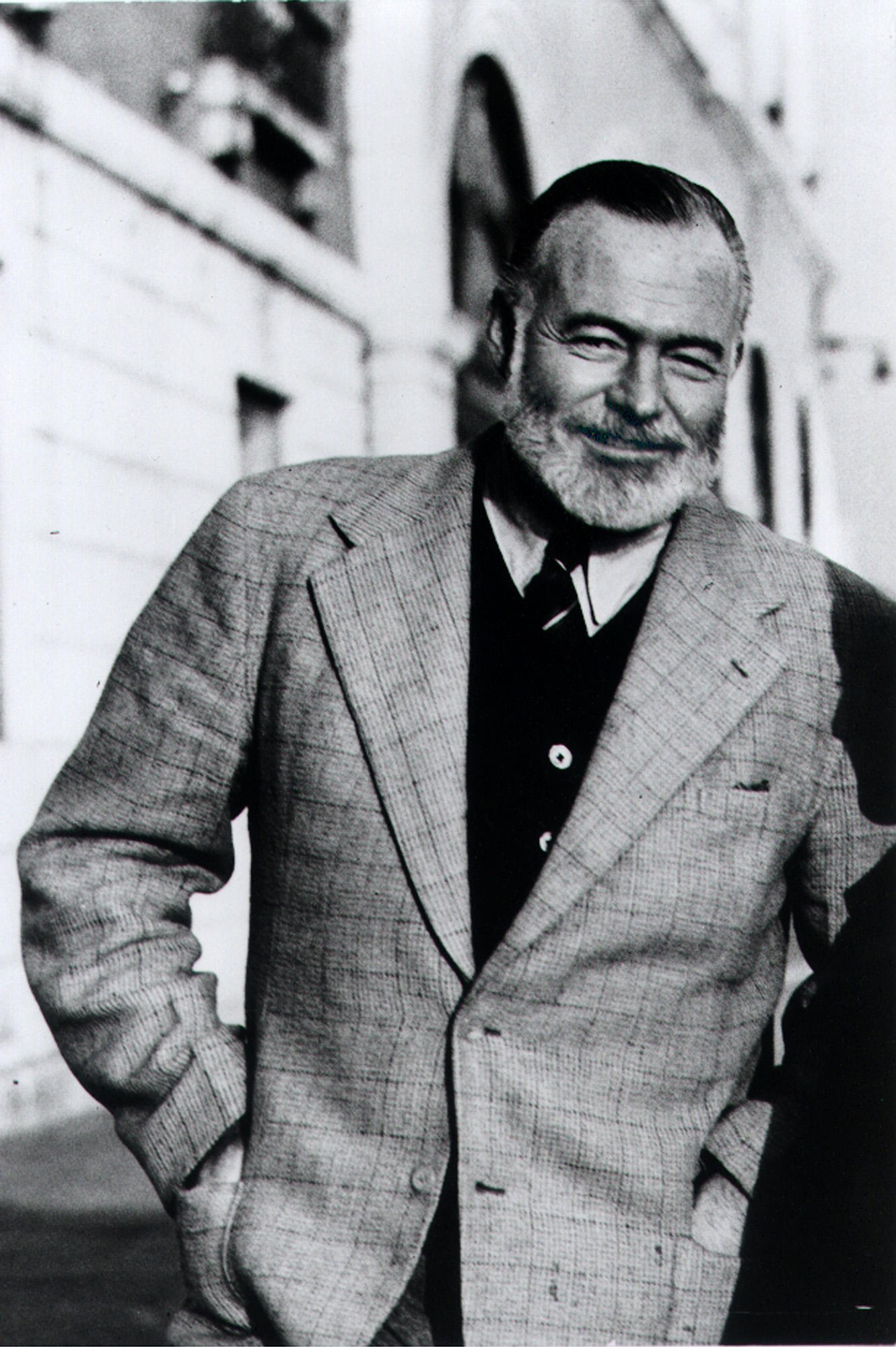
Over a hundred years ago, a young Ernest Hemingway arrived in Pamplona as a reporter for the Toronto Star and found in the Sanfermines a literary material that would overflow the pages. That 1923 trip was the beginning of an idyll that crystallized three years later in the novel 'The Sun Also Rises', translated into Spanish as 'Fiesta'.
It was the first novel published by the man who in 1954 would become the Nobel Prize in Literature. Since then, the work became inseparably linked to the name of Pamplona and the international projection of its festivities.
That Hemingway, as explained by Gabriel Insausti, professor of Contemporary Literature at the University of Navarra, was "a young writer who was just starting out, who had turned to journalism as a way of life, although it did not completely satisfy him. And who was part of what was later called the Lost Generation."
Upon his arrival, he pointed out, "Hemingway loves the world of bullfighting and wine, because he was from Chicago. If we think about what was happening in Chicago in 1925, well, Al Capone, Prohibition..." and then "he arrives here and sees that everyone drinks without any shame."
Dazzled by the festive atmosphere, Hemingway visited Pamplona nine times between 1923 and 1959.
But the novel 'Fiesta' is not exactly a 'party' for its characters. As Insausti emphasized, it tells "the story of a journey without a real destination; more than heading towards a specific place, it is more about escaping in the end, fleeing from themselves and from the emptiness that the war has produced." In fact, the protagonist of the work, Jake Barnes, is a reflection of Hemingway himself.
The Sanfermines, according to the professor, are "a celebration, a party. We remember that another year we are alive and we do the same as every year; we meet the same people and in a way celebrate that, life," but "these guys, no; these guys are desperate."
Bill Hillmann, a former boxer, journalist, writer, and runner of the bull runs, born in Chicago like Hemingway, told Efe that when he was twenty years old, he sat down to read 'Fiesta'. "I felt a lot of curiosity and excitement about the adventure of San Fermín. I thought: Wow! Does this really exist? I want to experience it," he said.
"I love adventure. I had an opportunity and I took it. I wanted to feel the bull run and be close to the animals. It was for the adventure," he confessed.
In 2014, Hillmann had a serious accident during the bull run, but he never thought of giving it up: "Even when I thought I was dying, I knew that if I lived, I would run with the bulls again. Ernest Hemingway's great-grandson, Michael, who is my friend, came to my aid. Hemingway's work brought me here and his grandson helped me when I thought I was going to die."
But the legacy is not without debate. In a mock trial held in Pamplona in 2023 by the Navarre Writers' Association and the Peña Anaitasuna, Hemingway was declared "innocent" of distorting the Sanfermines or being responsible for their overcrowding, although he was credited with spreading the festival worldwide.
In any case, if Hemingway were to see the current Sanfermines, Hillmann stated, "I think he would be happy. Because the culture is alive. The energy is strong."
Thus, between celebration and criticism, 'Fiesta' retains in Pamplona a weight that is hard to dispute. A century after the young reporter's arrival, the novel continues to resonate in the way the Sanfermines see themselves and how the world sees them.