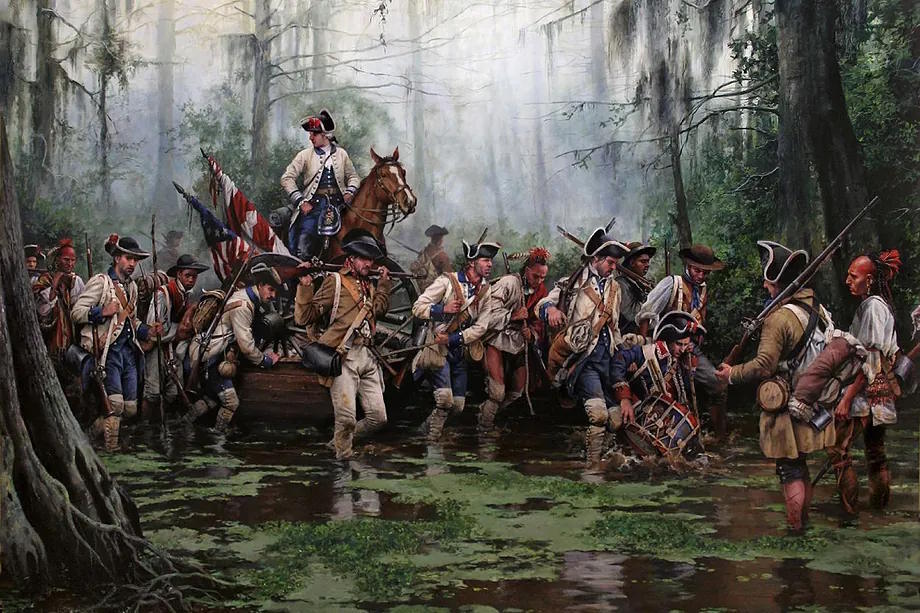
Gonzalo M. Quintero often points out that the names of wars are all "false," as they are often assigned retrospectively and even confusingly. This was the case with the so-called War of Independence of the USA, a conflict among the main imperial powers of the 18th century (the Spanish and French on one side, and the British on the other) that resulted in 13 of the 26 British colonies in North America jointly declaring their independence on July 4, 1776. This circumstantial union would be the seed of a new country, the USA, whose Constitution would not be established until 1788, with George Washington being elected as its first president a year later.
Although not widely known, despite the increasing literature on the subject, the Spanish Monarchy played a decisive role in that initial Declaration of Independence, which now celebrates its 250th anniversary. It was inevitable since by then, at least two-thirds of what is now U.S. territory belonged to Spain, from the Mississippi Valley to the West Coast, including Louisiana, California, and Mexico. Moreover, from there to the Strait of Magellan, except for Brazil and some French and Dutch enclaves, most of the continent spoke Spanish.
Furthermore, the War of Succession, which began in 1701 and led to the transition from the Habsburgs to the Bourbons in Spain, opened a new period of fierce struggles for global hegemony and control of the riches of the American continent between the British Empire (against whom Philip II had sent the Invincible Armada in the late 16th century) and the newly formed alliance between the Spanish and French monarchies, which shared the reigning dynasty.
Therefore, the conflict that began in 1775 was not limited to North America but also extended to the Caribbean and Central America, as well as Gibraltar and Menorca, under British control since the Treaty of Utrecht (1714). In his comprehensive work published by Alianza, "El enemigo de mi enemigo: España en la Guerra de Independencia de los Estados Unidos de Norteamérica (1775-1783)," the diplomat and historian Gonzalo M. Quintero highlights how the involvement of France first and then Spain turned what started as a revolt in 1775, transformed by the Declaration of Independence in 1776 into a revolution, into a global conflict. The humiliation of the British occupation of Havana and Manila during the Seven Years' War (1756-1763) and the loss of Florida were wake-up calls for the Spanish government, leading to vigorous imperial reforms.
During the conflict, Spain supported the American revolutionaries financially and militarily through merchants who supplied weapons and ammunition and even armed privateers with the main goal of weakening the British Empire. This demonstrates that national interest guided the actions of all parties, as neither Spain nor the USA wanted the total victory of the other's forces but rather to keep the British forces divided, following the principle of "helping the enemy of my enemy." Therefore, some Spanish successes like Gálvez's victory in Pensacola were not celebrated by the independent colonies, as it could threaten their territorial expansion ambitions, especially in Florida.
Regarding the war objectives, Quintero concludes that "Spain was only unable to achieve the restitution of Gibraltar, and despite it being the main goal, the others were not less important. The Spanish government of the time had an imperial or Atlantic vision, considering American territories as vital as European ones. When the British offered to return Gibraltar in exchange for Puerto Rico during the peace treaty negotiations, Spain rejected the proposal, deeming the British presence on the Caribbean island a much greater risk for the empire as a whole."