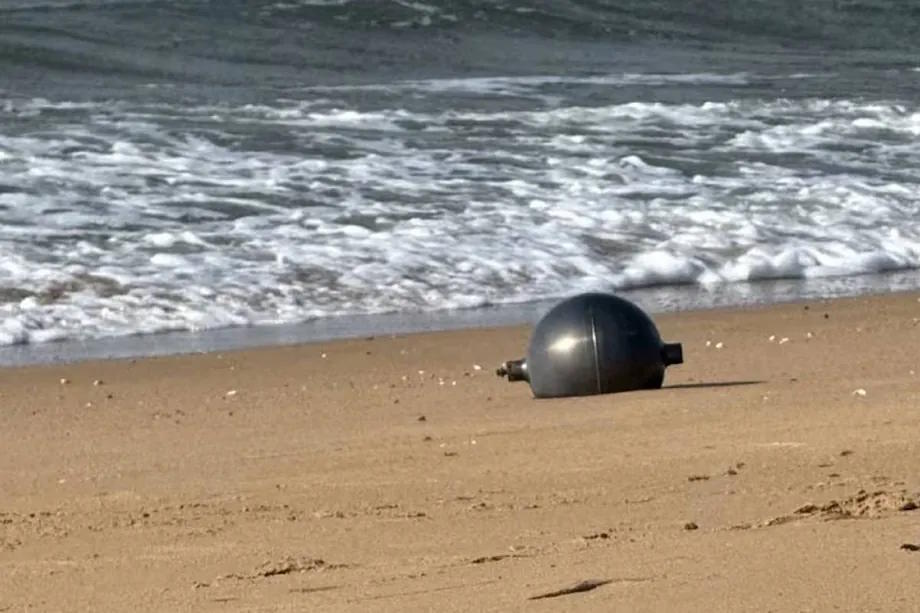
On the north coast of Queensland, Australia, the appearance of several metal objects of unknown origin on Forrest Beach has triggered a joint investigation between local authorities and the Australian Space Agency (ASA), as reported by sources cited by The Guardian.
The discovery, which includes six large spheres washed ashore by the sea, has led to the preventive closure of the area and the deployment of a security operation by the police and firefighters. Although initially there was concern among residents about the possible presence of hazardous substances, authorities have called for calm and stated that there is currently no immediate risk to the population.
The Queensland Fire Department has confirmed the location of six spherical structures, several of which have already been removed and stored in special safety containers for analysis, while the rest remain under custody. However, emergency services are maintaining vigilance in case new pieces may appear on the coast due to maritime currents.
The main line of investigation suggests that these objects could be remnants of aerospace technology, popularly known as 'space balls', meaning fragments or deposits associated with the early stages of rocket launches. The Australian Space Agency is working with the police and emergency management agencies to precisely determine their origin and composition.
Space archaeology specialist at Flinders University, Alice Gorman, quoted by The Guardian, has indicated after analyzing images of the remains that they do not show burn marks or obvious signs of atmospheric reentry. This detail reinforces the hypothesis that they could correspond to pressurized fuel tanks detached during the early stages of a rocket launch.
According to the expert, these types of structures are usually made of resistant alloys like titanium and, in some cases, may contain highly toxic substances like hydrazine, requiring extremely careful handling. The possibility has also been raised that the fragments belong to a Russian Fregat-type rocket, although this option has not yet been confirmed.
Australian authorities have emphasized that the population should only stay informed through official channels as the investigation continues. The phenomenon has once again highlighted the growing issue of space debris, an increasingly common challenge due to the rise in orbital launches worldwide and the subsequent reentry of fragments into Earth's atmosphere, some of which end up reaching inhabited or coastal areas like those in Australia.