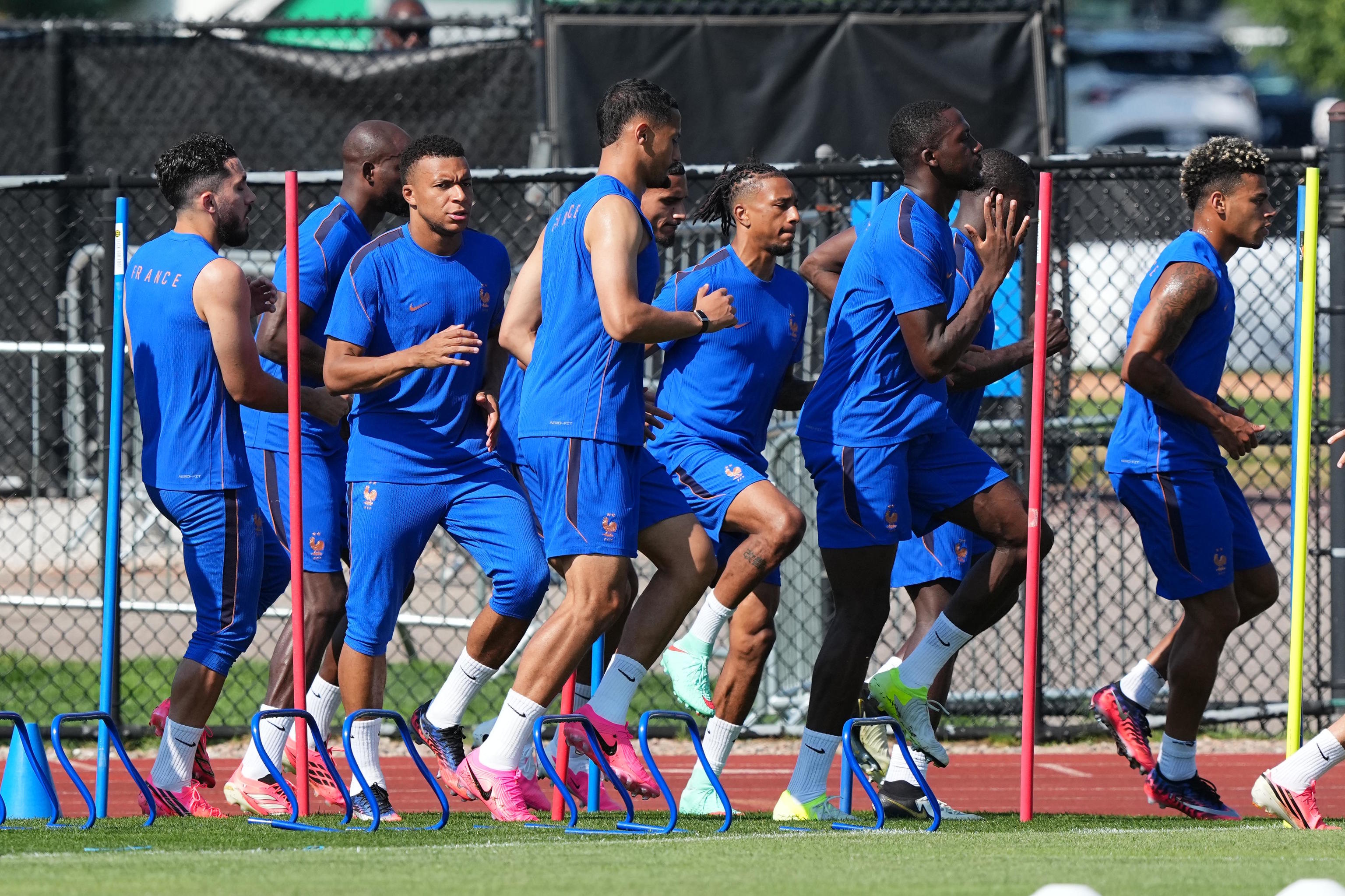
The police in Paris and other major French cities have increased surveillance ahead of the match between France and Morocco, fearing disturbances like the ones that led to 780 arrests and 200 injuries after the celebrations of PSG's victory in the Champions League final on May 30. As in previous rounds (not only in France's matches but also with Algeria's), four metro stations along the Champs-Élysées will be closed, and police surveillance will be reinforced in the twenty "fan zones" where the World Cup can be watched on giant screens in the French capital.
In contrast to the relative permissiveness under surveillance in cities with left-wing mayors, in towns with right-wing mayors such as Toulouse, Orleans, or Clermont-Ferrand, fan zones have not only been banned, but curfews have also been imposed on minors under 16 and the sale of alcohol has been prohibited from 10 p.m. during the World Cup.
"The bans will remain in effect even if France reaches the final, with the aim of avoiding crowds in the streets and preventing urban violence," declared the mayor of Clermont-Ferrand, Julien Bony. In contrast, the mayor of Paris, Emmanuel Grégorie, urged citizens to "enjoy a sporting, joyful, family-friendly, popular, and free moment" at the giant screens set up in the city.
In Épinay-sur-Seine, in the northern outskirts of the city, the Plaisir de Partage association has created a special area for 200 fans that will be fully booked today. In Strasbourg, where some of the most prominent figures of the Atlas Lions come from, such as Samy El Murabet and Gessine Yassine, the quarter-final match will be experienced with special intensity. "Our whole life is in France, but our longing for home and our ties with Morocco remain very strong," acknowledges Jamal Boussif, head of the Strasbourg Plural association.
"The years of coexistence within French society must be particularly reflected in moments like this," warns Boussif, in statements to the Yabiladi portal. "I urge everyone to celebrate the outcome calmly, to respect the law, and not to be drawn into disorder," he adds.
In the minds of many of the 800,000 Moroccans living in France (the second largest immigrant community after Algerians), the pain of the 2-0 defeat against Mbappé and his team in the semi-finals of the Qatar World Cup still lingers. "But today we are no longer a surprise, and that is a great source of pride," declared Moroccan coach Mohamed Ouahbi, who can boast several French-born stars in his team (including Ayyoub Bouaddi, the "lost treasure" as titled by L'Équipe, warning about the talent drain to Maghreb teams).
Another major difference from 2022 is the relaxation of political tension, following Emmanuel Macron's speech two years ago in the Rabat Parliament proclaiming that "the future of Western Sahara fits within the framework of Moroccan sovereignty." The historic milestone did, however, reignite old wounds between France and Algeria, culminating last year in the temporary withdrawal of ambassadors.
The frequent tensions with Algeria contrast with the "new chapter" signed by Macron and Mohamed VI and with the somewhat more benign historical memory of the French protectorate in Morocco (1912-1956). The "French dream" lives on in the minds of Moroccan immigrants, who lead in the number of residence permits granted in the country, ahead of Algeria and Tunisia.
Even before the World Cup final, on July 15 and 16, French Prime Minister Sébastien Lercornu will travel to Rabat to participate with six of his ministers in the plenary session of the High Joint Commission for bilateral cooperation. Moroccan sources described the political meeting -preceded by the sporting event- as "a particularly significant moment, given the exceptional quality of the relationship between the two countries."