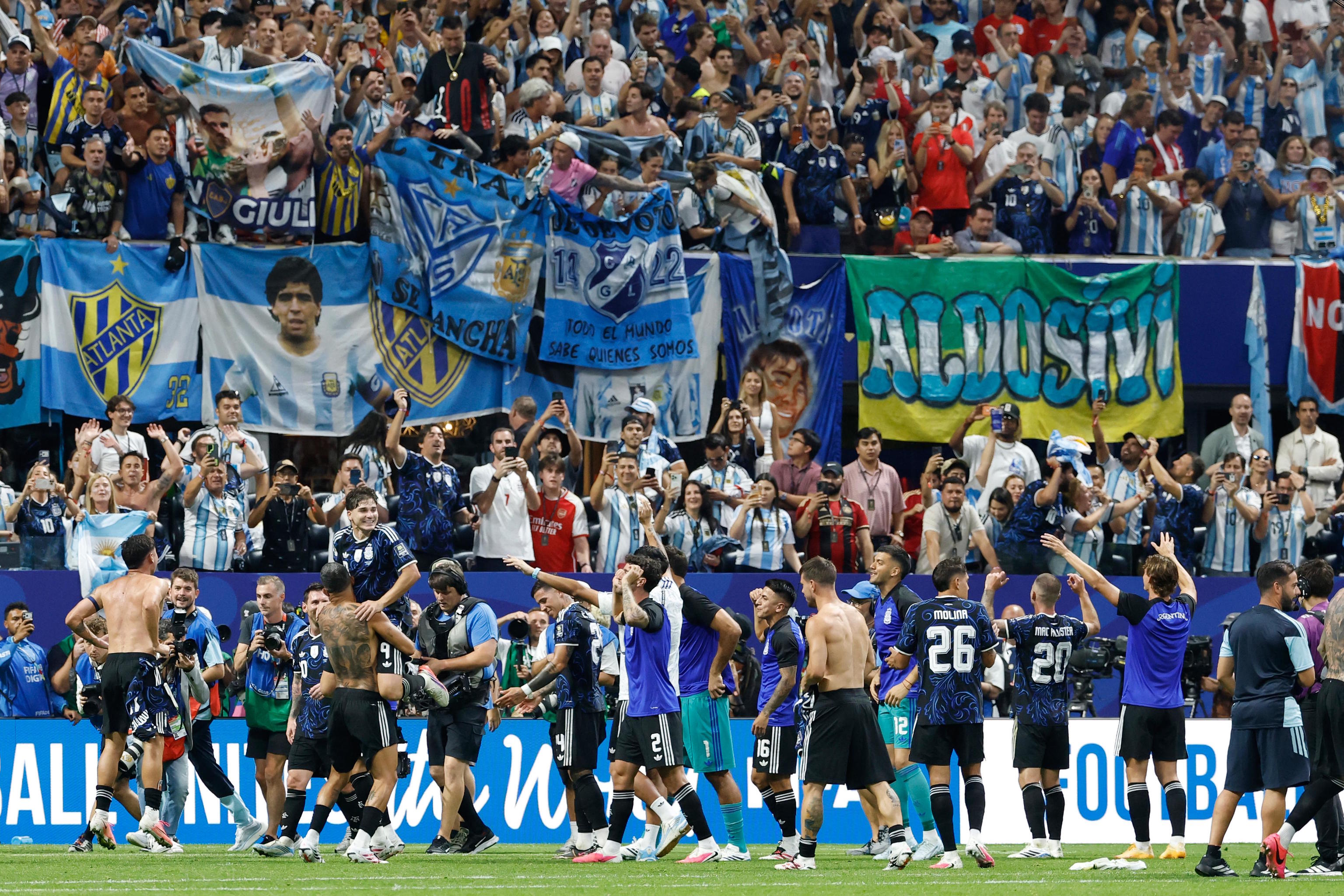
If you hear someone say they put a piece of paper with the name of a player from the opposing team in the freezer, that they have to wear the same shirt, or attend the game in the same place and with the same people, they are probably Argentine. When their national team plays in the World Cup, a behavior emerges that is a mix of superstition, beliefs, and rituals to fulfill the superstition, which is a way to push their team towards a goal, in this case, winning the World Cup against Spain.
The fans already see themselves as champions, not because of football, but because of signs. Because they have scored 19 goals and only conceded seven, like the date of the final. Because Scaloni sent Otamendi (19) and De Paul (7) onto the field for the comeback against England - again the date - and Montiel with the number 4 on his back, the World Cups Argentina would have won if they triumph in the final on Sunday at MetLife.
This feeling is not only in the stands but also reaches the locker room with rituals they maintain to keep the good luck they once had. Argentina has several superstitious players who need to repeat, out of habit, what once made them win. Their two center-backs, Lisandro Martínez and Cuti Romero, and Atlético's full-back Nahuel Molina are in charge of lighting a palo santo stick, a wood considered sacred that releases smoke similar to incense and is used mainly to cleanse spaces of negative energies, relieve stress, and connect spiritually. It's something they started doing in Qatar and now they call themselves the three "palo santo gang".
Rodrigo de Paul also has another superstition that he follows in every game. Before going out to warm up, he puts some soft candies in his pockets that he distributes to the rest of his teammates. In this World Cup, at the Kansas City headquarters, it became a tradition and, therefore, a superstition, another recent custom that started at the concentration for this World Cup in Ezeiza: barbecues.
Scaloni favors them because it represents a moment of group unity and relaxation, and that's why he also brought them to the United States. Every time there is a match, the day after, when the players return from seeing their families, it is prepared. There always appears Emiliano DibuMartínez, who has a new look since the round of 16... because that's what he did in Qatar. Before the match against Australia, he cut his hair and dyed an Argentine flag on his left temple. Now he has done the same.
From Qatar, where they were champions, come almost all the superstitions of this group, which they even pass on to their families. Enzo Fernández's brother couldn't come to the United States until the quarterfinals, and it wasn't for lack of desire. His brother prohibited it. He didn't want him to arrive before he did four years ago and break the superstition.
The players strictly follow it, like always warming up in a wedge formation with Messi at the front. The superstitions in the Albiceleste can be traced back almost 50 years, and this one about the captain, the number 10, being the first to step on the field - always with the left foot - originated with Maradona in Mexico '86.
Before, in the 1978 World Cup in Argentina, it was known that Pasarella always watched horror movies before playing. In '86, coach Carlos Bilardo imposed a good number of superstitions: he made the players always sit in the same seat on the bus, they didn't eat chicken during the concentrations because one day they did and lost, and the same police officers had to escort the team bus throughout the tournament. He also called his wife every match day, exactly at five in the afternoon.
If football is not enough for them, Argentines seek a way to release the tension of attending each World Cup as the favorite. Even Lionel Scaloni has one: entering the field with his right foot and making the sign of the cross.