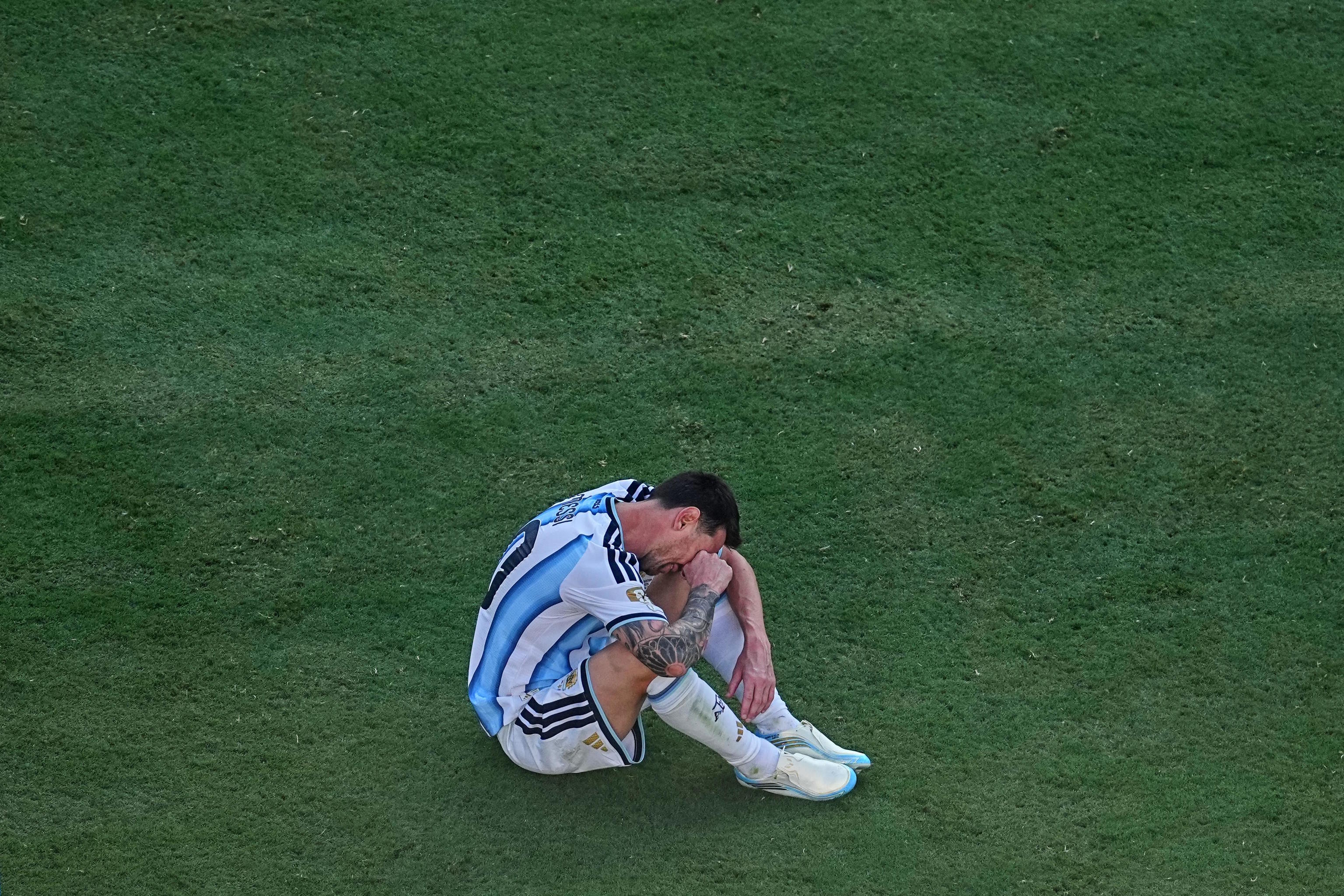
No shots on goal for the first time in the history of a World Cup final. Only two, and off target. Argentina and Leo Messi were like mannequins in the hands of Spain, erratic in attack due to the saves by Dibu Martínez, but dominant in midfield, solid in defense, and most importantly: world champions at the MetLife Stadium in New Jersey, where they bid farewell to '10', devastated in the end, crying inconsolably, lying on the grass with a lost gaze, receiving the affection of his teammates. At 39 years old, he ends his World Cup legacy with a crown, in Qatar, and two lost finals.
The statistics of Argentina were rarely seen in a World Cup final. The albiceleste did not create a single goal-scoring opportunity until the 119th minute, when they had their first shot. The second, in the 120th minute, relied more on heart than on a football that never accompanied them.
Only the 11 saves by their goalkeeper kept them in the game until extra time. Messi, the tournament's star with eight goals, assisting in two of the goals in Argentina's comeback against England in the semifinals, was completely absent, wandering on the field, conserving energy, and being a mere spectator.
He did not touch the ball in Spain's penalty area, 54 times in the rest of the field, the least of all the starters, seven of them in the final third of De la Fuente's team. He only attempted three dribbles and was a shadow of what other teams allowed him during the World Cup. Completely neutralized by Spain like all of Argentina, desperate, committing more fouls, 25, than in the intense match against England, and witnessing Enzo Fernández receiving a red card after a harsh tackle on Cubarsí. Before that, Messi had called for a red card for Cucurella for covering his mouth during a conversation. Paredes, with a double aggression towards Eric Garcia and Gavi after the referee had already blown the final whistle, summed up the helplessness of the albiceleste. "We are great in victory and we have to be great in defeat," Scaloni said.
Messi had landed in the United States with an empty backpack and a liberated soul from Qatar, where he won the cup that all of Argentina had been asking for for 16 years and pleading with every player since 1986, in a country that turned that summer into a religion. The four-year trial ended in the penalty shootout in Lusail, and from there everything changed, he was included in songs about Maradona, the Falklands, and albiceleste glory. He was lifted on the shoulders of every fan, teammate, and coach, with tears shed in every triumph. "For the Falklands, for Diego, for Leo's last one," as the new Argentine chant goes.
Leo's last one happened at the MetLife Stadium in New Jersey and against the country that saw him grow and suffer under the pressure of his national team. Since '86, any Argentine child who could play well inherited an invisible burden: they had to resemble Maradona. With Messi, the metaphor ended. In 2006, he made his debut, under Diego's command; in 2010, when he was already a Ballon d'Or winner, doubts began in a country that wanted immediate heroes. In 2014, at 27 years old in Brazil, desire turned into pressure. Maradona had won at 25, and Pelé had two titles before turning 22. The defeat against Germany was the cruelest night of his sporting life, passing by the cup without touching it.
After that came the lost finals in the Copa America, his resignation from the national team, and the return for Russia 2018, where he was already a veteran surrounded by doubts that couldn't prevent the defeat against France in the round of 16.
That's why Qatar liberated him and why the albiceleste was emotional watching his last steps this summer. Diego is the emotional legend, the street footballer, and the icon, but there are no longer doubts that Leo has been greater than him in a sporting sense. In the MetLife, the songs against Brazil that for decades covered Argentina's failures, like "Brazil, tell me how it feels," were no longer heard. Now, only chants about Messi's successes are heard.
On the embarrassing New York turf, Messi, at 39 years old, conserved energy. He didn't run the same, he couldn't. He was an island waiting for his moment, calculating his chances and playing alone when he had the best card. A poker game against Spain that he couldn't win. Six World Cups later, his legend ended at the MetLife in New Jersey.