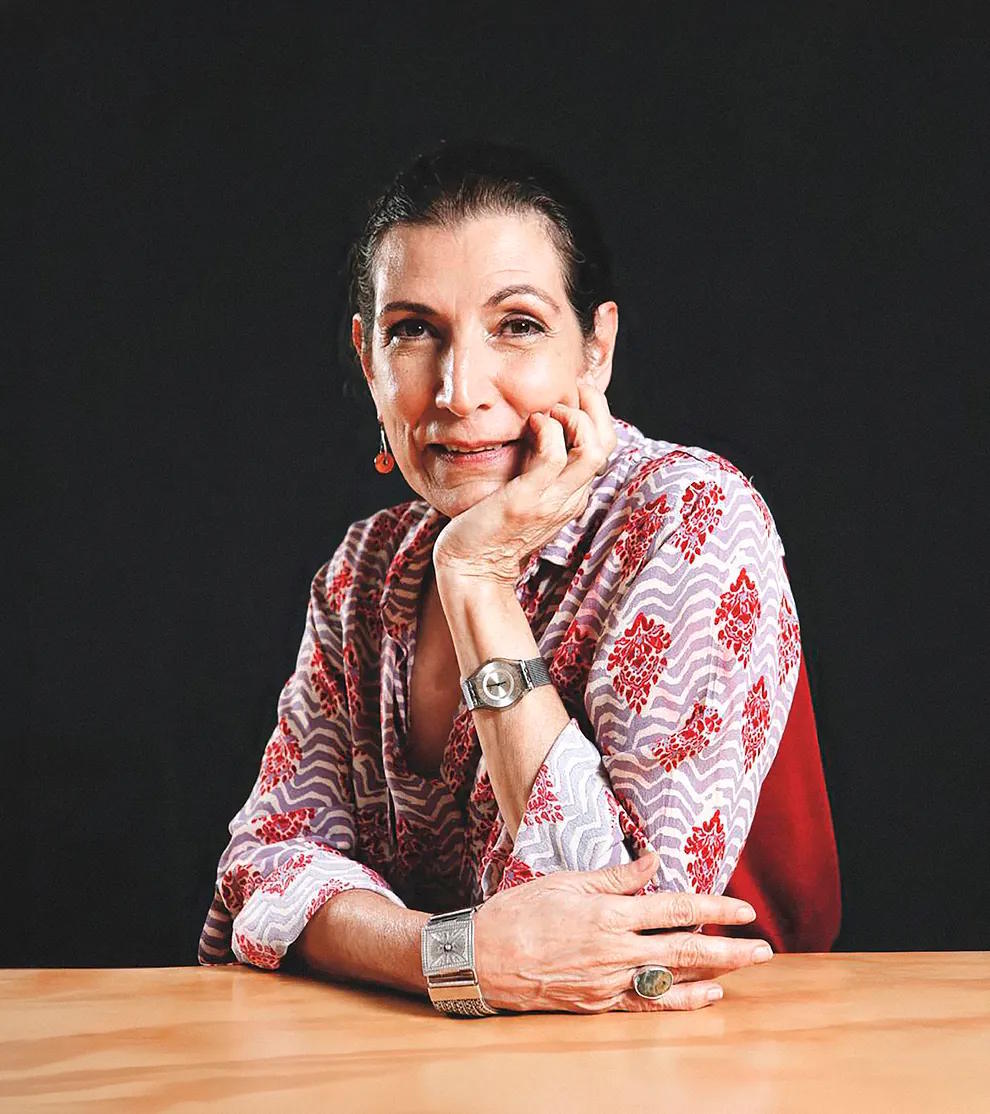
It was the day when the American dancer and choreographer Merce Cunningham, after finishing a class in New York, informed her that they were looking for dance teachers in Cuba. Alma Guillermoprieto was 20 years old and a professional contemporary dancer, like Martha Graham, whom she admired so much. She understood her teacher's message, flew to the island, and a few days later enrolled in the National Dance School of Havana. For three years, she kept dancing and teaching in harmony. Until 1973, when she gradually moved away from teaching. It was then that journalism began to emerge in her, in the Caribbean of her youth. In an unexpected way, pure instinct, suddenly or unknowingly, Alma Guillermoprieto began reporting on a large scale.
In 1978, the Sandinista revolution ignited in Nicaragua. A few days later, she was there covering the event for The Guardian. "I had never done any journalism like that before. I arrived in Managua, and they proposed that I write for The Guardian because their correspondent for Central America had gone fishing," explains Guillermoprieto. She was 29 years old. She was born in Mexico City in 1949. The first chronicle was in English, and she continued in that language for over 40 years. Today she is a master. A reference reporter for two generations. She has collaborated with The New Yorker, The New York Times, and some of the best journalism houses in the West. Brave, intelligent, daring. She risked her life at times, but managed to tell what was happening where it was happening.
In a necessary volume, she now gathers some of the chronicles done in the 21st century. The title of the collection is formidable: This Improbable Promised Land. Published by Debate. 19 precise and robust reports. Another enlightening exercise. Pieces that account for Guillermoprieto's coexistence with "the little drug dealers in Sinaloa," also the heartbreaking testimony of her return to Managua; the reflection on the U.S. siege in Nicaragua... Because in this vibrant, solid, and well-lived journalism, it is a way to rethink Latin America. A way to seek reasons, motives, and whys of fierce realities. "Sometimes they tell me that I always write about tough things, but how can I ignore that they are there and must be told." That is why now, perhaps with her reporting fulfilled, Alma Guillermoprieto defends joy.
"I am from that generation that dreamed of a better world and did not know how to build it. Now I am among the majority that feels great fear of the future"
"I am not interested in politics, what interests me is theater, drama, and farce. And in that, Trump is the great provocateur"
"With the emergence of AI, journalists are going to go through an almost annihilating professional crisis, but I am optimistic: we will survive, the profession will not die out"