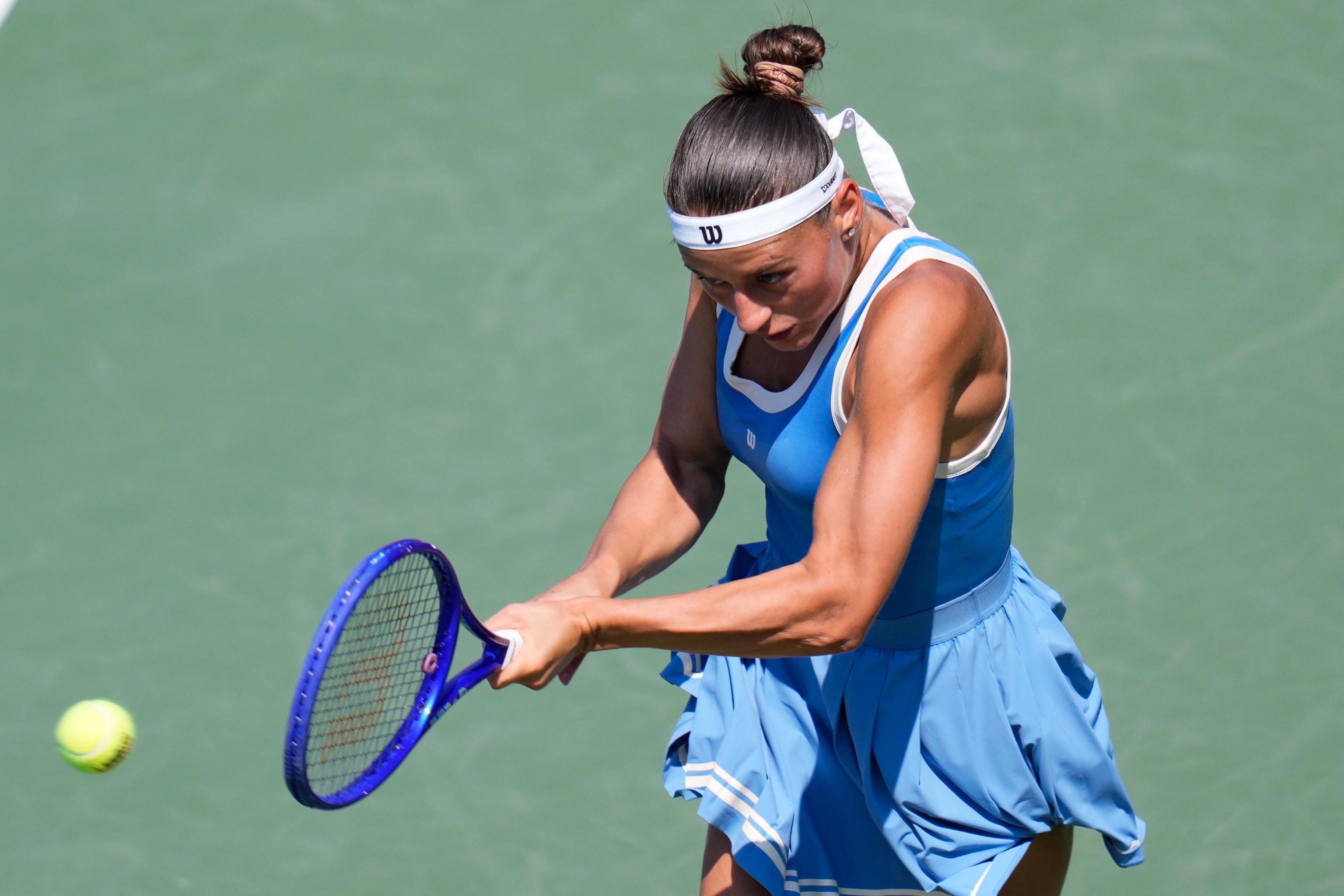
Marta Kostyuk (Kiev, 2002) is associated with her outspoken stance against the invasion of Ukraine by Russian troops, which she makes very clear when refusing to shake hands with any competitor from that nationality or from Belarus, a Putin ally. This was evident again at the Mutua Madrid Open, where on May 2nd she defeated Mirra Andreeva in the final. Kostyuk granted an interview to this newspaper via email, not wanting to delve into her relationship with these players beyond the net or what she believes would be the solutions to end the war.
Question. In December, you considered quitting tennis. Things have changed rapidly and for the better.
Answer. We all go through different stages and difficult moments, and I have experienced many of them in recent years. Although I kept fighting and finding the motivation and strength to work on myself, I had many tough days and weeks. I felt like I had hit rock bottom, so I am very happy to have found the strength and a way to get out of that situation.
Q. You reached the third round of the Australian Open in 2018 at just 15 years old. What was the most challenging part of transitioning to the WTA circuit after your magnificent junior career?
A. The most challenging part was realizing that I had time and that I didn't have to achieve everything immediately. I put a lot of pressure on myself and constantly compared myself to much older and more experienced players. When you are 15, everything is new, and you go through that process in front of everyone. Learning from those experiences is not easy, especially at that age.
Q. Is it true that you had suicidal thoughts due to the difficulty of managing your personal and professional situation?
A. Yes, it is true. I wouldn't talk about it if it weren't true. It was tough for me because I felt like I couldn't control anything that was happening around me: the public exposure, the hate I received, the danger my family was in, and how my tennis was declining because I couldn't focus. I couldn't sleep or eat well; it was a terrible time. I was exhausted and felt completely helpless, so it's no wonder I reached that point.
Q. When did you decide to start working with a psychologist?
A. When I felt like I no longer had control and needed to do something about it. I think it was one of the best decisions I have made. I am very happy with where I am today. I am married, have healthy relationships, and feel like I have much more control over my thoughts and mind. It requires a lot of work and practice, but it is one of the most liberating things you can do for yourself.
Q. The start of the Russian invasion of Ukraine in 2022 was a critical moment for you. How do you remember it?
A. It was very, very difficult because I was not in Ukraine while all my family was there. Everything was happening very quickly, and I had no idea what was going on. I spent the whole day watching the news and calling my family to make sure they were okay, not knowing how close they were to danger. It was a time of constant fear and uncertainty.
Q. To what extent has the pain and outrage over the invasion of Ukraine driven you to the peak of your career?
A. Getting to where I am required a lot of courage, strength, and personal work, as the situation brought many things to light: who I am and what my strengths and weaknesses are. It was a difficult path; I feel like I used that very tough and painful situation to my advantage, and obviously, I am very proud of it.
Marta Kostyuk, with the Mutua Madrid Open title.OSCAR DEL POZOAFP
Q. You had to play a match after learning that a Russian missile had just fallen 100 meters from your house.
A. It was terribly difficult, but I am glad I won. It reminded me that I have resilience and that I am capable of overcoming even the most complicated situations.
Q. How is your family? At that time, you mentioned that your sister was sleeping with three blankets, that she was very cold at home...
A. My family is fine right now. Every day is different because you never know where a missile or a drone will fall. They want to stay in Ukraine, build their lives there, and be with the people they love. During the winter, like many others, they had to deal with power outages and freezing temperatures. Everyone was trying to cope in their own way, as there wasn't much else to do.
Q. You live in Monte Carlo. What is your daily communication like with your family in Ukraine?
A. It's pretty normal. I used to travel a lot for tennis before the war, so I didn't see them very often anyway. We talk on FaceTime, send text messages, videos, and memes. More or less like any family living at a distance. The difference is that sometimes you wake up to news of another attack, and all you want is to make sure they are okay. But there is a limit to what you can do. You just try to be there for them and hope they are safe.
Q. When was the last time you traveled to Ukraine? You usually do it by car from Poland, right?
A. The last time I was there was in early April. I went to attend some meetings and activities of the Marta Kostyuk Foundation; it was an intense but very meaningful trip. And yes, I made that long and exhausting journey by car from Poland.
A. It is one of the most important projects of my life. I wanted to create something that could make a real difference for the children of Ukraine. Together with my team, we have created programs to make tennis more accessible through public schools, support young tennis players who want to continue both their education and their sports career, and help more people discover this sport through educational content. I am very proud of what we have built so far.
Q. On your website, you recommend, among other books, Man's Search for Meaning by Viktor Frankl, and One Hundred Years of Solitude by Gabriel García Márquez. Do you enjoy reading during tournaments and travels? It is not common among tennis players.
A. I go through phases with reading. There are times when I read a lot and others when I hardly read. Lately, I have been busier, so it is harder to find time to sit down, focus, and enjoy a book. One of the books I recently read is The City by Valerian Pidmohylny, and I loved it.