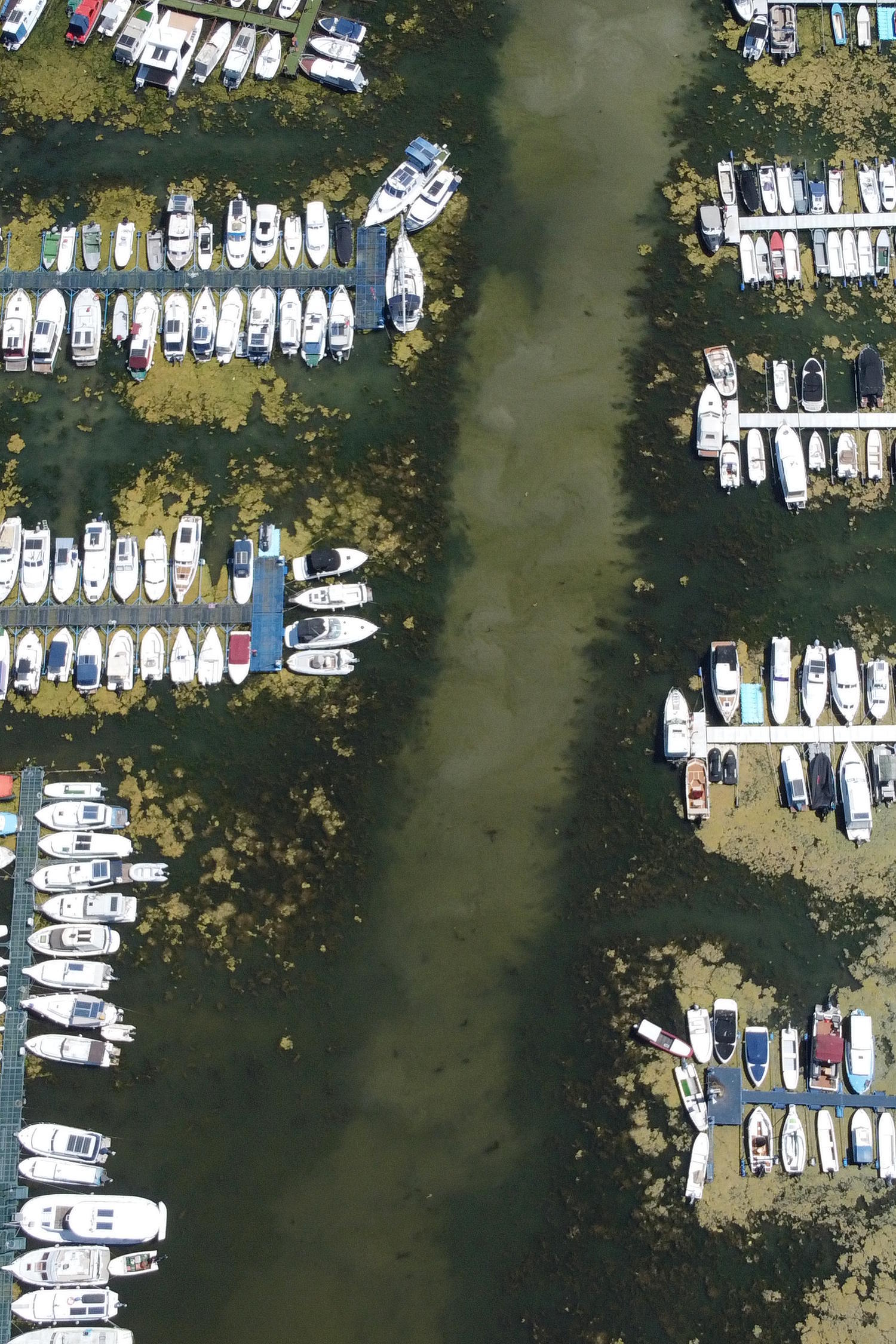
Every year, the great European rivers exert a powerful attraction for those seeking a different holiday experience inland, gliding through the heart and history of the old continent on serene river cruises, with stops in Vienna, Budapest, Bratislava, or Bucharest and bucolic routes amidst imposing castles.
This image has been disrupted this summer, with the extreme drought causing historic lows in the Danube, the Rhine, the Loire, and the Elbe, which have seen parts of their courses turned into a succession of sandbanks. Dozens of cruises have had to alter their routes, major river ports have become unnavigable, and the water has dropped to unprecedented levels.
In Serbia, near Prahovo, the Danube's decline has revealed a sunken Nazi ship from the Kriegsmarine during World War II. The wreckage has attracted an unusual horde of curious onlookers and tourists in small boats, circling the broken hull, the bridge, and the artillery turrets.
In Ruse, Bulgaria, archaeologists have been delighted by the discovery of the remains of a woolly mammoth in the riverbed. The recovery of the jawbone, scapula, tusks, and a femur of the animal was completed after the waters receded. According to experts, the dark coloration of the bones is a clear indicator of continuous exposure to a "swampy environment" for thousands of years.
Aside from curiosities, the second longest river in Europe (2,870 kilometers across 10 countries) is in a state of alert after recently recording its lowest level in history as it passes through Budapest: just 30 centimeters. The minimum for safe navigation is set at 2.7 meters.
The low level of the Danube has forced the shutdown of the Parks nuclear plant due to a lack of water to cool its reactors, leading to a halt in river traffic, both passenger and cargo. The river has temporarily become unnavigable in the Hungarian capital, and cruises are forced to dock 90 kilometers away in Komárom (with tourists boarding buses to reach Budapest, which has also had to restrict recreational water use).
In Vidin, in northwestern Bulgaria, the river cruise ship Viking Ullur ran aground on a sandbank on July 28, and its 186 passengers had to be evacuated. The company reported no injuries, no danger to the ship despite the incident, and passengers were able to continue their journey overland to Bucharest.
Changes in tourist routes
The challenging conditions of the Danube have forced cruise companies to implement contingency plans, such as changing ships on the go or alternative routes by bus. "When Mother Nature makes other plans, we work closely with our clients to provide alternative experiences, so they can determine the next steps of their journeys," read a statement from Avalon Waterways, which canceled several departures last week.
In Romania, where the Danube flows into the Black Sea, the river's flow decreased at the end of July to 1,700 cubic meters per second, compared to the usual 4,700 cubic meters for that time of year. The main concern here is how the halt in river navigation will affect the large cereal exports by barges.
On the Rhine River, one of the world's busiest waterways along its 1230 kilometers (from the Swiss Alps to the Netherlands), the drought is also causing serious damage. At the Kaub measuring station in Germany, the river's level dropped below 80 centimeters, leading to significant disruptions in commercial navigation.
"Water is our most precious resource," emphasized German Environment Minister Carsten Schneider during the launch of the Low Water Information System (NIWIS). The economic cost of water scarcity for Germany is estimated to reach 25 billion euros per year.
Near Bonn on the Rhine, another 135-meter-long ship, the Thurgau Gold, advertised as the epitome of luxury eco-friendly river cruises, ran aground on July 16. In Cologne, several boats hit the riverbed as the water level dropped to 67 centimeters, while in Düsseldorf, the 2018 historic low was matched.
In Lobith, the entry point of the Rhine into the Netherlands, the lowest level since 1976 was recorded this summer. "In the middle of July, the river is like at the end of September," said Ties van Wijk to NOS Nieuws, in charge of that marina. "Our country has traditionally had to defend itself against floods; now we have to face a very different enemy: droughts."
"Drought in Europe: extreme heat depletes water reserves" is precisely the title of the recent report by the climate scientists group World Weather Attribution (WWW), highlighting the role that evapotranspiration is playing this summer: the loss of moisture from the land surface through direct evaporation and plant transpiration.
Despite a rainy spring in Spain and other parts of Europe, early and successive heatwaves have caused extreme soil dryness and a worrying decline in water reserves. The reduced flow in the rivers and lakes of central Europe is also attributed to a noticeable loss of snow and premature melting due to high temperatures in the Alps.
The popular Les Brenets lake, a very popular destination on the Franco-Swiss border, has dropped to levels unsuitable for water sports due to the decrease in the Doubs River. The Loire River's castle route (a UNESCO World Heritage site) has also been affected by the driest summer in the last thirty years on France's longest river, with a severe lack of water along its thousand kilometers.
The minimum flow of the river has imposed navigation restrictions on flat-bottomed tourist barges on the castle route. Climate change and the drop in water levels also concern experts due to the impact on the foundations and pillars supporting constructions like the iconic Chenonceau Castle, literally built on a bridge over the Cher River, a tributary of the thirsty Loire.