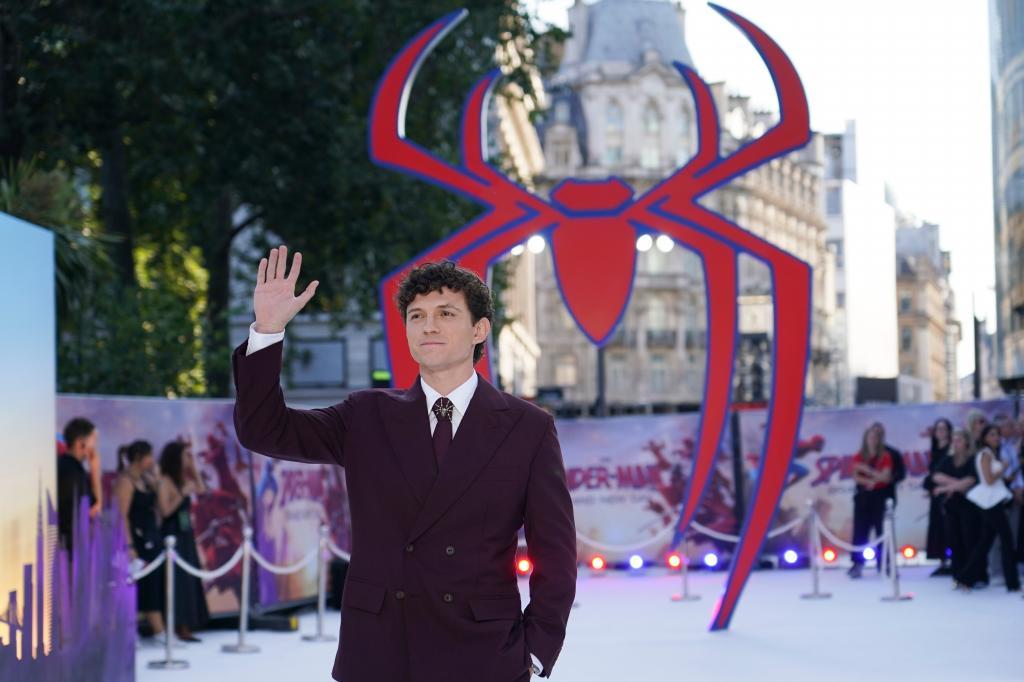
In 1977, Columbia Pictures decided to bring to life for the first time a live-action Spider-Man movie as a hook for a CBS series. The superhero, born from comics by Stan Lee and Steve Ditko and with a previous animated version, was on air for two years. During those years, as a hook once again, he was rescued twice in movies before Sam Raimi started in 2002 a phenomenon that is now hardly measurable. But let's try.
In five days, Spider-Man: Brand New Day, the ninth movie of the saga released this summer, broke the $1 billion mark at the box office; in less than two weeks, it is already the highest-grossing movie worldwide this year. It also holds the record for the highest first-weekend box office revenue in North America - $360 million - in the midst of the blockbuster crisis. What might sound like sporadic success is far from it for the superhero who now hides Tom Holland under his mask, previously portrayed by Tobey Maguire and Andrew Garfield.
Spider-Man has been a money-making machine since the saga was founded with Raimi's Spider-Man in 2002. This was already the first movie to surpass $100 million at the U.S. box office in its opening weekend. It ended up grossing $800 million worldwide, sold 12.2 million DVD copies in a couple of months, and turned a superhero hiding a young misfit into an icon. Of the eight movies that followed, none fell below $700 million. The entire saga has now surpassed $9 billion in revenue. Various reports estimate annual merchandise sales revenue for the character at around $1 billion.
"Spider-Man, like only Batman and we'll see if The Avengers, operates at a different level than any other superhero. No one has achieved his tone to reach all audiences, he has his own rules because he is a multigenerational character. He has managed to find the way to not appear old to new generations," says Julián M. Clemente, an expert in the genre and author of Spiderman: The Untold Story. Supporting his testimony is Íñigo de Prada, half of the podcast TBO en pantalla and author of The Hero's Journey: The Secret History of Marvel in Cinema: "Cinema as an event still works within the Hollywood blockbuster crisis, but not all superhero movies manage to be events anymore. Batman and Spider-Man still do. And, in the case of Spider-Man, it may seem silly, but since the rights belong to Sony and it doesn't have a streaming platform, it benefits. That longer window in theaters and the audience knowing that it won't be on Disney+ in just over a month plays in its favor."
There are many more reasons that can be found. The first being that the climbing superhero has managed to overcome genre barriers and become family cinema for all audiences. It did so from the 2002 movie, which ushered in a new era in Marvel, with its bright colors contrasting with the dark filter to give it seriousness that had accompanied X-Men two years earlier. This attracted an audience not only looking for the comic book character.
Spider-Man also resonates with fans through pure identification: almost anyone can see themselves reflected in that somewhat clumsy and maladjusted young person at some point. His movies, with more or less success, have always known how to play with different genres - between comedy and romance - without giving up being superhero films. Julián M. Clemente explains this with a specific example: "There is a great movement in No Way Home, where the issue of family tragedy is repeated, in this case with Aunt May, as the origin to continue telling his story. At that moment, he puts on the original comic book suit. There you realize that his origin is completed, but more movies about him can still be made. Now you see him integrated into his dermis, with the spirit and naturalness shown in the comics."
However, if something has boosted Spider-Man's popularity, it is how it has resonated from generation to generation. There are those who in the 60s became fans of the comics and the early audiovisual versions. Those who got into it with the animated series of the 80s and 90s. Those who jumped on the bandwagon of the movie saga in the 2000s. And, above all, those who entered the universe with Disney animated series and video games. Marvel's Spider-Man and Spidey and His Super Team are mass phenomena. The video game franchise that Insomniac Games created for PlayStation, reportedly had already surpassed 50 million copies by February 2024. With the release of Brand New Day, it has returned to the top spots in sales rankings in the United States.
"Children's series are not very appealing to adult audiences, but they have managed to create an animated universe around Spider-Man to reach a much younger generation. These are the kids who carry Spider-Man in their backpacks. Which one do they carry? The one from the cartoons. And that has also brought them to the movies, to Holland's film," points out Íñigo de Prada.
Marvel clings to this popularity - and the imminent arrival of The Avengers - after some failed or not very successful releases. Is Spider-Man the starting point for the rebirth? We'll see.