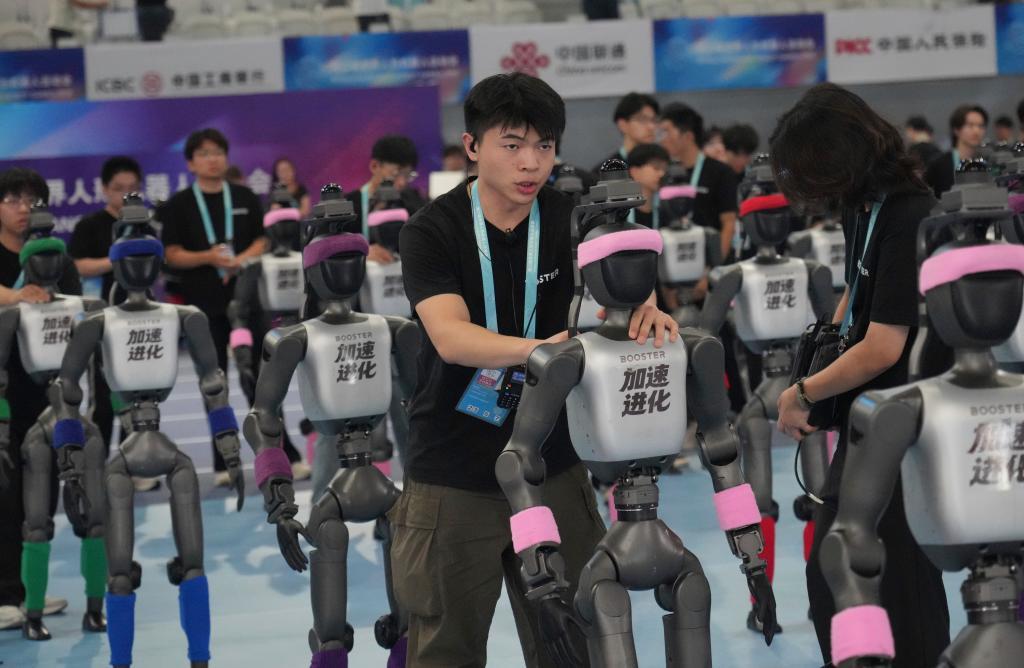
The new Galaxy Robot Park, located in the south of the capital, Seoul, is presented as the first theme park designed to merge physical artificial intelligence with the music industry and mass entertainment. With an area of about 16,500 square meters, this venue combines artistic shows and interactive activities that aim to redefine our daily relationship with machines.
The main attraction of the park is the so-called Robot Arena, a stage where groups of humanoids perform perfectly synchronized choreographies of K-pop hits like 'Bang Bang Bang' or 'APT' by ROSÉ and Bruno Mars. To achieve this level of precision in their movements, the machines use advanced motion capture technology to progressively learn new dance steps. In addition to the musical shows, visitors have the opportunity to interact directly with the technology.
The park features robots that box remotely controlled by the public, mechanical dogs, and androids capable of creating personalized portraits. Even in the complex's cafes, the ice cream and coffee are served by robotic arms. Behind this mega-project is the South Korean company Galaxy Corporation, led by its CEO Choi Yong-ho. The company, which represents internationally renowned Korean artists like singer G-Dragon and actor Song Kang-ho, defines this concept as a business model called EnterTech.
According to Choi Yong-ho, the original idea stemmed from the harsh lessons of the global health crisis: "No matter how much we wanted to go on a world tour during the Covid pandemic, we simply couldn't. That's when we all realized that humans have limitations." Faced with uncertainty about whether Korean pop fans will swap real concerts for android shows, the executive remains cautious but optimistic: "The answer is something we are still in the process of discovering, as no one else has tried it before."
During the six-week trial phase that began in July, over 20,000 people visited the venue, a successful turnout that, according to the management, demonstrates the potential of these developments to become "a new form of entertainment." In Choi Yong-ho's words, the park represents only the first phase of a global expansion: "The next step after K-pop is the combination of content and physical artificial intelligence. We will make Galaxy Robot Park the beginning of a new era of global entertainment."
The medium-term goal is to export this format to strategic markets worldwide, such as the United States, the United Arab Emirates, and Japan. The official opening of the park has attracted professionals from the education sector as well as local families. During the inauguration event, which featured coordinated exhibitions of martial arts between robots and human artists, attendees expressed their surprise at the agility of the automatons.
Radio announcer Lee Ha-mi, who attended with her children, positively assessed the technological advancement, a view shared by 39-year-old kindergarten teacher Kang Hyun-jung, who highlighted the multiple experiences children can enjoy. The company's CEO emphasized the significance of this social and technological milestone during a press conference: "This space, which we call 'Robot Park', is a place where robots move freely, where a robot serves you ice cream, another plays the piano at a birthday party, and where we have just begun a story of coexistence and symbiosis with robots."