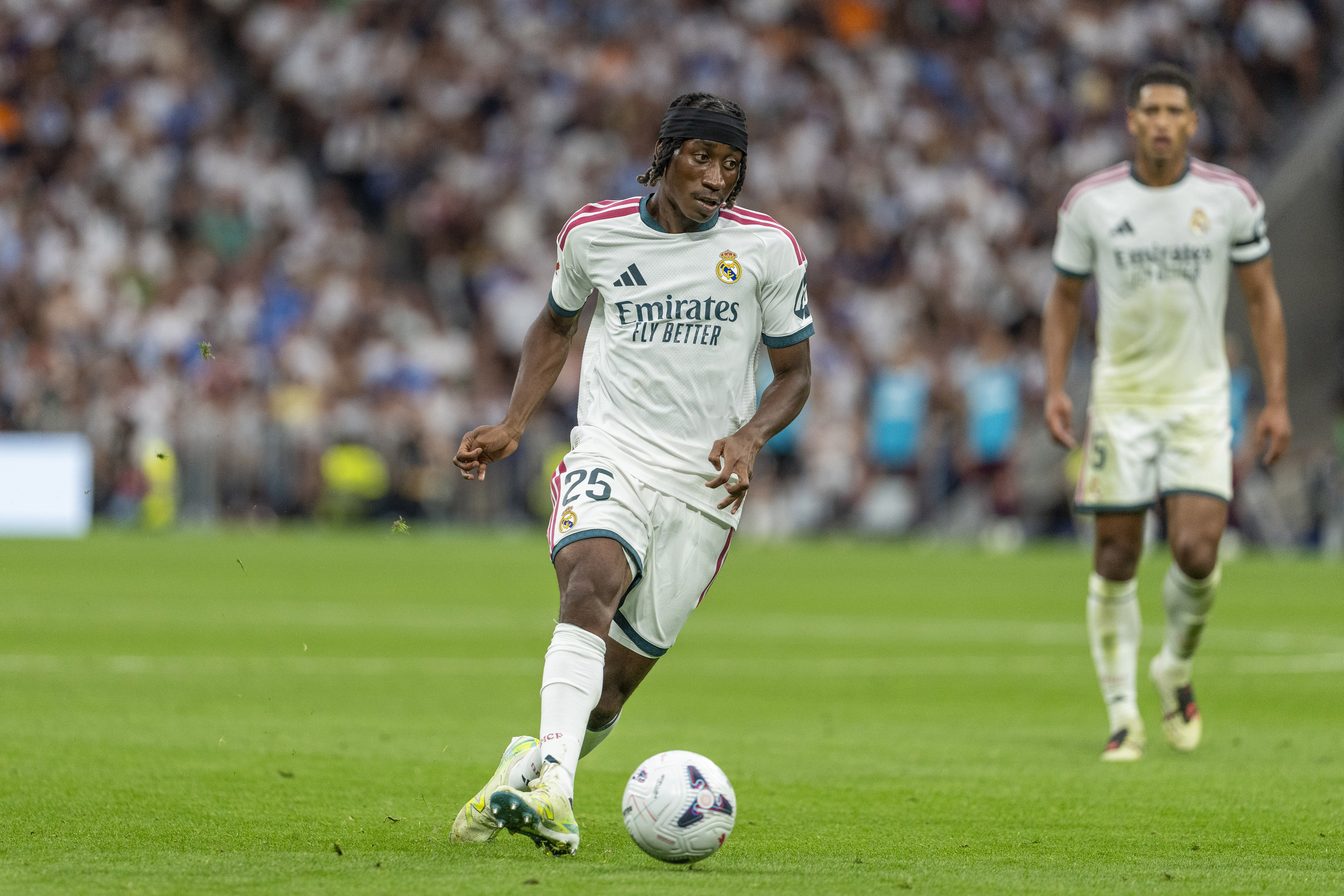
The closing of the transfer market has once again highlighted the two speeds of Spanish football, a league divided in two. On one side are Real Madrid, Barcelona and Atletico, still capable of going into the European market and paying significant fees for players. On the other is almost the entire league, forced to balance the books, sell before buying, look for loans, free agents and last-minute opportunities to navigate an austere market. Between these two worlds, an unexpected exception has emerged: Deportivo, driven by investment from Abanca and willing to take risks that many La Liga clubs cannot or do not want to take. In the middle of it all, names such as Ceballos, Casadó and Giménez became the protagonists of the final hours.
The numbers explain the situation better than any individual deal. Spanish teams have spent around $865 million this summer, a figure that places La Liga fourth in the world in terms of investment, but far behind the Premier League, which has surged to nearly $4.63 billion. It also trails Serie A and sits slightly below the Bundesliga.
The gap with England is no longer just a matter of the biggest clubs. It is a structural difference that affects almost every level of the ranking. Manchester City has led the global spending market, and the seven clubs that have invested the most belong to the Premier League. Real Madrid appears eighth and Barcelona tenth. Between them, Ipswich Town, newly promoted to the Premier League, has managed to invest around $231 million. Something almost unthinkable in Spain.
"The model of Spanish clubs is the academy. The Premier League is a loss-making model," admits Javier Gómez, Corporate General Director of La Liga, to EL MUNDO. "If the Premier League has double the revenue of La Liga or the Bundesliga, and we are investing around $926 million, they should be at around $1.74 billion. They are investing around $4.63 billion. This means they are not generating it; it is money coming directly from their shareholders. It is a permanent loss-making model that generates inflation across the sector," he says.
Madrid and Barcelona have tried to compete in this environment. Diomande, signed by Real Madrid for around $144 million, is the only player from a La Liga club among the ten most expensive transfers of the summer, with Enzo Fernández to City topping the list at more than $174 million. You have to expand the list to the 45 most expensive signings of the window to find just four involving Spanish clubs: Diomande, Gordon, Rodri and Cucurella. Atletico, which has kept Julián Álvarez, made Hjulmand, at around $46 million, its biggest investment alongside Kang-In Lee. In the final hours, they also completed the loan signing of Jonathan David from Juventus. In total, they have spent around $142 million, enough to place them only 24th among the clubs that have spent the most.
Beyond that, there is a huge gap. Betis, who secured the arrival of Ceballos on a free transfer at the last minute, is the next La Liga representative, with around $35 million invested and 77th place in the global ranking. Then comes Deportivo, 90th, with around $30 million, and Racing, 101st, with approximately $24 million after signing Pablo García from Betis. Only six Spanish clubs have spent more than around $23 million on transfers. Most La Liga teams have ended the window with a positive net balance or with net spending that barely reaches $11.6 million. Total austerity.
The case of Deportivo is different. "Their main shareholder has carried out capital increases, as Atletico has done; it is public information, and they are using that money. It goes beyond the recruitment capacity generated by their financial statements," explains Javier Gómez. There are players such as Román, Aubameyang and Adama, as well as last-minute arrivals like Casadó and Giménez, adding the finishing touches to the project.
Athletic has not paid a single dollar in transfer fees, Malaga has invested barely $347,000, and seven teams have not reached $11.6 million. Loans, free transfers, sales, percentages of future deals and patience — a great deal of patience — until the final hours of the window.
Comparisons with the rest of Europe only increase the sense of isolation. In Italy, 15 clubs have spent more than around $23 million, and seven have also exceeded that figure in net investment. In Germany, ten teams have spent more than $23 million, and in France, nine. Even the Championship, England's second tier, has nine clubs above that threshold. Saudi Arabia and Turkey each have five. The same number as the entire Spanish league.
La Liga continues to spend and remains one of the major competitions in world football, but economically it continues to struggle. The Spanish market has split in two: stars for the biggest clubs, ambitious bets for a handful of others, and the financial calculator for almost everyone else.