In 1999, in The Thomas Crown Affair, Pierce Brosnan fixed in the collective imagination of a whole generation what an art thief should be. With a three-piece suit, a white glove, a slow walk, and innate elegance, one could enter a highly secure museum, the Metropolitan Museum of Art in New York; take out of its frame a Monet, Sunset in Venice, and calmly escape through the door with a valuable piece tucked in a leather briefcase. Without a hair out of place or a drop of sweat soaking his shirt.
Until reality shattered the glamour that Hollywood wanted to wrap these thefts in. The three-piece suits are actually coveralls and hoods. The slow walk is actually fast getaways on motorcycles not always successful. And the leather briefcase has been replaced by sledgehammers, angle grinders, metal bars... and any blunt object that can be used to break doors, windows, or glass cases. The only connection between fiction and reality is the few minutes that thieves take to enter, loot the place, and flee. In the past year, museums in Italy, Austria, Spain, the United Kingdom, and, especially, France, have been victims of this method.
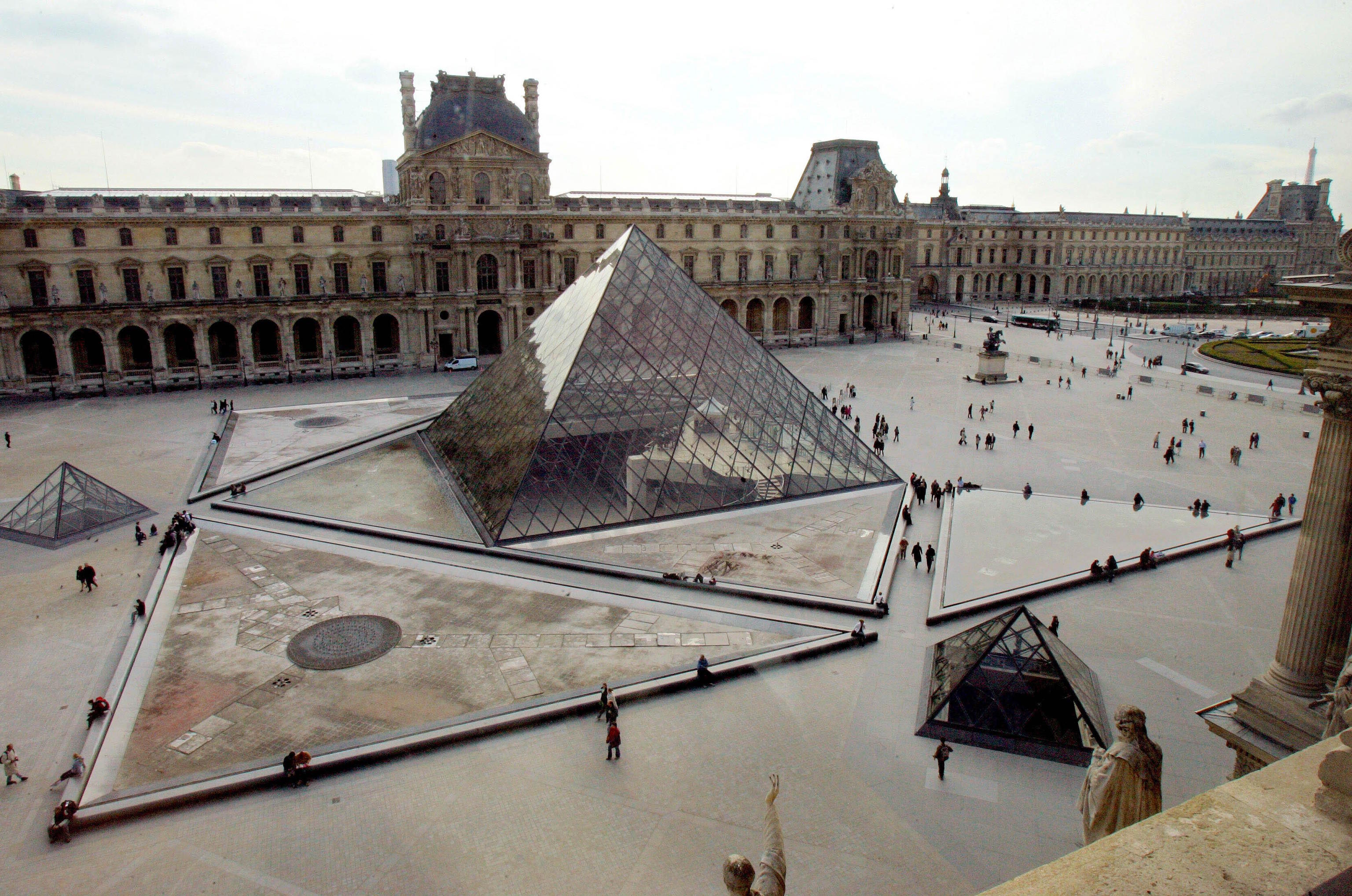
On October 19, in broad daylight, a group of hooded individuals entered the Apollo Gallery of the Louvre in Paris, using an electric lift and a disc cutter to break the window. The loot was a selection of jewels from the collection of Napoleon III and Empress Eugénie de Montijo valued at around 88 million euros. Less than a year later, on September 8, other hooded individuals broke into the house-museum of the painter Pierre-Auguste Renoir on the French Riviera using electric saws to steal four paintings valued at 8 million euros in just a few minutes. And in between, there have been thefts -mostly with the same modus operandi- in Badajoz, Villena, and Albacete in Spain; in Exeter and Bristol in the United Kingdom; in the Museum of Applied Arts (MAK) in Vienna; in Parma and in Sicily in Italy, and in the French cities of Limoges, Langres, Wingen-sur-Moder, and Châtillon-sur-Seine.
"That type of robbery that Hollywood has portrayed a lot, of a person of high economic status, a great art connoisseur who steals for the challenge, we have never encountered. We have to talk about criminals, but the big change we are seeing is that these thefts are becoming more violent, faster, and with the current protocols, no one manages to stop them," explains Marc Balcells, director of the Criminology degree at the Universitat Oberta de Catalunya. "They are thieves who today can steal art, tomorrow iPhones, and the next day high-end cars. They are much more informal thieves, who gather in groups. It is not organized crime or the mafia. They do not intend to steal cultural heritage; they want jewels and gold," adds this expert.
"They are thieves who today can steal art, tomorrow iPhones, and the next day high-end cars"
The report Changing Tactics, Changing Targets: The Evolving Nature of Museum Heists, published on August 26 by Europol, meticulously outlines the new profile of criminals, how they organize, how they act, and what type of materials interest them. According to the European authority, there is no longer a rigidly structured network under the leadership of a leader, but rather criminals without previous links are recruited through social networks, such as Telegram, for specific assaults. They are no longer specialists in the trafficking of cultural goods, they are active in other markets, and they are only interested in profits. The target is precisely jewels and gold due to their high value, ease of placement in the market, and manageability. Operations are no longer stealthy, they now break showcases using sledgehammers, axes, crowbars, and in some cases, explosives.
"A painting valued at 50 million euros may be impossible to sell openly, difficult to transport, and dangerous to keep. However, a more modest collection of jewels may lose cultural value when dismantled, but offer components that can be moved through illicit or semi-legitimate channels. The criminal calculation could thus lean towards an object of lower nominal value but with a higher likelihood of conversion," says Nikos Passas, professor of Criminology and Criminal Justice at Northeastern University in Boston and co-director of the Institute for Security and Public Policy.
Gold, which was the target in the three Spanish robberies and in some of the French ones, is a good example. Its price currently hovers around 4,000 euros per ounce - about 28 grams - and offers the opportunity to easily transform it through smelting, making it more difficult for authorities to trace its origin. "Artworks are easily identifiable and their monetization is extremely difficult. However, with jewels, pieces of archaeological gold, coins, or precious materials, criminals can profit by destroying the cultural identity of the object and selling the material it is made of. This is one of the most concerning aspects of the current trend: recovery can become impossible because the object itself no longer exists in its original form," explains Ibrahim Bulut, advisor at the International Committee for Museum Security and professor at the Association for Research into Crimes against Art (Arca).
Although, according to experts, the value of these assets in the market can decrease by up to 30% once their cultural heritage status is removed, these pieces remain extremely valuable and represent a quick and easy way to make profits. "It used to be said that crime didn't pay, but the truth is that's no longer the case. We need to strengthen our security and, more importantly, the penalties for crimes against art. I propose that criminals be charged with terrorism against cultural heritage and sentenced to 40 years in prison. We need measures that truly act as a deterrent. Currently, criminals do not fear the police or going to jail; for them, the theft is worth it despite the risk," explains Christopher Marinello, founder of Art Recovery International, a firm specialized in recovering stolen or looted art.
The assault on the Louvre, which inaugurated this wave of express robberies - rarely exceeding seven minutes - and using violent techniques, opened the debate on museum security in France. The Government, in fact, presented in June a security plan for its heritage with 33 measures that will be implemented between 2026 and 2027. But this debate has permeated throughout Europe due to the wave of attacks on its institutions. If thieves equipped with disc saws can steal from one of the most prestigious museums on the continent, why wouldn't they do it in any other. "The Louvre was the wake-up call, but let's not forget that they have been recognizing security deficiencies for years and that it is built in an old residence, so there is always an escape route," adds Jorge Llopis, judicial expert and founder of the portal Pecados del Arte.
However, experts oscillate between those who see the weakness of the Louvre as a kind of calling effect for criminals and those who doubt that this expression can be used. "If you can get into the Louvre, you can get into any museum. There is no doubt that this theft sent a message to other criminals: Europe has a security problem in its museums," assures Christopher Marinello. "I would speak more cautiously of an imitation effect. A successful, spectacular, and highly publicized theft can show other criminals that even internationally renowned institutions can be vulnerable. However, there is no basis to claim that the Louvre incident led to subsequent thefts. The underlying vulnerabilities and criminal motivations already existed. The Louvre case may have increased the visibility of the phenomenon, but it did not create the threat," adds Ibrahim Bulut. And Marc Balcells concludes: "When you see that a major museum like the Louvre is so vulnerable, what message does that send to smaller museums? All you need is a motivated group to carry out that heist. If the big one was so easy to steal, how much easier will it be for a smaller one like the one in Villena or Badajoz. These problems stem from those situations."
Under the evident threat of these identical robberies across Europe, there is also an underlying debate. Everything points to museums needing to strengthen security measures and adapt to a new reality, but is it possible to do so without losing the very essence of what a museum is? In other words, how can valuable heritage be kept exposed to the public without being vulnerable to express assaults. "Museums should not become fortresses. Their public, educational, and civic purpose depends on significant access to cultural heritage. The most appropriate approach is smart, adaptable, and proportionate security. This involves using intelligence and risk assessment to focus protection measures where they matter most, rather than treating every visitor or object as an identical risk," states Nikos Passas.
This same week, the Museu de Mallorca decided to remove 20 Almohad-era coins from archaeological sites from the Islamic period and transfer them to a secure chamber for fear of a repeat of what happened in Villena. "Perhaps due to the lack of reliable security measures, the solution may be to keep the assets in custody, in safety deposit boxes, or in more powerful museums without implying recentralization," points out Jorge Llopis.
There are even experts, like Christopher Marinello, who advocate for stricter security systems: "Given that there are no funds for security, we must try alternative methods that could affect accessibility: requiring passports to enter museums, allowing them to sell stored items that may never be exhibited, moving the local police station to the upper floors of smaller museums, or considering the presence of armed guards 24 hours a day, as is the case in airports. Nothing conveys the idea of museum security better than an MP5 or MP7 submachine gun."